Pre-Construction of Relocation Complexes and Introduction of Trust-Based Methods
Innovations in the Residential Environment
Seoul's Dongjak-gu is set to fully implement the "Dongjak-gu Style Development Project Management Plan," which was created to reflect the area's unique characteristics, including its many sloped terrains.
Currently, more than 80 development projects, such as redevelopment, reconstruction, and local housing cooperatives, are underway within Dongjak-gu. However, most of these sites are located on hilly terrain, making the formation of residential complexes particularly challenging. The district has established this plan to provide systematic support and help overcome these geographical constraints.
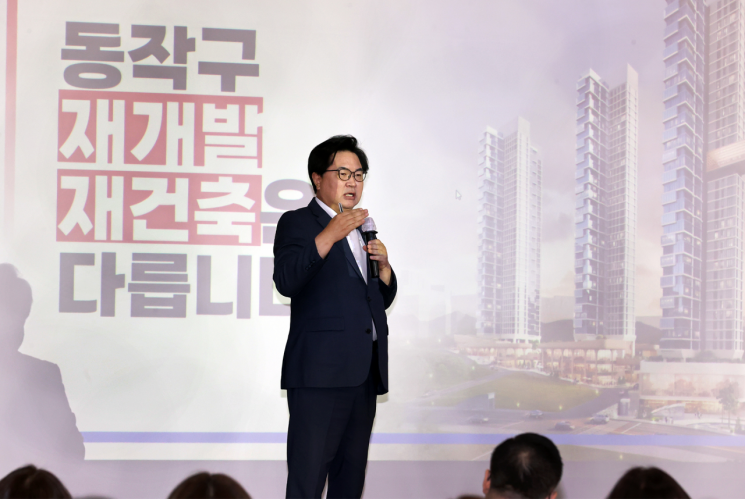 Park Ilha, the district mayor, is explaining the Dongjak-gu style development project at the expanded executive meeting held in May at the Dongjak-gu Office auditorium in Seoul. Provided by Dongjak-gu.
For apartment complexes to be built on sloped land, the district has set "leveling design" as the basic principle. Drawing on examples from Roppongi and Azabudai Hills in Tokyo, Japan, the plan presents practical solutions such as creating neighborhood living facilities that utilize differences in elevation and establishing horizontal pedestrian environments, including the installation of decks.
To address relocation issues that arise during development projects, the district has also introduced a "pre-construction of relocation complexes" policy. Under this approach, facilities such as senior towns, where existing residents can move in, are built first before the main project begins. This is expected to both substantially protect the housing rights of original residents and maintain the pace of project progress.
Fairness in appraisal will also be improved. When appraising single-family homes and commercial properties, the district will apply adjustment factors that consider individual elements such as transaction and compensation cases, and will strengthen the verification process for the results. Measures to protect rental income earners have also been clarified. Separate rental facilities (such as officetels) will be provided to replace rental income, and the inclusion of related clauses in the cooperative's articles of association must be discussed in advance.
There will also be changes to the project implementation system. The core is the introduction of the "trust-based method," which ensures expertise, transparency, and speed. The "Namsung Station North Transit-Oriented Development Project," which is being carried out using the trust-based method, completed its designation as a maintenance area in just one year and six months. This is at least two years faster than the traditional cooperative method. The district plans to prioritize the application of the trust-based method to all new development projects going forward.
Park Ilha, the mayor of Dongjak-gu, stated, "This management plan focuses on overcoming geographical limitations and making substantial improvements to the residential environment that residents can truly feel." He added, "As this is a carefully considered plan, I ask for the active participation and interest of all residents."
© The Asia Business Daily(www.asiae.co.kr). All rights reserved.












