WSJ Reports FBI Shifts Resources to Departments Handling Iran-Related Threats
Focus Moves from Immigration Enforcement to Counterterrorism Amid Rising Concerns Over Iranian Sleeper Cells
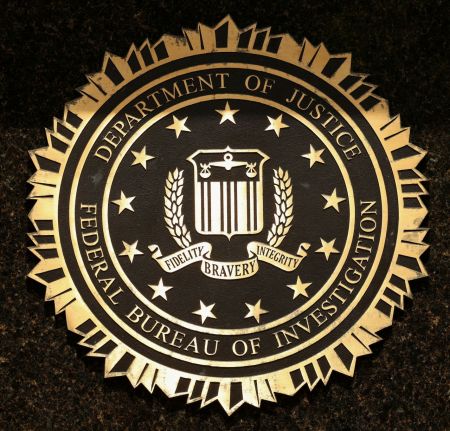
As a ceasefire between Iran and Israel has been reached, concerns have intensified that Iran may attempt terrorist attacks against the United States, which carried out airstrikes on Iranian nuclear facilities. It is also observed that the Federal Bureau of Investigation (FBI), which had focused on immigration enforcement since the launch of the Donald Trump administration, has begun to place greater emphasis on responding to these threats.
The Wall Street Journal (WSJ) reported on June 24 (local time) that the FBI recently ordered its major field offices in cities such as New York, Los Angeles (LA), San Francisco, Chicago, and Philadelphia to reallocate resources to departments handling Iran-related matters and domestic threats. In recent months, the FBI had prioritized immigration enforcement and deployed personnel accordingly, but this move is seen as a realignment of those priorities.
The FBI leadership also reportedly sent an internal email over the past weekend instructing field offices to strengthen intelligence surveillance and to maintain close communication with the Department of Defense and National Guard, as military facilities could become targets of retaliatory attacks.
Concerns about Iranian terrorism had already been raised prior to these developments. On June 23, NBC cited two U.S. government officials who said that Iran sent a message to President Trump during the G7 summit, warning that if the United States carried out airstrikes on Iranian nuclear facilities, it would activate "sleeper cells" currently lying dormant within the United States.
A sleeper cell refers to covert operatives or criminal organizations that remain hidden. During the September 11, 2001 terrorist attacks, the Sunni Islamic extremist group al-Qaeda formed sleeper cells with individuals who had entered U.S. aviation schools under false pretenses and carried out the attacks.
U.S. authorities are also intensifying efforts to arrest illegal immigrants from Iran. The Department of Homeland Security announced that Immigration and Customs Enforcement (ICE) arrested 11 Iranian nationals over the past weekend for violating immigration laws. According to the Department of Homeland Security, a man in his 50s arrested in Minnesota had previously been involved with a group linked to Hezbollah, and a man arrested in Alabama had served as a sniper in the Iranian military.
On the night of June 21, the United States conducted airstrikes on three major Iranian nuclear facilities: Fordow, Natanz, and Isfahan. This was the first direct U.S. airstrike on Iranian territory, coming eight days after Israel's attack on Iran on June 13. In response, Iran carried out "symbolic retaliation" by striking U.S. military bases in Qatar and Iraq, but notified the United States in advance of its plans. Subsequently, with U.S. mediation, Iran agreed to a ceasefire with Israel on June 23.
© The Asia Business Daily(www.asiae.co.kr). All rights reserved.

![Clutching a Stolen Dior Bag, Saying "I Hate Being Poor but Real"... The Grotesque Con of a "Human Knockoff" [Slate]](https://cwcontent.asiae.co.kr/asiaresize/183/2026021902243444107_1771435474.jpg)














