Appearing Before the U.S. House for Semiannual Monetary Policy Report
"Economic Strength Means No Need to Rush"
On Inflation Outlook: "Possible Impact Between June and August"
Effectively Dismisses Possibility of July Rate Cut
Jerome Powell, Chair of the U.S. Federal Reserve (Fed), effectively dismissed the possibility of a rate cut in July, stating that the economic impact of tariffs could become significant this summer. Despite repeated pressure from U.S. President Donald Trump to lower rates, Powell reaffirmed a cautious stance, saying he would not rush to ease monetary policy until the direct effects of tariffs are observed.
Powell Warns of Tariff-Driven Inflation Between June and August: "No Need to Rush"
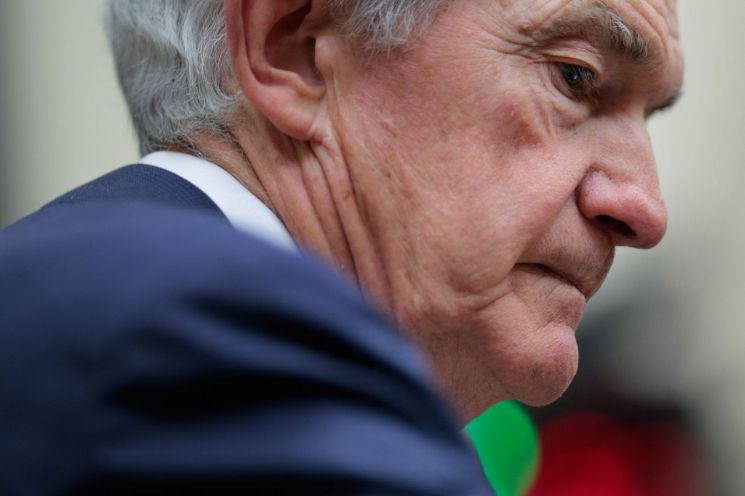
On June 24 (local time), during a semiannual monetary policy report hearing before the House Financial Services Committee, Powell was asked about the possibility of a rate cut in July. He responded, "If inflationary pressures continue to be subdued, we could resume rate cuts," but added, "I don't want to single out any particular meeting." He further stated, "There is no need to rush because the economy is still strong," drawing a line against the possibility of a near-term rate cut.
Previously, on June 18, the Fed unanimously decided to keep the federal funds rate unchanged at 4.25?4.5% during the Federal Open Market Committee (FOMC) regular meeting. At that time, the Fed judged that the risk of stagflation?simultaneous inflation and economic slowdown?had increased, and concluded that a more cautious approach to future monetary policy was necessary.
Regarding the impact of tariff policy on prices and the economy, Powell predicted, "A significant impact could emerge between June and August." He noted, "Concerns about tariff levels and their economic impact peaked in April and have since eased," but warned, "Nevertheless, this year's tariff increases are likely to push up prices and put a burden on economic activity." He also emphasized that "the impact of tariffs depends on their final level," highlighting the ongoing uncertainty.
On the inflationary effect of tariffs, Powell assessed that it could be temporary but might also persist. He stressed that controlling price increases "depends on the scale of the tariff effect, the time it takes for prices to fully reflect it, and how well long-term inflation expectations are anchored."
Based on the price indicators released so far, the actual impact of tariffs has been limited. However, as Powell has warned, inflationary pressures could rise again starting this summer. He projected that the Personal Consumption Expenditures (PCE) price index for May would increase by 2.3% year-on-year, with the core PCE price index rising by 2.6%. These figures are slightly higher than in April (2.1% and 2.5%, respectively).
Powell explained, "The policy environment continues to change, and its economic impact remains uncertain," adding, "We are in a good position to wait for more information on the economic outlook before considering policy adjustments." He continued, "The FOMC's responsibility is to keep long-term inflation expectations stable and to prevent temporary price increases from becoming a persistent inflation problem," emphasizing, "Without price stability, we cannot achieve a strong and sustainable labor market that benefits all Americans."
'Trump Picks' at the Fed Advocate July Rate Cut, but Markets Expect a Hold
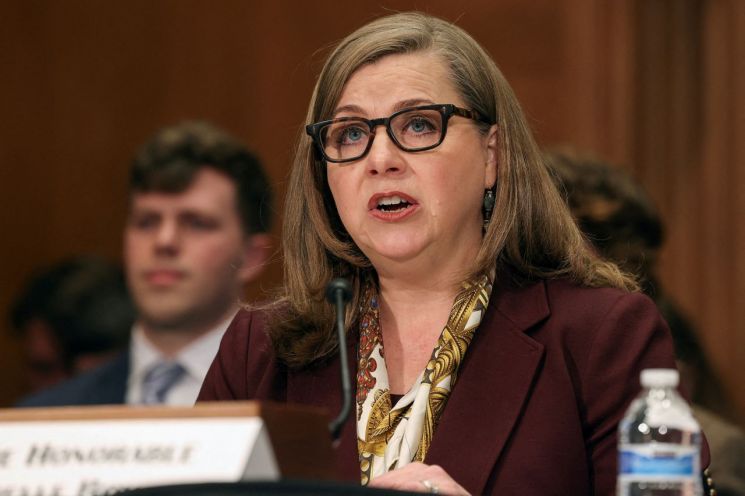 Michelle Bowman, Vice Chair for Supervision at the US Federal Reserve (Fed) Photo by Reuters Yonhap News
This cautious stance from Powell contrasts somewhat with the 'July rate cut' argument that has recently emerged within the Fed. Following Christopher Waller, Fed Governor, Michelle Bowman, Vice Chair for Supervision at the Fed, stated the previous day that she could support a rate cut next month if inflation remains subdued. Bowman, who was appointed Vice Chair for Supervision earlier this month by President Trump, and Waller, who is mentioned as a candidate for the next Fed Chair, have both expressed support for a rate cut. However, Powell continues to draw a line against the possibility of an early rate cut.
The market also sees the likelihood of a July rate cut as low. According to CME FedWatch, the federal funds futures market on this day reflected an 81.4% probability of rates being held steady in July. The probability of a rate cut of 0.25 percentage points or more in September is predicted at 85.2%. On Wall Street, there are also views that there will be only one rate cut this year. JP Morgan, Goldman Sachs, Barclays, Nomura, and Deutsche Bank all expect the Fed to cut rates only once in December.
Meanwhile, ahead of Powell's congressional testimony, President Donald Trump once again publicly criticized Powell in the early morning. On his social media platform Truth Social, Trump wrote, "Jerome Powell of the 'too late' Fed will appear before Congress today to explain why he is refusing to cut rates," adding, "I hope Congress deals with this foolish and stubborn man properly. We will pay the price for his incompetence for years to come," strongly condemning Powell.
© The Asia Business Daily(www.asiae.co.kr). All rights reserved.













