On June 23, Gwangju City Council member Lee Eunchae (Democratic Party of Korea) urged effective administrative improvements by continuing sharp inquiries into various city administration issues such as entrusted projects, pledge fulfillment, digital twin, and welfare during the 317th regular administrative audit.
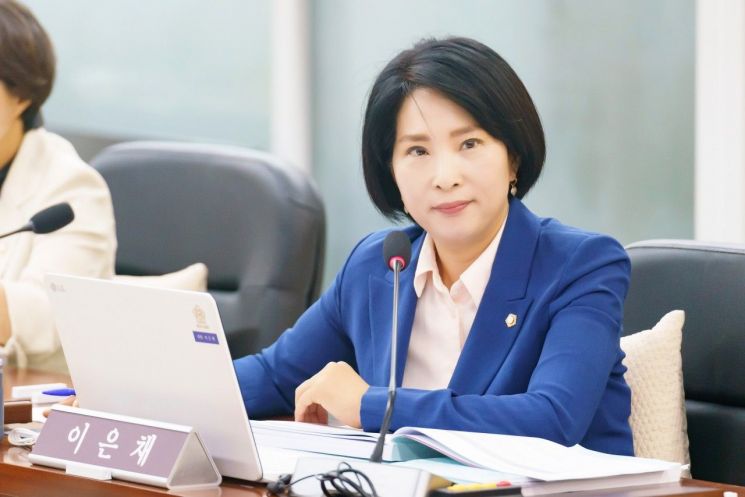 Gwangju City Council member Lee Eunchae is urging effective administrative improvements by continuing sharp inquiries into various city administration issues such as entrusted projects, pledge fulfillment, digital twin, and welfare during the 317th regular administrative audit on the 23rd. Provided by Gyeonggi Gwangju City Council
Lee emphasized, "Although a large budget is allocated to public entrusted projects every year, certain audits have revealed deficiencies in some projects," and stressed the need for regular audits of all entrusted projects, as well as thorough monitoring of follow-up actions.
She also pointed out that when granting permits for new residential-commercial complex buildings promoted by Gwangju City, active administrative intervention is required from the design stage, such as installing meters to prevent disputes.
Additionally, Lee proposed that for the successful implementation of the digital twin project, the city should conduct additional benchmarking focused on leading cases such as Seoul Sangam and Incheon, rather than nearby failed cases, and establish strategies through collaboration with research organizations. She stated, "It is necessary to carefully establish a direction for building a digital twin that suits the conditions of Gwangju City."
Regarding pledge fulfillment, Lee strongly demanded, "There are issues with the accuracy of pledge management, such as some unstarted projects being marked as completed. The city must clearly distinguish between procedural completion and actual completion, and manage pledges in a way that is understandable to both citizens and the council."
In the welfare sector, Lee mentioned the limitations in identifying those in welfare blind spots and pointed out, "Active identification and public-private cooperation are needed for those not detected by the current system, such as socially withdrawn individuals or families of people with developmental disabilities." She also raised the urgency of establishing a statistical foundation to identify children unable to participate in special activities at daycare centers and to develop support measures for them.
Lee also addressed the issue of operational cost disparities between the Deonurim Platform and Changupnuri, stating, "Continuous leasing of private buildings is inefficient," and suggested that relocation to a Gwangju City-owned building should be considered. She also urged the development of effective programs through interdepartmental cooperation, especially since the project budget has been insufficient since the designation of the Lifelong Learning Special Zone.
Regarding carbon neutrality policy, Lee emphasized, "The Climate and Carbon Division should serve as the control tower for related projects, and all departments must cooperate to achieve the goals." In particular, she strongly called for the active utilization of instructor resources, securing budgets, and establishing promotional strategies to strengthen environmental education for youth and children.
Lee pointed out specific cases of administrative shortcomings in various areas such as urban planning, education, welfare, and safety, and stated, "The achievements of administration must be proven by what citizens actually feel. We must restore public trust through substantial improvements, not just formal achievements."
© The Asia Business Daily(www.asiae.co.kr). All rights reserved.












