Mandatory Youth Participation in Committees and Proposal for Youth Autonomous Budget System
City: "A Nationwide Issue... Joint Response with the Central Government Needed"
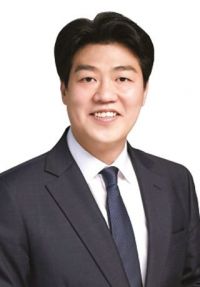 Soohun Kang, Gwangju City Councilor.
There has been a call for practical measures to address the outflow of young people from Gwangju.
Soohun Kang, a member of the Gwangju City Council (Democratic Party, Seo-gu 1), emphasized the need for effective youth participation policies during the “five-minute free speech” at the first plenary session of the 333rd extraordinary meeting held on June 23, stating, “The collapse of Gwangju’s 1.4 million population and the outflow of young people is ‘Gwangju’s quietest disaster.’”
Kang expressed concern, saying, “According to the Ministry of the Interior and Safety’s resident registration population statistics as of the end of May, Gwangju’s population has dropped to 1,399,980, falling below the 1.4 million mark.”
He further pointed out, “Last year, more than 65% of Gwangju’s net outflow population was young people,” adding, “Due to the outflow of youth, Gwangju’s growth engine is facing a serious crisis.”
Accordingly, Kang proposed to ▲ make it mandatory for youth to account for at least 30% of appointments to various committees, and ▲ introduce a youth autonomous budget system in which young people directly participate in budget formulation and policy design.
Kang also stated, “It is time to shift from policies for young people to policies created together with young people,” and added, “A single step for youth will become an important footprint that determines the future of Gwangju.”
In response, a Gwangju City official said, “The youth population in Gwangju stands at approximately 369,000, accounting for 26.2% of the total population. The lower the age group, the higher the tendency for migration. This is mainly due to moves for university admission, employment, and independence in the Seoul metropolitan area.” The official emphasized, “Population decline is a common issue among local metropolitan cities, caused by low birth rates and concentration in the Seoul metropolitan area, so a joint response with the central government is necessary.”
The official continued, “Gwangju City is implementing youth policies across 96 projects in 28 departments, with a total budget of 334.6 billion won. This year, we are focusing on improving the conditions for youth to settle in the city, such as strengthening employment linkage in the Work Experience Dream Project, increasing job-seeking activity allowances to 3 million won, and expanding the Gwangju Job Savings Program by 300 participants in the areas of employment, housing, and welfare. We will continue to strive to enhance the effectiveness of youth policies through youth networks and other means.”
© The Asia Business Daily(www.asiae.co.kr). All rights reserved.










