Gwangjin, Mapo, and Seongdong Jump 0.4%
Seoul's May Transactions Surpass 7,000
Five Major Metropolitan Cities Down 0.05% from Previous Week
Apartment prices in Seoul rose by 0.29% compared to the previous week, widening the increase and driving up housing prices in the greater metropolitan area. This trend is believed to be fueled by a surge in last-minute home buying demand, as the implementation of the third phase of the stress-based Debt Service Ratio (DSR) next month is expected to reduce loan limits.
According to Real Estate R114 on June 22, nationwide apartment sales prices increased by 0.10% compared to the previous week. In Seoul, prices rose by 0.29%, expanding from the previous week’s 0.22% increase.
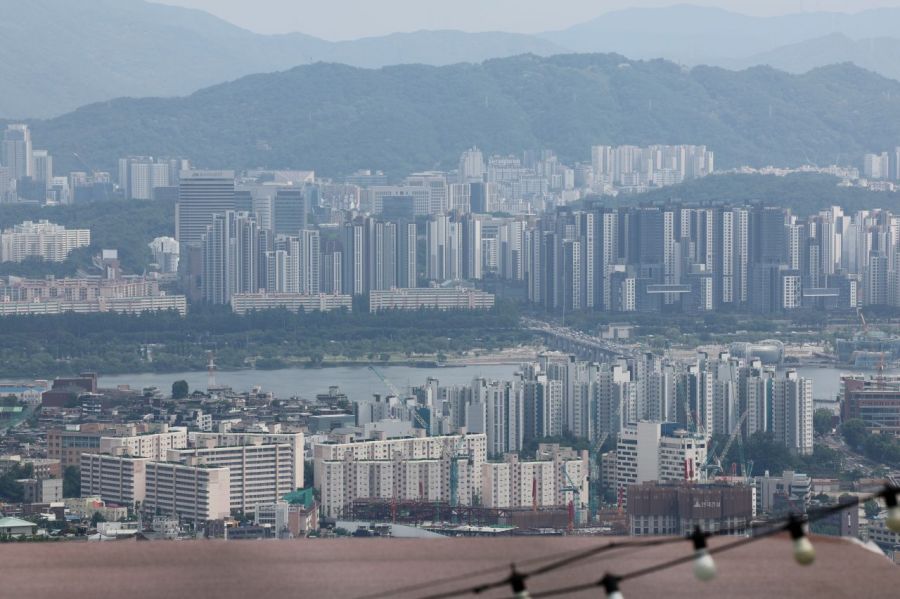
The greater metropolitan area also saw a 0.15% rise, influenced by Seoul, but apartment prices in Gyeonggi and Incheon fell by 0.02%. In contrast to Seoul, the five major metropolitan cities and other provincial regions experienced declines of 0.05% and 0.06%, respectively.
Nationwide, downward trends were more prevalent. Out of 17 cities and provinces, only 4 saw increases, while 13 recorded decreases in apartment sales prices compared to the previous week. The declines were particularly notable in South Chungcheong (-0.12%) and Jeju (-0.12%). Last month, the nationwide monthly rate of change reached 0.63%, up from 0.45% in April.
Meanwhile, nationwide apartment jeonse (long-term deposit lease) prices showed a modest upward trend, rising by 0.04%. In Seoul, prices increased by 0.05%, while Gyeonggi and Incheon (0.03%), the five major metropolitan cities (0.03%), and other provincial regions (0.02%) all recorded gains. Of the 17 cities and provinces nationwide, 12 saw increases, 1 remained unchanged, and 4 experienced declines, with rising regions in the majority.
There is analysis that the sales market is overheating, as concerns grow that market regulations could expand in key areas alongside the third phase of the stress-based DSR. According to the Seoul Real Estate Information Plaza, the number of apartment sales transactions in Seoul last month was 7,569, indicating a rebound in transaction volume after a slump following the March surge (when transactions surpassed 10,000).
Yoon Jihae, head of the Real Estate R114 Research Lab, stated, "Significant weekly price increases of 0.40% to 0.50% have been observed in preferred areas that remain deregulated, such as Gwangjin, Dongjak, Mapo, Gangdong, and Seongdong in Seoul. While expanding supply should be considered as a way to control demand, large-scale supply increases inevitably require regulatory easing as well. This means the government faces a dilemma in trying to achieve both price stability and supply expansion at the same time."
© The Asia Business Daily(www.asiae.co.kr). All rights reserved.












