NATO Summit in The Hague, Netherlands, June 24-25
President Lee Weighs Attendance Until the Last Minute
Uncertainties Abound: Tariff Negotiations, Defense Spending Demands, Israel-Iran Conflict, Russia-Ukraine War
New Administration Must Choose a Sophisticated Diplomatic Strategy Reflecting the International Situation
The North Atlantic Treaty Organization (NATO) summit is just around the corner. Scheduled to take place in The Hague, Netherlands, from June 24 to 25 (local time), this summit comes at a time when the international security landscape is in turmoil due to the protracted war in Ukraine and the escalating military confrontation between Israel and Iran. In addition, as seen at the recent Group of Seven (G7) summit, U.S. President Donald Trump has become a variable that increases uncertainty in both bilateral and multilateral diplomacy. Against this backdrop, the Lee Jaemyung administration, which has declared a policy of "national interest and pragmatic diplomacy," faces the challenge of devising a detailed strategy to assess the practical benefits of attending the NATO summit.
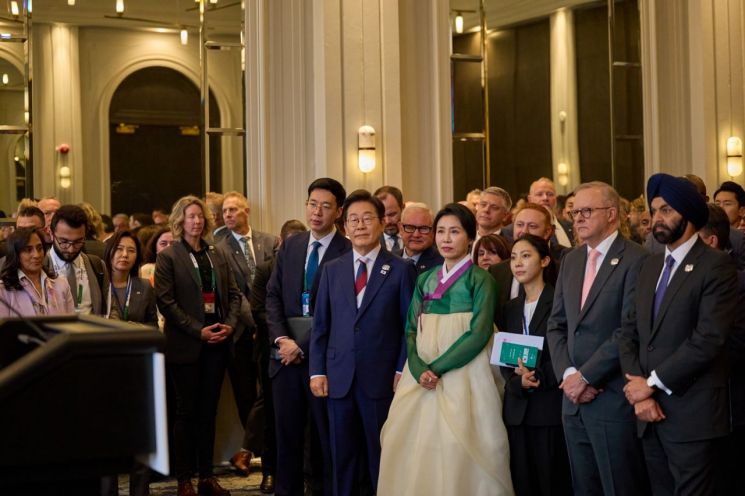
The NATO summit was originally a forum for the 32 European and North American allied countries to discuss collective security, but in recent years, its agenda has expanded globally. Since Russia’s invasion of Ukraine, the allies have been pursuing the largest military buildup since the Cold War, and at this summit, they are likely to agree on increasing defense spending and strengthening military capabilities. Under U.S. pressure, NATO member states are setting new goals to enhance their military capabilities, and are even discussing a significant increase in the defense spending target from the current 2% of gross domestic product (GDP) to as much as 5%.
Alongside the war in Ukraine, the new conflict in the Middle East is a key issue heating up the summit. As Israel has recently shown signs of direct confrontation with Iran and the situation in the Middle East has deteriorated, differences of opinion within NATO have become apparent. French President Emmanuel Macron has publicly criticized Israel, stating, "We do not want a nuclear-armed Iran, but attempting a military regime change would be a grave mistake." In contrast, German Chancellor Friedrich Merz defended Israel, saying, "Israel is doing the 'dirty work' on behalf of all of us." Such divergent views among member states are clear.
Rapidly Changing International Situation, Growing Pressure on South Korea
President Lee has been reviewing the pros and cons of attending the NATO summit from various angles. The new administration is emphasizing "pragmatic diplomacy centered on national interest," but opinions differ on whether participation in multilateral forums truly serves practical interests. In fact, within the presidential office, there have been debates between those advocating caution?questioning the need to attend consecutive multilateral summits when pressing domestic issues remain unresolved, and warning against unnecessarily provoking China and Russia?and those supporting attendance, arguing that non-participation itself could be interpreted as a diplomatic message and become a burden. Attending the NATO summit aligns with the previous conservative administration’s "value alliance diplomacy," raising concerns that an unprepared approach could undermine the new pragmatic direction. On the other hand, some argue that participation is desirable in order to send a consistent message of solidarity with the United States and other Western allies on security issues.
The intensifying military conflict between Israel and Iran is an indirect source of pressure not only for NATO but also for South Korean diplomacy. If the South Korean and U.S. leaders meet at the NATO summit, U.S. demands regarding the Israel-Iran conflict could become a burden for South Korea. There is already speculation that the United States, which strongly supports Israel, may request South Korea, as an ally, to make a similar statement of support, or even pressure it for military assistance.
The divisions within the NATO alliance are also a concern for South Korea. With member states split over the Middle East situation, it will not be easy for South Korea to maintain a balanced position without leaning to either side. If handled poorly, South Korea could fail to satisfy either side and face diplomatic misunderstandings, while siding with one could jeopardize relations with the other.

Strategic Gains and Losses Depending on Attendance... Another Test for Pragmatic Diplomacy
There are clear practical benefits that South Korea could gain by attending the NATO summit. First is the opportunity to export defense industry products. Since Russia’s invasion, European countries such as Poland, feeling heightened security threats, have shown great interest in so-called "K-defense" by importing large quantities of South Korean tanks, self-propelled artillery, missiles, and other weapons. The NATO summit could serve as an excellent platform for economic diplomacy for South Korean defense companies.
It would also provide another opportunity for key bilateral diplomacy, such as a South Korea-U.S. summit. If a meeting between the South Korean and U.S. leaders, previously canceled, is realized on the sidelines of the NATO summit, it would allow the two countries to coordinate on core issues such as tariff negotiations and responses to North Korea’s nuclear threat. During the G7 summit, President Lee emphasized the importance of "creating a trade environment that is not disadvantageous compared to other countries," and the summit could open the door for such discussions. Additionally, mere participation would place South Korea at the center of the global diplomatic network. Through a series of meetings, the South Korean leader could explain South Korea’s positions and roles on international issues to other countries, garner support, and discuss multilateral cooperation with middle-power nations that share common interests.
The link to the Indo-Pacific strategy is also noteworthy. The Indo-Pacific strategy, launched under the Joe Biden administration, aimed to strengthen checks on China through cooperation among liberal democracies. Even if President Trump’s administration is less enthusiastic about multilateral cooperation, the trend of NATO and Asian partners pursuing solidarity continues. South Korea’s participation in the NATO summit signifies its role as part of the Europe-Indo-Pacific security network, maintaining continuity in sharing norms and security cooperation. This can help South Korea secure a greater voice in multilateral security cooperation networks beyond the South Korea-U.S. alliance, expanding the horizons of alliance diplomacy.
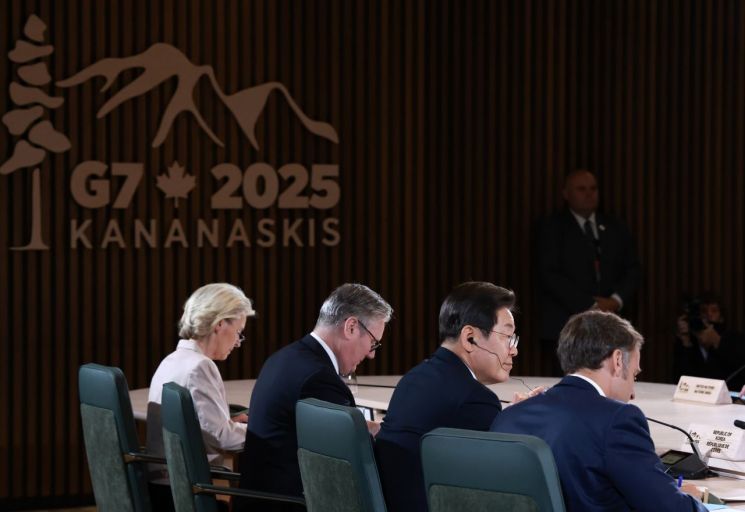
There are also benefits to be gained if South Korea does not attend the NATO summit. It could avoid unnecessary friction with China and Russia, leaving room for future improvement in relations, and domestically, it could claim the legitimacy of "pursuing balanced diplomacy." Conversely, South Korea’s attendance itself would reassure its allies. The mere presence of the South Korean leader at the NATO summit would send a positive signal that South Korea continues to participate in the liberal alliance. However, even in this case, the South Korean government must maintain a defensive and principled stance to avoid excessively provoking China and Russia.
President Lee now faces a diplomatic decision point: maximizing national interest while bridging divisions within the alliance and avoiding unnecessary conflicts with neighboring countries around the Korean Peninsula.
© The Asia Business Daily(www.asiae.co.kr). All rights reserved.














