Recent Leak of 191 Liters of Sulfuric Acid at Hanbit Unit 2
Fires and Counterfeit Parts Controversy in the Past Two Months
Voids and Output Surges Repeated Since 2010
Most Local Residents Learn of Accidents After the Fact
Concerns Grow Over Proposed Extension for Units 1 and 2
Local Residents and Civic Groups Demand Immediate Halt
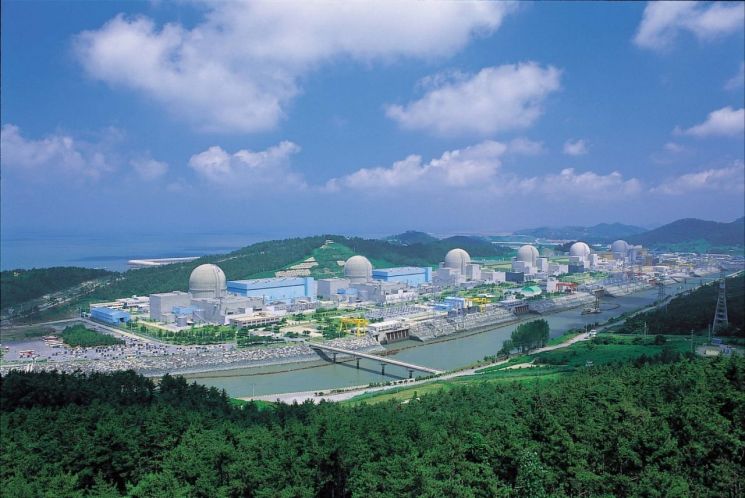
Recently, another safety incident occurred at the Hanbit Nuclear Power Plant in Yeonggwang, South Jeolla Province (which operates a total of six reactors), with a sulfuric acid leak sparking growing anxiety. The patience of local residents is reaching its limit due to recurring nuclear power plant-related accidents that erupt just as they are about to be forgotten. There is a strong wave of public opposition to the proposed extension of the operational lifespan for Units 1 and 2, which are nearing the end of their design life.
According to Yeonggwang County, Hanbit Nuclear Power Plant, and the South Jeolla Fire Headquarters on June 21, a report was received at 8:32 p.m. on June 14 stating that "sulfuric acid has leaked inside Hanbit Nuclear Power Plant."
In response to the report, the fire authorities dispatched 11 pieces of equipment and 17 firefighters. They confirmed that 191 liters of sulfuric acid had leaked from the pump connection in the sulfuric acid storage tank of Unit 2 at the plant.
The fire authorities immediately shut off the valve and installed absorbent mats to contain the leak. The leaked sulfuric acid was then collected in dedicated containers with a capacity of 20 liters each.
Sulfuric acid, if inhaled, can cause coughing, breathing difficulties, pulmonary edema, convulsions, and low blood pressure, which can potentially lead to death. If it comes into contact with water, a chemical reaction generates intense heat, which can cause a fire.
Fortunately, thanks to the swift response, there were no officially reported casualties, but it was a moment that could have escalated into a major accident.
This is not the first accident at Hanbit Nuclear Power Plant. Just over a month ago, at 10:41 p.m. on May 9, a fire broke out in the underground air purification facility of the turbine building of Unit 5. Although a plant employee managed to extinguish the fire using a fire extinguisher, the incident shocked the local community.
In April, there was also a controversy over the supply of "fake bearings." An investigation revealed that 92 bearings, which are key components of nuclear power plant equipment, had been supplied as counterfeit products disguised as genuine items.
Looking further back, the situation becomes even more serious.
In May 2019, during a test operation of Unit 1, there was an incident where a sudden surge in output caused by improper control rod operation was left unattended for as long as 12 hours. In addition, more than 140 voids (holes) were found in the containment wall (which shields against radiation) of Hanbit Unit 4. A similar situation had occurred at Hanbit Unit 3 in 2014, and it was repeated in just over four years.
The problem is that the response capabilities of the relevant authorities to such incidents are significantly lacking.
In fact, it has been revealed that many of these incidents were not immediately reported to the local community or were only disclosed after a delay. While some argue that this is to avoid unnecessary anxiety, there is a growing demand for a more proactive notification system, especially for nuclear plant accidents that are directly linked to human life.
Residents of Yeonggwang perceive that the nuclear plant authorities are attempting to conceal incidents, resulting in considerable distrust.
In addition to the ongoing incidents and accidents, there is also intense opposition regarding whether to continue operating the aging reactors among the six currently in operation at Hanbit Nuclear Power Plant.
Officially, Units 1 through 4, including Unit 1 which began commercial operation in 1986, are over 30 years old and are already classified internationally as "end-of-life reactors." Furthermore, the design lifespan of Unit 1 will expire in December 2025, and that of Unit 2 in September 2026.
Nevertheless, Korea Hydro & Nuclear Power is reportedly seeking a 10-year extension of the lifespan for Hanbit Units 1 and 2, whose design life ends this year. The company has completed a radiological environmental impact assessment and held public hearings with residents, and has submitted an application for an operating license amendment to the Nuclear Safety and Security Commission. The commission will review the application over the next two years before deciding whether to grant the extension.
Although the final decision on continued operation has not yet been made, even the move to pursue an extension is reigniting anxiety among local residents.
Local environmental groups are also taking a clear stance in opposition.
"Nuclear-Free Gwangju-Jeonnam Action," a coalition including Gwangju Environmental Movement Union, recently released a statement asserting that "the decision to extend the lifespan of aging nuclear reactors must be reconsidered."
A resident of the Yeonggwang area commented, "Every time a safety issue arises at Hanbit Nuclear Power Plant, promises are made to prevent recurrence, but they have never been kept. Residents' trust is gradually eroding. Once the nuclear plant operator loses this trust, no matter how advanced the technology or equipment, the anxiety will not be resolved. The authorities must engage in thorough self-reflection."
© The Asia Business Daily(www.asiae.co.kr). All rights reserved.












