U.S. Retail Sales Down 0.9% in May
April Also Revised Down to -0.1%
Consumer Spending Shrinks Despite Improved Sentiment
Last month, U.S. retail sales saw an unexpectedly sharp contraction, marking two consecutive months of decline for the first time in a year and a half. After households increased spending on items such as automobiles ahead of the full implementation of tariffs, they have now closed their wallets again amid ongoing uncertainty over trade policy. This suggests that a contraction in consumer spending, which supports the U.S. economy, is becoming a reality.
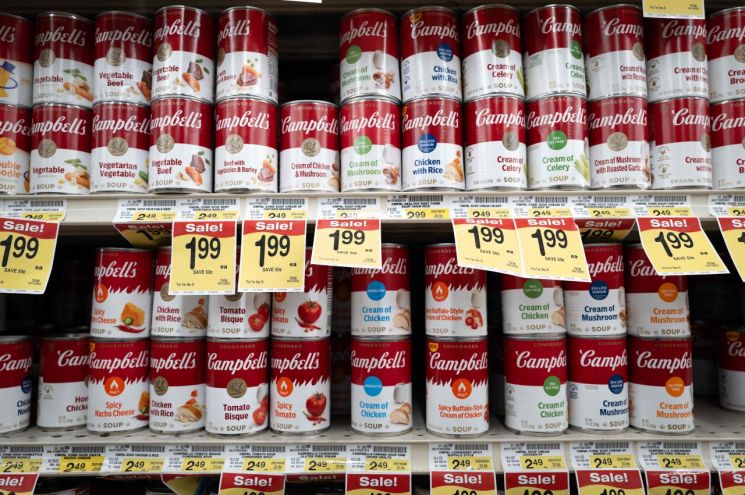
According to the U.S. Department of Commerce on June 17 (local time), retail sales in May 2025 totaled $715.4 billion, down 0.9% from the previous month.
According to Dow Jones experts, retail sales last month were expected to fall by 0.6%, but the actual decline was steeper than forecast. Retail sales for April were also revised downward, from an initial 0.1% increase to a 0.1% decrease. This marks the first time retail sales have declined for two consecutive months since the end of 2023, indicating that consumers are once again cutting back on spending.
Retail sales excluding automobiles fell by 0.3%, significantly underperforming the market expectation of a 0.1% increase.
Out of the 13 retail sales categories, seven showed declines. Sales decreased at motor vehicle and parts dealers (-3.5%), building materials and garden equipment stores (-2.7%), gasoline stations (-2.0%), food services and drinking places (-0.9%), food and beverage stores (-0.7%), electronics stores (-0.6%), and health and personal care stores (-0.1%). In contrast, spending increased at general merchandise stores (2.9%), sporting goods and bookstores (1.3%), and furniture and home improvement stores (1.2%).
Core retail sales (the control group), which exclude highly volatile sectors, increased by 0.4% from the previous month. Core retail sales are closely watched by experts as they are reflected in the calculation of Gross Domestic Product (GDP) and exclude sales at food services, automobile dealers, building materials stores, and gasoline stations.
This decline in retail sales indicates that consumers, who had preemptively increased purchases of items like automobiles ahead of tariff implementation, are now cutting back on spending again. Although the impact of tariffs on U.S. prices remains limited for now, consumer sentiment continues to be pressured as household finances have already deteriorated due to accumulated inflation and high interest rates.
Heather Long, chief economist at Navy Federal Credit Union, explained, "Americans purchased cars in March before tariffs were imposed, and in May, they did not visit auto dealerships," adding, "Households are becoming more cautious with their spending due to concerns about rising prices."
The retail sales data released on this day contrasts with recent survey results indicating an improvement in consumer sentiment. On June 13, the University of Michigan reported that its consumer sentiment index for June rose by 8.3 points from the previous month to 60.5. This figure was significantly higher than the forecast of 54.0 and was attributed to a psychological easing among consumers as the tariff war between the U.S. and China entered a truce phase. However, the decline in retail sales last month suggests that uncertainty over trade policy and concerns about an economic slowdown are still weighing on consumer spending.
© The Asia Business Daily(www.asiae.co.kr). All rights reserved.











