The Wall Street Journal (WSJ) reported on June 16 (local time) that tensions between OpenAI, the developer of ChatGPT, and Microsoft (MS) over their artificial intelligence (AI) partnership have reached a peak.
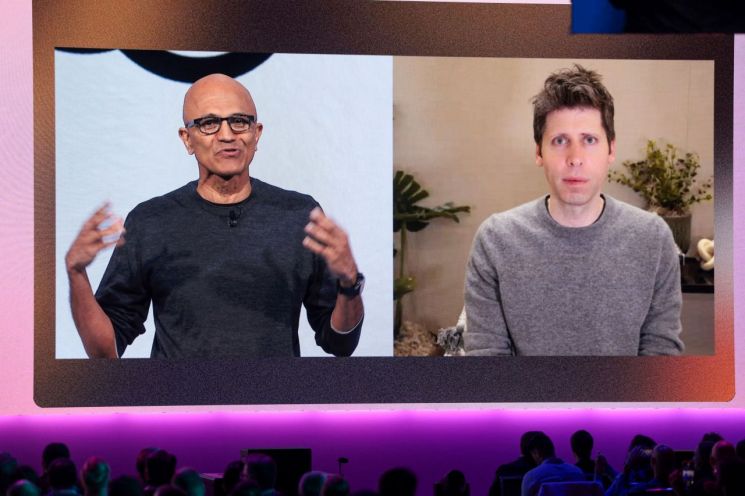
OpenAI and MS have been leading the AI boom since forming a partnership in 2019. In this process, MS invested $13 billion in OpenAI and currently holds a 49% stake. However, according to WSJ, OpenAI claims that MS is exercising excessive control over its AI products and computing resources. OpenAI wants to ease this control and obtain MS approval for its transition from a non-profit structure to a for-profit company, but negotiations are reportedly facing difficulties. Additionally, sources say that in recent weeks, OpenAI executives have discussed, as a 'last resort,' the possibility of reporting MS to regulatory authorities for anti-competitive behavior.
MS secured access to OpenAI's technology through massive early investments, but as the two companies now compete in several areas, it is becoming increasingly difficult to find points of cooperation. Currently, the two companies are also clashing over the handling of intellectual property (IP) from Windsurf, a coding startup acquired by OpenAI. Contractually, MS has access to all of OpenAI's IP, but OpenAI does not want Windsurf's technology to be transferred to MS. This is because MS's AI coding tool, GitHub Copilot, is in direct competition with OpenAI's technology.
Furthermore, MS is demanding a larger equity stake if OpenAI transitions to a public benefit corporation, but OpenAI is reportedly reluctant. If OpenAI does not complete its transition to a public benefit corporation by the end of the year, it risks losing $20 billion of the investment it has raised so far, as this was a condition for the funding.
Under the current agreement, MS has the exclusive right to sell OpenAI's AI tools through its Azure cloud service and has priority access to OpenAI's technology. MS is also OpenAI's sole computing partner, but last year, OpenAI was allowed to pursue its own data center project, Stargate.
As the two companies compete in various fields, including chatbots and enterprise AI tools, signs of strain in their partnership have emerged. Last year, MS also hired a large number of co-founders and employees from Inflection AI, a competitor of OpenAI.
According to WSJ, OpenAI is seeking to renegotiate its existing contract terms with MS to collaborate with other cloud service providers, sell its technology to more customers, and secure additional computing resources. Meanwhile, MS wants to maintain access to OpenAI's technology even after OpenAI declares it has achieved artificial general intelligence (AGI) at a human level.
© The Asia Business Daily(www.asiae.co.kr). All rights reserved.











