Korea Aerospace Administration Launches 'K-Drone Airframe Supply Chain Initiative'
Aiming for Self-Reliance in Core Technologies and Global Market Entry
A strategy for drone development targeting global demand is being established, along with efforts to achieve self-reliance in the industrial ecosystem by producing airframes and core components domestically.
On June 17, the Korea Aerospace Administration announced the official launch of its strategic initiative for the advancement of the Korean drone industry by holding the 'K-Drone Airframe Supply Chain Initiative Launch Ceremony.'
The 'K-Drone Airframe Supply Chain Initiative' is a comprehensive government policy aimed at addressing the structural issues faced by the domestic drone industry, including reliance on foreign airframes and core components, supply chain vulnerabilities, and the lack of technological leadership. The initiative seeks to build an autonomous and competitive drone ecosystem.
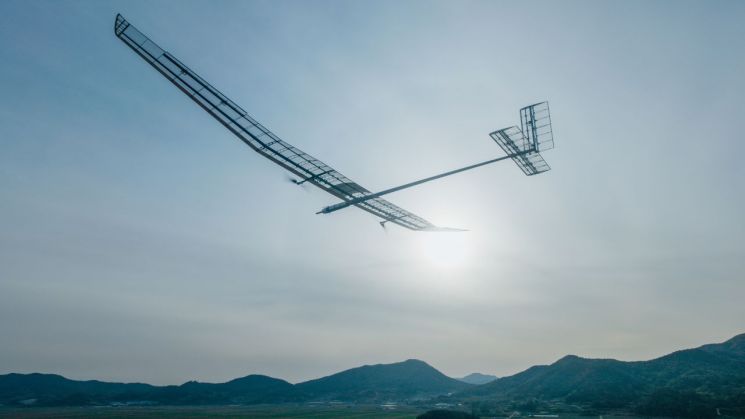 Flight test of EAV-4 by Korea Aerospace Research Institute. Not directly related to the article content. Courtesy of Korea Aerospace Research Institute
Drones, which require the integration of advanced technologies such as artificial intelligence (AI), semiconductors, and avionics, are emerging as essential assets for future security and industry. They are both strategic weapons and central to high value-added industries. However, the domestic drone market remains highly dependent on foreign products, making it urgent to secure technological sovereignty and internalize the industrial structure.
In response, the Korea Aerospace Administration will implement the initiative's core strategic tasks, including developing a technology and policy roadmap for entering the global market, achieving self-reliance in the industrial ecosystem through domestic production of airframes and core components, strengthening inter-ministerial collaboration, and fostering an innovative ecosystem for intelligent drone technologies based on AI and next-generation semiconductors.
Through these efforts, the domestic drone industry is expected to move away from dependence on foreign products, establish a foundation for self-reliance in core technologies, and build a stable and resilient supply chain system. Public-private cooperation is also expected to enhance both technological capabilities and production capacity.
In particular, by integrating advanced technologies such as AI and next-generation semiconductors, the industry will be able to move beyond its traditional focus on airframe hardware and establish a foundation to lead an advanced ecosystem for intelligent drone technologies. Through these changes, the Korea Aerospace Administration aims to gradually strengthen technological competitiveness in the global market.
John Lee, Director of the Mission Headquarters at the Korea Aerospace Administration, stated, "The K-Drone Initiative is more than just technology development; it is the starting point for government-wide cooperation to achieve self-reliance in national strategic technologies, strengthen supply chain resilience, and secure global competitiveness." He added, "We will systematically organize implementation strategies for each key task and sequentially carry out concrete execution procedures, including planning for preliminary feasibility studies to support these efforts."
© The Asia Business Daily(www.asiae.co.kr). All rights reserved.












