Excavation of Tomb Located 2 Kilometers from Tang Chang'an
Three Generations of Diplomacy, from the Grandfather?Cousin of the Silla King?to the Grandson
Academic Community: "An Important Record of Silla-Tang Relations"
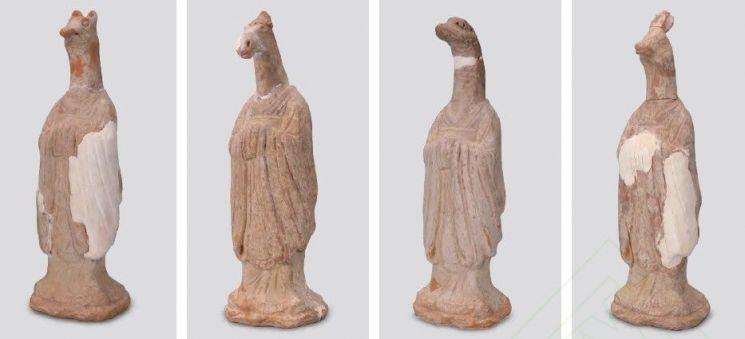 Some of the twelve zodiac animal statues excavated from the tomb of Kim Young, a noble from Silla. Photo by Professor Kim Youngkwan, Yonhap News.
The tomb of a Silla royal who stayed in China's Tang Dynasty has been identified for the first time through an archaeological excavation. Estimated to be around 1,200 years old, the tomb is of exceptionally high historical value, as the epitaph recording the deceased's name and status has been preserved intact.
On June 16, Yonhap News reported, "The Shaanxi Provincial Institute of Archaeology in China recently released a report summarizing the excavation of the 'M15' tomb in Yanta District, Xi'an." According to the report, the tomb was located about 2 kilometers north of Chang'an (the former name of Xi'an), the capital of the Tang Dynasty, and had previously been damaged by grave robbers. However, during the investigation conducted in June 2022, researchers newly identified a stone epitaph as well as more than 80 burial items.
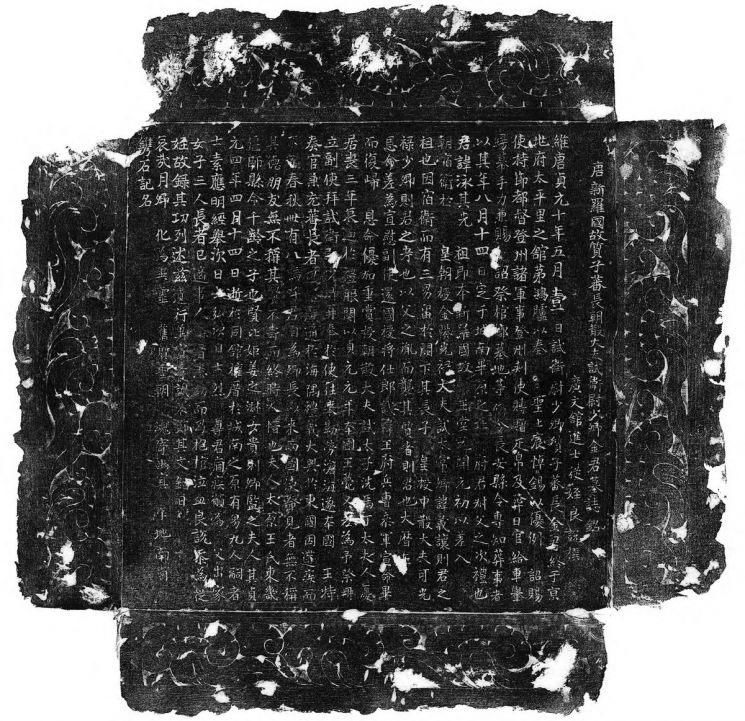 Rubbing of the tombstone lid stone excavated from the tomb of Kim Young, a nobleman from Silla. Photo by Professor Kim Youngkwan, Yonhap News.
Based on the artifacts and the inscriptions on the epitaph, the institute determined that the tomb belonged to Kim Young (金泳), a "Gilja" (質子) from Silla who was sent to the Tang Dynasty. A Gilja refers to the child of a monarch or a powerful official sent to another country for diplomatic purposes.
This is the first time that the tomb of a Silla royal has been confirmed through an archaeological excavation in China. The institute explained, "The inscription on the epitaph has made it clear who the tomb's owner is," adding, "As the first case to be archaeologically excavated, it is of great value."
The epitaph recording the life of the tomb's owner was found inside the entrance to the burial chamber. The main stone, which contains detailed information, is inscribed with a total of 557 characters. The epitaph measures approximately 38 centimeters in both width and height, forming a nearly square shape, and consists of two parts: a lid stone and a main stone, which were found joined together.
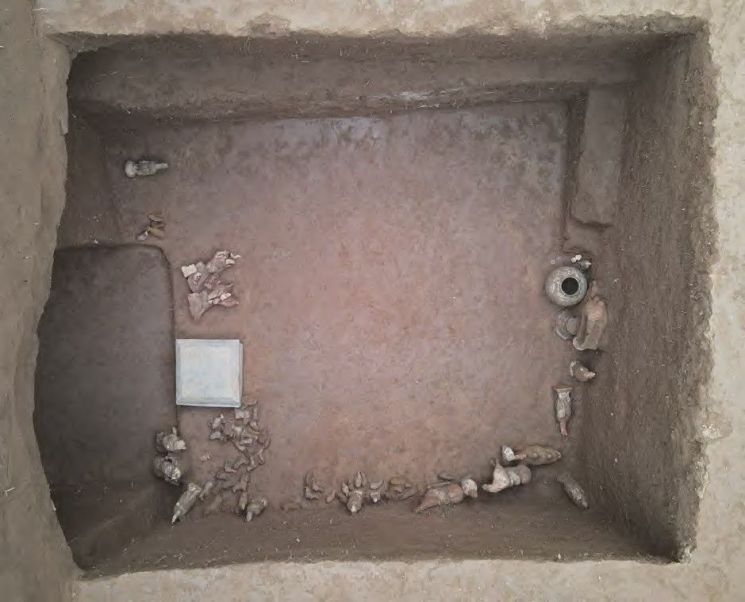 Interior view of the tomb of Gilja Kim Young from Silla. Photo by Professor Kim Youngkwan, Yonhap News.
The disclosure of the excavation findings has attracted significant attention from the academic community in Korea. Although epitaphs believed to belong to Silla individuals have been discovered in China in the past, this is the first time that a tomb and its occupant have been clearly identified together. As a result, scholars are paying particular attention to the family relationships recorded on the epitaph.
Kim Youngkwan, a professor in the Department of History at Chungbuk National University, said in an interview with Yonhap News, "The grandfather of Kim Young, the tomb's owner, is identified as Kim Euiyang, who came from Silla and served as an imperial guard for the emperor. He is recorded as a cousin of the Silla king." He added, "The tomb and epitaph of Kim Young will serve as an important testament to diplomatic relations and human exchanges between Silla and Tang in the eighth century."
© The Asia Business Daily(www.asiae.co.kr). All rights reserved.














