Concerns Rise Over Increasing Youth Smoking
Legal Reforms Needed to Regulate Synthetic Nicotine Like Traditional Tobacco
As the use of e-cigarettes among adolescents continues to rise, the National Assembly Research Service has proposed that synthetic nicotine, which currently falls into a regulatory blind spot, should be regulated as tobacco.
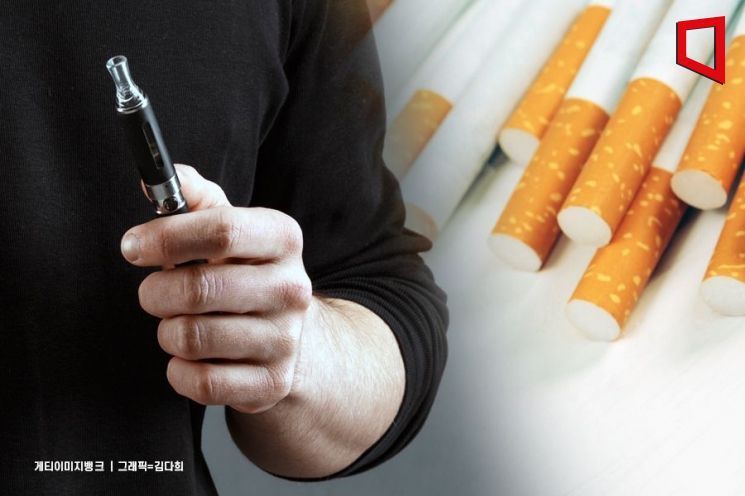
In a report published on June 11, the Research Service recommended expanding the definition of 'tobacco' under the Tobacco Business Act to block adolescents' access to e-cigarettes, and to ban online transactions of e-cigarettes.
Currently, the Tobacco Business Act defines tobacco only as products made from 'tobacco leaves,' meaning that only natural nicotine is regulated as tobacco. As a result, most liquid-type e-cigarettes containing synthetic nicotine are not classified as tobacco under the law. Consequently, most liquid e-cigarettes sold in Korea are not subject to tobacco taxes or surcharges, nor do they face regulatory restrictions such as bans on online sales.
The report suggested that the definition of 'tobacco' should be broadened to include any product manufactured using nicotine as a raw material, thereby enabling regulation of synthetic nicotine and prohibiting its online sale. The report also noted that in the United States, the United Kingdom, and the European Union, synthetic nicotine is included within the scope of regulation, and the addition of flavorings is banned as part of legislative efforts to block adolescent access to e-cigarettes.
Previously, several bills to expand the definition of tobacco and regulate synthetic nicotine were introduced in the National Assembly and discussed three times in the Economic and Fiscal Subcommittee of the Strategy and Finance Committee. However, these bills remain pending.
The Research Service pointed out that "as unmanned e-cigarette stores rapidly proliferate, social concerns about adolescent e-cigarette use are growing," and stated that "the indiscriminate spread of unmanned e-cigarette stores should be curbed by applying the automatic tobacco vending machine regulations under the National Health Promotion Act." The agency also added that "amendments to the Youth Protection Act could be considered, such as requiring unmanned stores to install adult authentication devices equipped with ID theft prevention technology."
Furthermore, the Research Service argued that when amending the Tobacco Business Act, it is also necessary to discuss revising the National Health Promotion Act to prohibit the addition of sweeteners or flavorings during the manufacturing process of synthetic nicotine products. The reason cited was that many adolescents begin smoking with flavored e-cigarettes and continue smoking because of their distinctive tastes and aromas.
Additionally, the report pointed out the need for government efforts to encourage stronger self-regulation by businesses, in order to minimize the exposure of tobacco products on online video platforms such as YouTube.
© The Asia Business Daily(www.asiae.co.kr). All rights reserved.