Japan Unveils "Basic Plan for Promoting Disaster Countermeasures"
Begins Preparations for "Nankai Mega Earthquake"
The Japanese government has begun developing measures to reduce casualties by up to 80% in preparation for the Nankai mega earthquake, which is feared to cause as many as 300,000 direct deaths.
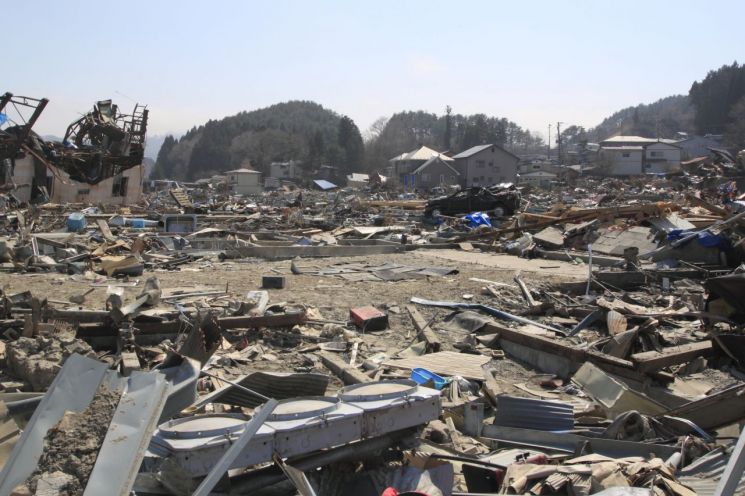 The Japanese government has established a disaster response plan to reduce casualties by up to 80% in preparation for the Nankai Trough megathrust earthquake, which is predicted to cause up to 300,000 deaths. The photo shows the scene during the Great East Japan Earthquake. Photo by Getty Images
According to the Yomiuri Shimbun on June 11, the Japanese government on this day unveiled its "Basic Plan for Promoting Disaster Countermeasures" to prepare for the Nankai mega earthquake, with the aim of reducing fatalities by up to 80% and halving the number of buildings that collapse or are destroyed. The government has set detailed goals for 134 key measures and plans to complete them within 10 years.
Key measures include increasing the maintenance rate of coastal levees from 42% in 2023 to 50% by 2030 and promoting the automation and remote control of levee openings. The seismic reinforcement rate for block walls at social welfare facilities at risk of collapse is also planned to rise from 20% in 2022 to 53% by 2030. The proportion of major facilities with completed seismic retrofitting will be expanded from 12% in 2023 to 32% by 2030. The plan also aims to raise the preparedness level of local governments so that living conditions in evacuation centers meet international standards (Sphere standards).
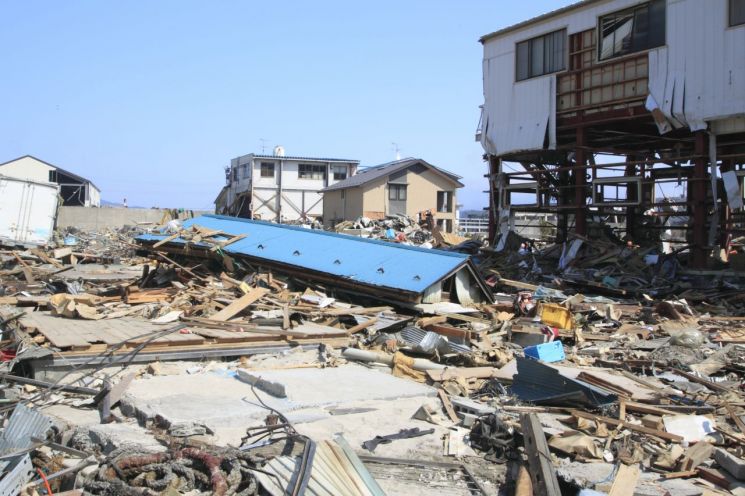 The Japanese government has established a disaster response plan to reduce casualties by up to 80% in preparation for the Nankai Trough megathrust earthquake, which is predicted to cause up to 300,000 deaths. The photo shows the scene during the Great East Japan Earthquake. Photo by Getty Images
The Nankai mega earthquake refers to a magnitude 8 to 9 superquake that could occur in the Nankai Trough region, stretching from the coast of Shizuoka Prefecture to the coast of Miyazaki Prefecture in Kyushu. The Nankai Trough is an undersea fault that extends about 800 kilometers from offshore Shizuoka to southern Kyushu. In this area, magnitude 8 to 9 major earthquakes have historically occurred every 100 to 150 years. The Japanese government estimates there is about an 80% probability of a major earthquake occurring in this region within the next 30 years.
According to a scenario released by the Japanese government in March, if the Nankai mega earthquake occurs, direct fatalities could reach up to 298,000, indirect fatalities 52,000, and injuries between 620,000 and 950,000. The number of evacuees is projected to reach up to 12.3 million, and the number of buildings that could collapse or be destroyed is estimated at 2.35 million. With 29 out of Japan's 47 prefectural governments potentially exposed to tsunami risk, anxiety is spreading online, with some expressing fears that "it could strike today." In some circles, related rumors are spreading rapidly. A notable example is the prophecy in the sequel to the Japanese manga "The Future I Saw," published in 1999, which states, "The real disaster will come in July 2025."
According to the Japan Society of Civil Engineers, the total estimated economic and asset damage from a Nankai Trough mega earthquake over the next 20 years would amount to 1,466 trillion yen (approximately 13,800 trillion won). This is 2.4 times Japan's gross domestic product (GDP) of 609 trillion yen last year. The Society of Civil Engineers predicts that recovery will take 22 years. Of the estimated damage, direct asset losses such as building destruction are calculated at 225 trillion yen, while indirect economic losses from disruptions to economic activity due to the destruction of roads and port facilities are estimated at 1,241 trillion yen.
© The Asia Business Daily(www.asiae.co.kr). All rights reserved.