Designated as the WHO Collaborating Center for Chronic Disease Surveillance
Expanding Role as a Leading Institution in International Health Cooperation
The Korea Disease Control and Prevention Agency (KDCA) announced on June 12 that it held a plaque unveiling ceremony to commemorate its designation as the World Health Organization (WHO) "Collaborating Center for Chronic Disease Surveillance and Big Data Utilization."
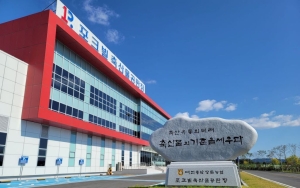
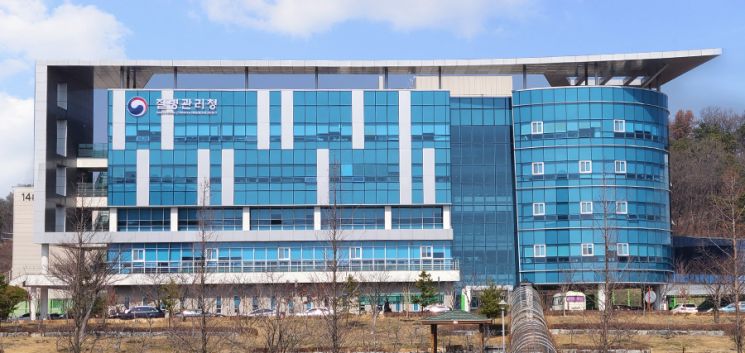 The exterior view of the Korea Disease Control and Prevention Agency located in Osong, Chungbuk. Korea Disease Control and Prevention Agency
A WHO Collaborating Center is a specialized institution designated by the WHO to carry out international health projects. In fields such as infectious diseases, chronic diseases, mental health, nutrition, nursing, maternal and child health, environmental health, occupational health, and medical technology, these centers participate in: ▲ strengthening health capacities at national and regional levels ▲ developing policies, providing technical support, and conducting training in line with WHO programs ▲ operating surveillance systems, collecting and analyzing data, and making evidence-based policy recommendations ▲ conducting international joint research and disseminating research outcomes ▲ and contributing to international standardization efforts for health-related technologies, terminology, and diagnostic criteria. Recently, such collaborations have expanded to include areas such as climate change, population aging, big data, and the use of artificial intelligence (AI) in health information.
To be designated as a Collaborating Center, the candidate institution must be evaluated by the WHO headquarters and regional offices based on technical needs, and must obtain the official consent of the institution's head and the government. Currently, approximately 800 WHO Collaborating Centers are operating in about 80 countries worldwide.
This is the first time a domestic institution has been designated as a WHO Collaborating Center in the field of early surveillance of chronic diseases. With this designation, the KDCA will now operate its third WHO Collaborating Center, following those in the fields of "antimicrobial resistance" (March 2021) and "pandemic preparedness and response" (September 2024).
Accordingly, the KDCA will collaborate with the WHO to: ▲ share expertise and experience in establishing and operating chronic disease surveillance systems with member countries, including those in the Western Pacific region ▲ provide technical support for the analysis and utilization of health big data ▲ and participate in a variety of activities and advisory roles, including joint research, workshops, meetings, and training.
At the plaque unveiling ceremony, Sandro Demaio, Director of the WHO Asia-Pacific Centre for Environment and Health, and Lee Jongku, Vice President of the National Academy of Medicine of Korea, delivered congratulatory remarks, expressing their hope that the KDCA will continue to grow as a leading player in the international community in the field of chronic diseases.
Ji Youngmi, Commissioner of the KDCA, stated, "The designation of this WHO Collaborating Center is a meaningful result that recognizes our agency's expertise and role not only in infectious diseases but also in the field of chronic diseases at the international level." She added, "We will continue to generate evidence necessary for developing strategies for the prevention and management of chronic diseases in response to changing health environments such as population aging and climate change, and we will do our utmost to fulfill our role as a leading institution in international health cooperation."
© The Asia Business Daily(www.asiae.co.kr). All rights reserved.