Trump: "Only Final Approval from Xi Jinping and Myself Remains"
Chinese Students Also Allowed to Enroll in U.S. Universities
Lutnick: "U.S. Tariff Rate on China to Remain at 55%"
WSJ: "China to Resume Rare Earth Exports to U.S. for Six Months"
On June 11 (local time), U.S. President Donald Trump announced in London, United Kingdom, that during trade negotiations with China, China agreed to supply rare earth elements to the United States, and the United States agreed to allow Chinese students to enroll in U.S. universities. President Trump mentioned a 55% tariff rate on Chinese imports to the United States. In relation to this, U.S. Secretary of Commerce Howard Lutnick explained that the current tariff level would not change further. It was reported that China would resume rare earth supplies to the United States for a limited six-month period.
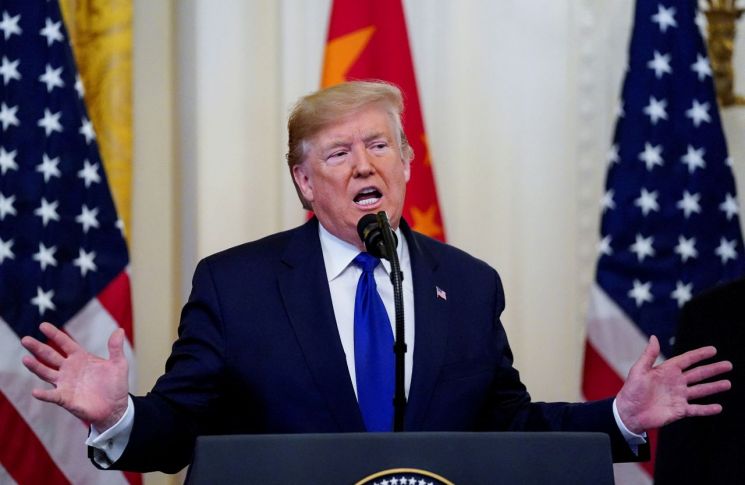
On the same day, President Trump posted on his self-created social networking service, Truth Social, stating, "The trade negotiations with China have been completed, and only the final approval from President Xi Jinping and myself remains."
This statement came after the United States and China, at the second round of high-level trade talks held in London the previous day, reached a principled agreement on the implementation plan for the U.S.-China trade agreement that had been reached last month in Geneva, Switzerland. The previous day, Secretary Lutnick had stated, "We have agreed on a framework for implementing the Geneva agreement."
President Trump explained, "China will preemptively supply permanent magnets and all necessary rare earth elements," and added, "We will allow Chinese students to attend U.S. universities."
However, the U.S. economic media outlet The Wall Street Journal (WSJ) reported that China would resume rare earth exports to the United States for only a six-month period. Citing sources, the outlet explained that this measure was intended for China to secure leverage in negotiations with the United States in preparation for potential future trade tensions.
President Trump also stated, "We are applying a total tariff of 55% on Chinese imports, and China is imposing a 10% tariff on U.S. imports," adding, "The relationship between the two countries is excellent."
The 55% tariff rate on Chinese imports mentioned by President Trump is a total figure. According to a White House official, this number is the sum of the additional 20% fentanyl tariff and 10% basic tariff imposed on China after the start of his second administration, totaling 30%, plus approximately 20% tariffs imposed on specific products.
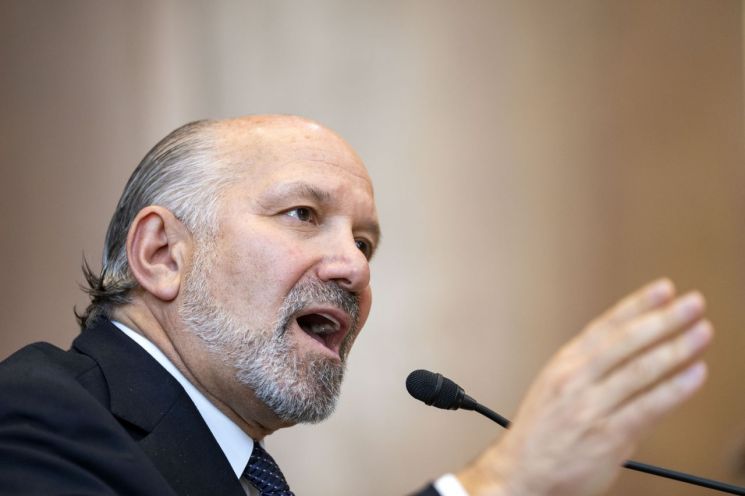
Secretary Lutnick stated that the tariff rate imposed by the United States on China would not move further from the current 55% level. In a CNBC interview that day, when asked whether the tariff rate on China would change again, he replied, "I can say that with certainty."
Secretary Lutnick assessed that the key achievement of the London negotiations was institutionalizing the Geneva truce. He explained that, unlike the Geneva agreement, China had resumed rare earth exports to the United States slowly, which prompted retaliatory measures from the United States, including restrictions on visa issuance for Chinese students enrolled at U.S. universities. Secretary Lutnick said, "We both felt displeased," and explained that last week's phone call between President Trump and President Xi "changed everything." He went on to express confidence, stating, "All applications for permanent magnets by U.S. companies will be approved by the stock market."
Previously, the two countries, after marathon negotiations that continued until the previous night, reached a consensus on resuming trade in key minerals such as rare earth elements and on implementing the agreements reached at last month's Geneva talks. At that time, the United States and China agreed to lower the tariff rates they had imposed on each other by 115 percentage points for 90 days, and China agreed to abolish certain non-tariff measures, such as the suspension of rare earth mineral and permanent magnet exports to the United States.
© The Asia Business Daily(www.asiae.co.kr). All rights reserved.













