The International Monetary Fund (IMF) announced on June 10 (local time) that it had sent a delegation to Syria for the first time in 16 years since 2009 to discuss support measures for reconstruction.
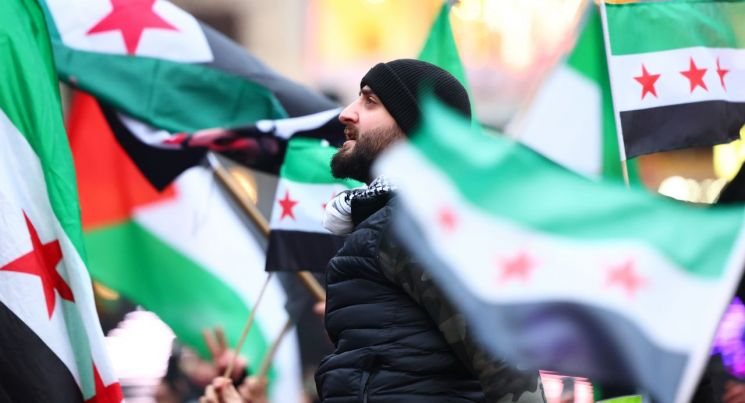 Syrians cheer at Stockholm City Station square in Sweden on the 8th (local time), as Syrian rebel forces declared victory after 13 years of civil war. Photo by Yonhap News
The delegation, led by IMF Deputy Managing Director Bo Li, visited Damascus, the capital of Syria, from June 1 to 5. Their mission included assessing the economic and financial situation, evaluating policy priorities, and establishing a roadmap to strengthen capacity for policy formulation and implementation.
The IMF reported that discussions with the Syrian transitional government covered the following topics: meeting spending needs for civil servant salaries, healthcare and education services, and support for vulnerable groups; modernizing the tax and customs systems and securing tax revenue; strengthening public financial management; adopting a monetary policy framework for the central bank; improving anti-money laundering systems and allowing reconnection to the international financial system; lifting regulations on private sector development; and improving the investment environment.
Regarding the Syrian civil war, which began in 2011, the IMF stated, "Syria has suffered tremendous hardship due to the conflict, and the size of its economy has shrunk significantly compared to before. Humanitarian aid and reconstruction support are urgently needed."
Regarding the transitional government established by the Islamic rebel group Hayat Tahrir al-Sham (HTS), which ousted the Bashar al-Assad dictatorship in December last year, the IMF assessed, "The authorities are committed to restoring economic growth and improving the standard of living for the people, and plan to pursue sound economic policies."
The IMF also emphasized its commitment to supporting Syria, adding, "We are developing a specific roadmap for the policy and capacity-building priorities of major economic ministries, including the Ministry of Finance, the central bank, and the statistics office."
© The Asia Business Daily(www.asiae.co.kr). All rights reserved.












