Children from Low-Income Families Have Less Than Half the Play Opportunities of Their Affluent Peers
Survey Conducted in Recognition of World Play Day
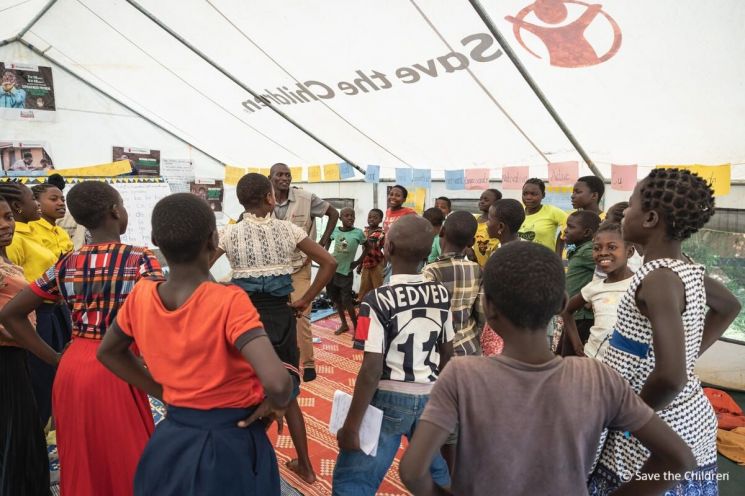 Children playing in a child-friendly space within the Uganda Changali refugee camp. Save the Children
It has been found that children from low-income families are more than twice as unlikely to have opportunities to play with their parents or guardians compared to their peers from affluent families.
On June 11, the international child rights NGO Save the Children stated, in recognition of the 2nd annual 'World Play Day,' that "there is a severe income gap in access to play opportunities, which are crucial for children's healthy development."
The organization analyzed survey results conducted by the United Nations across 88 countries and reported that "57% of children aged 3 to 4 from households in the lowest 20% income bracket did not experience at least four types of play or early learning activities with their parents or guardians over the past three days."
The list of early learning activities includes reading books, telling stories, singing, going out, playing together, naming objects, counting numbers, and drawing pictures. Among children from households in the top 20% income bracket, 29% had not engaged in these activities.
Save the Children expressed concern, stating, "Children from low-income families are being excluded from essential play experiences at an early age." The organization warned that such disparities can negatively affect children's emotional development, social skills, and learning abilities.
© The Asia Business Daily(www.asiae.co.kr). All rights reserved.











