Chairman Lee: "Resolving the Undervaluation of the Korean Stock Market Is Sufficient"
On Real Estate: "Consistent Announcements of Housing Supply Will Stabilize the Market"
Consensus on Separating Budget Authority from the Ministry of Economy and Finance and Investigative Authority from the Prosecutors' Office
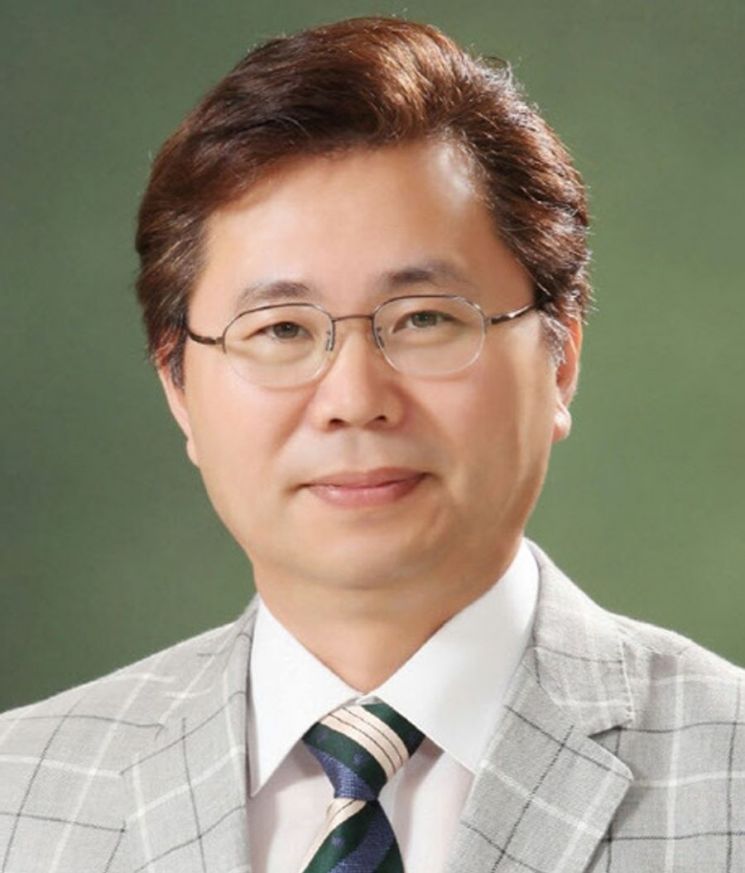
Lee Hanju, the head of the National Policy Planning Committee tasked with designing the policy roadmap for the Lee Jaemyung administration, identified economic growth and public livelihood as his top priorities on June 11. He assessed President Lee's pledges, such as achieving KOSPI 5000 and stabilizing housing prices, as attainable goals, and stated that promoting the issuance of local currency is necessary to revitalize the economy and improve people's livelihoods.
In an interview with MBC News Today, Lee Hanju responded to a question about the committee's priorities and objectives by saying, "What the government must do is wage a war for growth and public livelihood." He evaluated the current situation as one where economic conditions are worse than before the COVID-19 pandemic, with the country's growth potential eroded.
The National Policy Planning Committee will fulfill the role of a presidential transition team, which could not be formed due to the early election. Starting from June 12, the committee will spend 60 days setting the national policy agenda and budget for President Lee's five-year term. The official plaque-hanging ceremony will be held on June 16 at the Gwanghwamun office.
He also stressed the need for new growth engines. Lee Hanju said, "Until now, many countries, including ours, have focused on growth by simply increasing demand. While public livelihood is an immediate matter of daily survival, it cannot be sustainable without long-term support."
He continued, "For real growth, we need to go beyond construction or simple distribution and possess unique technologies that we can present to the global market. Furthermore, true growth requires that development occurs evenly nationwide and across all social strata. I believe that to become an advanced nation, we need a new approach to growth."
When the anchor pointed out the failures of real estate policies under the Roh Moo-hyun and Moon Jae-in administrations, Lee Hanju responded, "In the short term, since people are concentrated in Seoul and the metropolitan area, real estate issues can arise from this concentration. However, if the government consistently announces plans to 'steadily supply housing,' especially 'steadily supply public housing' and 'steadily provide land for private housing,' this alone can stabilize demand for real estate. If supply continues, I believe the real estate problem can be resolved."
Regarding the pledge to achieve KOSPI 5000, he identified the current undervaluation of stock prices relative to corporate assets as an issue caused by the 'Korea Discount,' which stems from security and stock market problems. He assessed that resolving these issues would make the goal achievable.
Lee Hanju stated, "There is a metric comparing stock prices to corporate assets (Price-to-Book Ratio, PBR). Normally, because stock prices are high, the ratio exceeds 1, but ours is currently 0.9. For most emerging markets, it's around 2, and for advanced economies, about 3. The issue is how to ensure that our undervalued market is properly evaluated."
He added, "Because of national security concerns, a certain discount is inevitable. More importantly, people need to feel confident about buying our stocks. If the stock market is unfair or disadvantages minority shareholders, it becomes uncomfortable to invest. Therefore, I believe that resolving stock market unfairness and disadvantages to shareholders will address much of the issue. If the PBR reaches even 2, achieving KOSPI 5000 is well within reach."
Regarding the local currency pledge, he explained, "It is a policy that encourages and promotes consumption in certain areas within a given period. The effects are clear in that respect. Moreover, the benefits do not disappear immediately after the policy ends; the positive impact lingers, greatly improving local businesses and traditional markets."
On government restructuring, he expressed agreement with separating the budget authority of the Ministry of Economy and Finance and the investigative authority of the Prosecutors' Office. However, when asked whether trade should be separated from the Ministry of Trade, Industry and Energy, he replied, "The economy is now a matter of national security. We have decided to expand and maintain the concept of economic security established by the previous administration. We must be able to respond to rapidly changing situations. Fixing any one area could actually be risky."
© The Asia Business Daily(www.asiae.co.kr). All rights reserved.












