Over 30% Since the 2023 Academic Year... Clear Upward Trend
Kim Moonsoo: "Need to Determine Correlation with Yoon Administration's Disruption of Admissions"
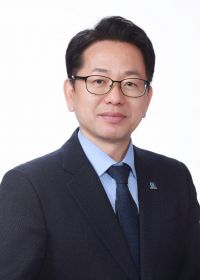 Moonsoo Kim, member of the Democratic Party of Korea.
The proportion of high school graduates taking the College Scholastic Ability Test (CSAT) has increased by 11.4 percentage points over the past 10 years.
According to an analysis by Moonsoo Kim, a member of the Democratic Party of Korea (representing Suncheon, Gwangyang, Gokseong, and Gurye-gap in South Jeolla Province), based on data submitted by the Korea Institute for Curriculum and Evaluation on "the number and proportion of current students and graduates taking the CSAT from the 2016 to 2025 academic years," the proportion of graduates taking the CSAT surged from 23.3% in the 2016 academic year to 34.7% in the 2025 academic year. This marks an increase of 11.4 percentage points over 10 years.
The number of graduates shows a V-shaped trend. Starting at 136,000 in the 2016 academic year, the number declined slightly, reaching a low of 125,000 in the 2021 academic year. It then rebounded, rising to 157,000 in the 2024 academic year and sharply increasing to 160,000 in the 2025 academic year, which was held last year.
Looking at the proportion, although it fluctuated, the overall trend was upward. In the 2016 CSAT, the proportion was 23.3%, meaning about 20 out of every 100 test-takers were graduates. By the 2023 academic year, this number exceeded 30, and the 2024 academic year recorded the largest increase. For the 2025 academic year, the proportion is estimated to be around 35 out of every 100 test-takers.
The 2023 CSAT, when the proportion of repeat test-takers (N-susaeng) surpassed 30%, coincided with the expansion of regular admissions at some universities in Seoul. In the 2024 academic year, former President Yoon Suk Yeol's remarks about eliminating "killer questions" just a few months before the CSAT created uncertainty in the admissions process. For the 2025 academic year, the number of available spots at medical schools, as well as in major and non-major admissions at universities in the Seoul metropolitan area and national universities, increased significantly.
During these periods, private education expenses surged. The average monthly private education spending per student reached record highs for four consecutive years from 2021 to 2024, which corresponds to the 2022 to 2025 academic years in terms of college admissions. Of course, repeat test-takers (N-susaeng) are not included in the statistics for private education expenses at the elementary, middle, and high school levels. However, the trend of more students retaking the CSAT can be inferred.
On June 11, Kim stated, "The proportion of repeat CSAT takers is clearly on the rise," and added, "It is necessary to determine whether there is a correlation with the Yoon Suk Yeol administration's disruption of the admissions process, the surge in interest in medical schools, and the expansion of regular admissions."
© The Asia Business Daily(www.asiae.co.kr). All rights reserved.











