Egg Tray Price Surpasses 7,000 Won for First Time in 4 Years for Large Eggs
Avian Influenza Outbreak in Chungcheong Leads to Reduced Production
Chicken Prices Rise Separately from Eggs
Due to the outbreak of poultry diseases and a decline in the productivity of laying hens, there are forecasts that farm-gate egg prices will remain strong at least until August.
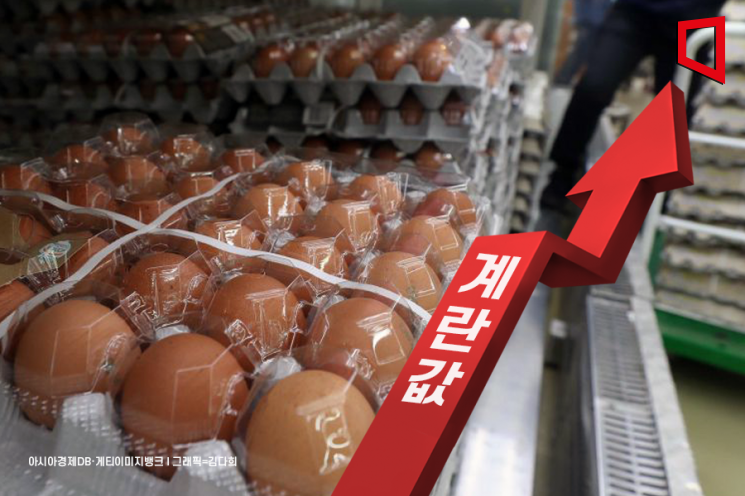
On June 8, the Korea Rural Economic Institute (KREI) stated in its June edition of the "Agricultural Outlook" report that this month's farm-gate price for 10 large eggs is expected to be between 1,850 and 1,950 won, which is a 12.4% to 18.5% increase compared to a year ago.
Compared to the average price over the past three years?excluding the highest and lowest prices recorded from 2020 to last year?this is 9.9% to 15.8% higher. The price for 10 large eggs at the farm-gate is projected to be between 1,750 and 1,850 won from July to August. Although prices are expected to drop compared to the previous month due to decreased egg consumption during the summer, they will still be about 8.2% to 14.4% higher than in August last year.
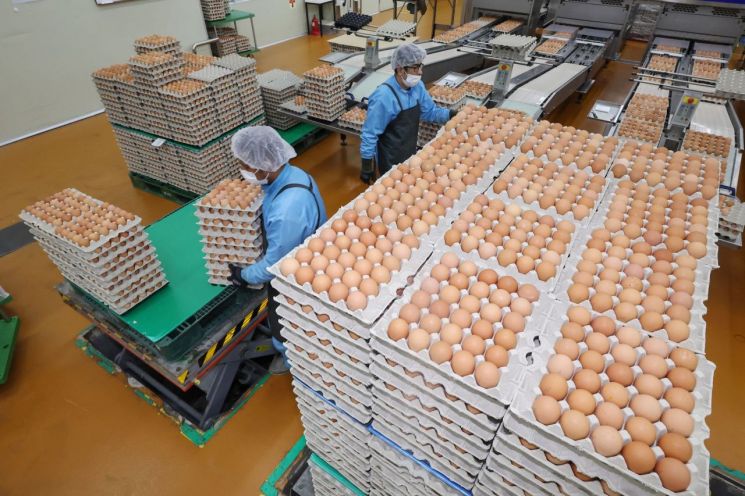
This year, farm-gate egg prices were similar to those of a year earlier as of March. However, in April and May, the price for 10 large eggs rose to 1,773 won and 1,838 won, representing increases of 10.2% and 12.2%, respectively. As farm-gate egg prices increased, consumer prices also rose. Last month, the average consumer price for a tray of 30 large eggs was 7,026 won, surpassing the 7,000 won mark for the first time in four years since July 2021. This is 6.0% higher than a year ago and 4.2% higher than the three-year average.
KREI explained that the main reason for the rise in farm-gate prices was the concentrated outbreak of highly pathogenic avian influenza (AI) in the Chungcheong region last March, which caused an imbalance in supply between regions and led to a nationwide increase in farm-gate prices.
Additionally, KREI cited a decline in productivity due to the aging of laying hens and the occurrence of diseases such as low-pathogenic AI, infectious bronchitis (IB), and fowl typhoid. The Ministry of Agriculture, Food and Rural Affairs also stated in an explanatory report last month that, starting from the end of March, the occurrence of infectious bronchitis and other consumptive diseases in many farms during the change of seasons temporarily reduced egg production by an estimated 4% to 6%.
The Korea Association of Laying Hen Farmers announced that, from March until recently, it had raised the farm-gate price of eggs by about 30%, from 146 won to 190 won per egg, and explained that wholesale egg prices have since increased. However, the association argued that the rise in egg prices was triggered by government regulations and excessive markups by retailers.
Meanwhile, separate from egg prices, last month’s farm-gate chicken price also rose to about 1.5 times higher than a year earlier. This was attributed to a decrease in shipments and a shortage of larger chickens, which also reduced the supply of chicken parts. However, KREI forecasts that this month’s farm-gate price for broilers will fall to between 2,100 and 2,200 won per kilogram, a decrease of 8.4% to 12.6% compared to the previous month.
© The Asia Business Daily(www.asiae.co.kr). All rights reserved.













