Urgent Need to Revise the Building Management Act Hindering Maintenance
Administrative System for Management Also Divided Between Urban and Rural Areas
Lee Kyuhyun, a member of the Jeonnam Provincial Assembly (Democratic Party of Korea, Damyang 2), has called for an amendment to the current Building Management Act, which is hindering the maintenance of vacant houses.
On June 5, during the 391st first regular session of the Jeonnam Provincial Assembly, Lee Kyuhyun announced that he had submitted a proposal urging the immediate revision of the Building Management Act, which is obstructing the maintenance of vacant houses. He stated that the proposal had been delivered to the National Assembly, the Ministry of Land, Infrastructure and Transport, the Ministry of Agriculture, Food and Rural Affairs, and other relevant authorities.
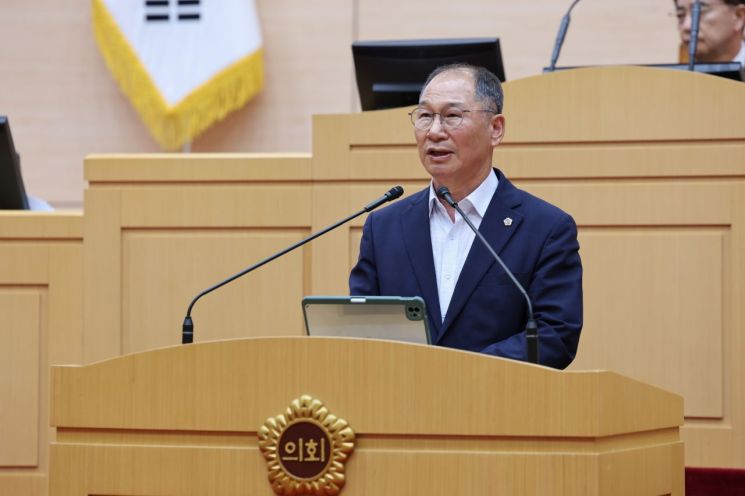
According to Lee Kyuhyun, as of 2024, there are approximately 20,000 vacant houses in the province, the highest number in the country. However, the actual number of vacant houses being maintained is far from sufficient compared to the growing demand each year. In particular, for the demolition of vacant houses carried out by local governments, the Building Management Act requires mandatory expert review of demolition plans, resulting in an additional cost of about 1 million to 1.5 million won per building. Lee Kyuhyun pointed out that these procedures are holding back progress on maintenance projects.
Lee Kyuhyun stated, "The obligation to review demolition plans is out of touch with the realities of rural areas, and it only increases unnecessary administrative costs, undermining the maintenance capacity of local governments." He added, "The current system actually acts as an obstacle to effective vacant house maintenance."
He continued, "Another issue is that the vacant house management system is divided between urban and rural areas." He emphasized, "The dual structure, split between the Ministry of Land, Infrastructure and Transport and the Ministry of Agriculture, Food and Rural Affairs, leads to administrative inefficiency and avoidance of responsibility. Therefore, it is necessary to unify the management system and expand national funding support."
He also added, "The vacant house issue is not simply a matter of landscape, but a serious social risk directly related to resident safety, such as structural collapse or crime. It is a situation in which further delay in institutional reform is unacceptable."
© The Asia Business Daily(www.asiae.co.kr). All rights reserved.












