Secretly Recorded Classroom Audio Cannot Be Used as Evidence,
Supreme Court Acquits Teacher of Child Abuse Charges
Ruling Expected to Impact Joo Ho-min Case and Other Similar Trials
The Supreme Court has ruled that if parents secretly place a recorder in their child's backpack to record a teacher's remarks during class, the recording cannot be used as evidence in a criminal trial. This ruling is expected to affect the child abuse case involving a special education teacher and the son of webtoon artist Joo Ho-min.
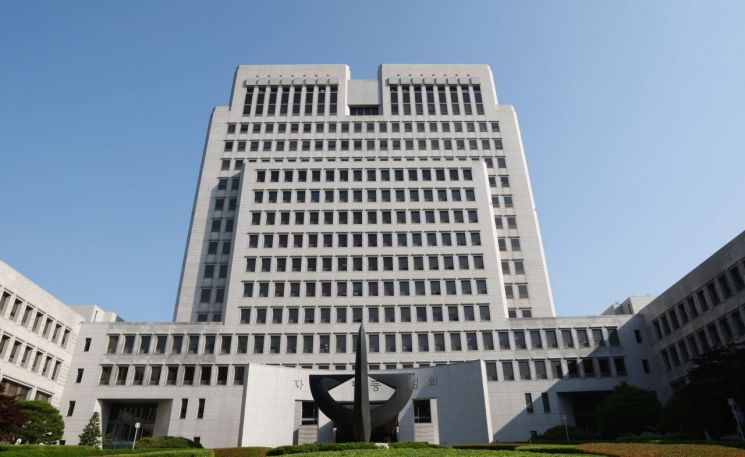
The Supreme Court's Second Division, presided over by Justice Park Youngjae, on June 5 rejected the prosecution's appeal and upheld the acquittal of elementary school teacher A, who had been indicted for violating the Child Abuse Punishment Act.
Teacher A, who worked at an elementary school in Seoul, was brought to trial on charges of emotionally abusing a third-grade student 16 times between March and May 2018, including saying things like, "You seem like a kid who hasn't been attending school." The victim's parents, suspecting child abuse, secretly placed a recorder in their child's backpack to record A's remarks and submitted the recordings to the police as evidence.
The key issue in the trial was whether the secretly recorded audio could be admitted as evidence. The Protection of Communications Secrets Act stipulates that it is prohibited to record or listen in on "non-public conversations between others" using electronic devices, and such recordings cannot be used as evidence.
The courts of first and second instance admitted the recordings as evidence and found A guilty. The appellate court ruled that the teacher's class remarks constituted a public conversation and acknowledged the necessity of collecting such evidence.
However, in January of last year, the Supreme Court sent the case back to the appellate court, stating, "The defendant's remarks during class, secretly recorded by the victim's parents, constitute a 'non-public conversation,' and the recordings lack evidentiary value under the Protection of Communications Secrets Act." At the retrial, the appellate court acquitted A, stating, "These recordings were collected in violation of the Protection of Communications Secrets Act and therefore lack evidentiary value."
The prosecution appealed the acquittal, but on this day, the Supreme Court dismissed the prosecution's appeal and again rendered a verdict of not guilty. The Supreme Court stated, "The lower court did not violate the rules of logic and experience, nor did it exceed the boundaries of free evaluation of evidence or misunderstand the legal principles regarding admissibility of evidence."
This ruling is expected to affect other similar child abuse cases, including the case involving Joo Ho-min currently under review by the Supreme Court.
In the case related to Joo Ho-min's son, the parents also submitted secretly recorded class audio as evidence. In the first trial, the special education teacher was found guilty and received a suspended fine of 2 million won. However, last month, the appellate court acquitted the teacher, ruling that the recordings were inadmissible as evidence. The prosecution has appealed this verdict.
© The Asia Business Daily(www.asiae.co.kr). All rights reserved.











