May 14: Bird Correspondent Hyunpyo Cho and Woojin Cho Discover the Species
May 30: Four Oriental Pratincole Chicks Hatch and Fledge
The city of Ulsan announced that the Oriental Pratincole, a Natural Monument, has been observed for the first time in the Namchang fields of Onyang-eup, Ulju-gun.
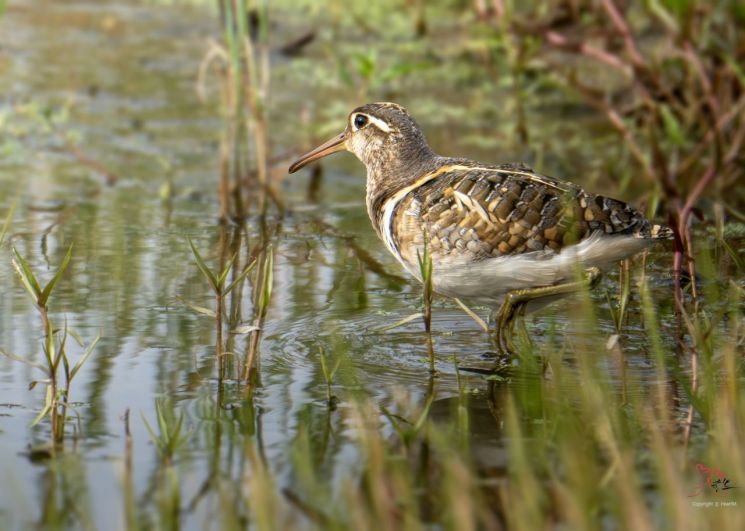
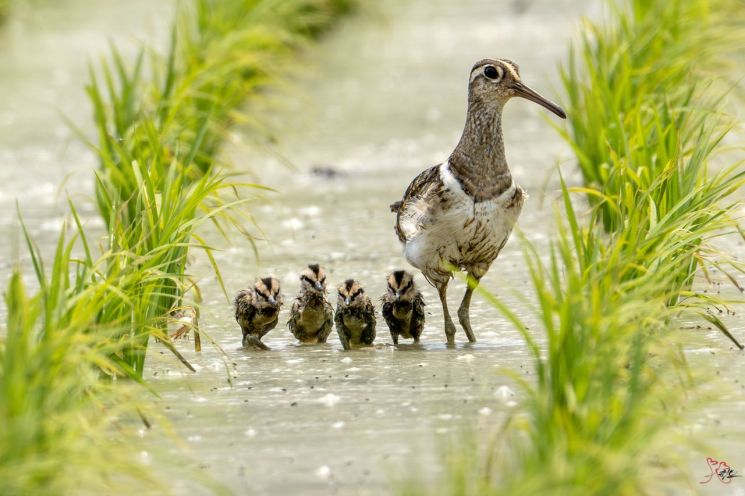
This observation confirmed the first breeding process of the Oriental Pratincole, and it was also observed and recorded that four chicks hatched and followed their mother as they moved to another rice field.
The Oriental Pratincole belongs to the pratincole family and is protected as a Natural Monument. It nests in wetlands, fallow fields, and rivers, where the female approaches the male and engages in courtship behavior. The nest is built on the ground, well-camouflaged and surrounded by vegetation.
This is the first time that the Oriental Pratincole has been recorded in Ulsan.
The initial observation was made on May 14, when Hyunpyo Cho (new correspondent) and his son Woojin Cho (a fifth grader at Wolgye Elementary School), who were birdwatching in the Namchang fields, spotted two Oriental Pratincoles, one male and one female.
Subsequently, on May 19, citizen biologist and photographer Gideuk Yoon and Seungmin Hong, head of Jjaekjjaek Rest Area, observed a female engaging in courtship behavior and mating.
On the following day, May 20, photographer Gideuk Yoon confirmed a male incubating eggs in a nest in the middle of a rice field.
Ornithologists estimate that incubation likely began around May 11 or 12, considering that the average incubation period for males is 19 to 20 days.
The Oriental Pratincole typically lays three to four eggs, with only the male incubating them. However, in recent domestic cases, joint incubation by both male and female has also been observed. In this instance, the male alone was responsible for raising the chicks.
On May 23, officials from the Natural Monument management departments of Ulsan City and Ulju-gun visited the site and met with Jumdeok Eom, the farmer who cultivates the rice field where the nest is located (resident of Dongsang-ri, Onyang-eup, Ulju-gun), asking him to postpone rice planting due to the presence of the rare bird's nest.
Mr. Eom responded, "Since such a precious bird has arrived, I will do so," expressing his intention to participate in protecting the bird.
Afterward, scenes of the male leaving the nest briefly to forage were captured by photographers who had gathered from across the country.
On May 30, it was reported that four Oriental Pratincole chicks had hatched and were foraging together with the adult male.
Hyunpyo Cho, the new correspondent who observed the fledging scene, reported, "During the fledging process, one Oriental Pratincole chick fell into an agricultural waterway, but a photographer rescued it and returned it to the rice field."
Fledging is an important stage in which the chicks leave the nest and prepare to live independently.
Seungmin Hong, head of Jjaekjjaek Rest Area, emphasized, "While several individuals have been observed and are breeding near the Nakdong River estuary, this is the first observation and breeding record in Ulsan, making it significant. It is necessary to maintain an ecological environment that allows them to return and breed continuously in the coming years."
A city official stated, "We thank the farmer who made it possible for the Natural Monument to visit Ulsan and breed safely," and added, "This was possible because correspondents, citizen biologists, bird enthusiasts, and photographers observed, protected, and recorded the breeding process together. We will continue to actively conduct observation activities so that the birds can visit comfortably and leave safely."
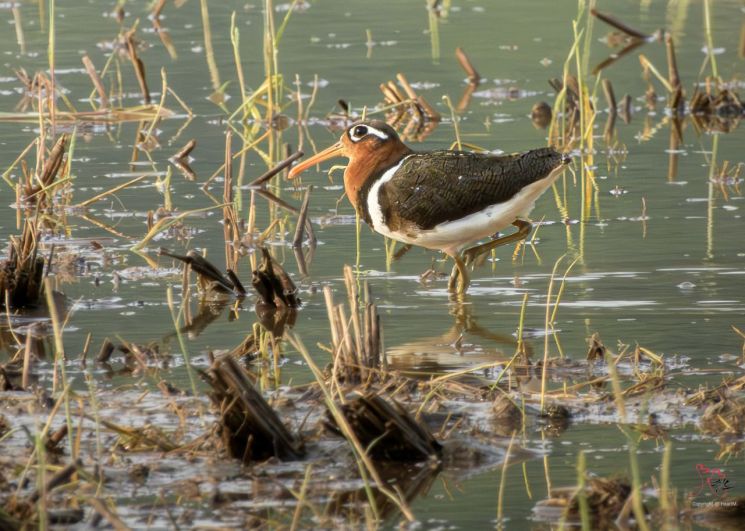
One characteristic of the Oriental Pratincole is that the female is more colorful than the male. The upper body is dark olive-brown, with a reddish-brown color from the face to the upper chest, and a broad black chest. The male has a gray-brown background from the face to the chest, with white mixed in.
Since breeding was first confirmed at Cheonsu Bay in June 2000, breeding has also been confirmed in Yeongam, the lower Nakdong River, Gochang, Muan, Siwaho in Jeju Island, and Hogok-ri in Hwaseong.
© The Asia Business Daily(www.asiae.co.kr). All rights reserved.













