The Fourth Governor to Complete Full Term
Expected to Move to a Research Institute After Retirement
Clear Assessment of Achievements and Shortcomings
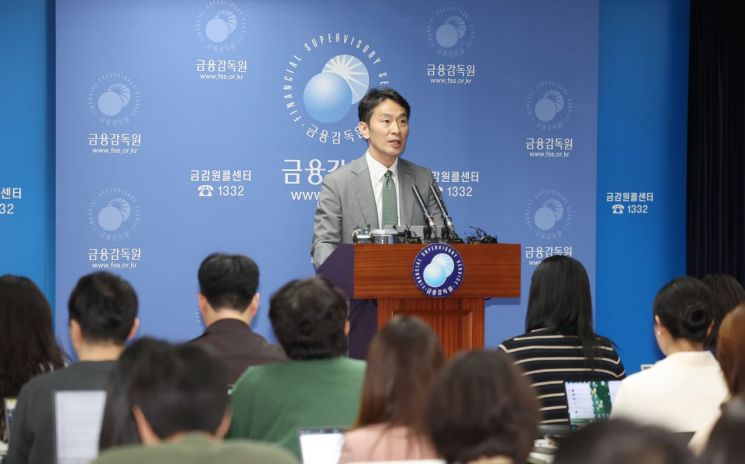
Lee Bokhyun, Governor of the Financial Supervisory Service (FSS), is stepping down after completing his three-year term. Until the next governor is appointed, the FSS will be led by Senior Deputy Governor Lee Sehoon.
At his farewell ceremony held at the FSS headquarters in Yeouido on June 5, Lee stated, "Financial reform is the starting point for improving the economic structure to secure productivity."
Lee emphasized, "Given the current reality of our economy, this is a very critical time when we must quickly reach social consensus on many issues and implement necessary institutional improvements to lay the foundation for a new leap forward. All stakeholders?including authorities, financial institutions, companies, and investors?must unite for ongoing financial reform."
He added, "If our initial response to economic and financial issues is inadequate, it will ultimately become a significant burden for us, who are responsible for market stability, inspections, and sanctions. Even if the scope of work among institutions appears unclear or overlaps with multiple agencies, I urge you, as financial professionals, to take proactive initiative."
Lee drew attention throughout his three-year tenure, from his appointment to his departure. As the youngest-ever FSS governor and the first with a prosecutorial background, he attracted widespread interest. He was often referred to as the "youngest member of the Yoon Sukyeol group" and "President Yoon’s confidant."
The financial industry has credited Lee with responding quickly to crises and actively working to resolve issues. Notable examples include the Taeyoung Construction workout and the restructuring of real estate project financing (PF). Corporate restructuring is a complex and unpredictable process due to conflicting interests among creditors and the defensive stance of companies. Lee personally voiced his position throughout the process, from the Taeyoung Construction workout to the real estate PF restructuring.
He also received positive evaluations for ensuring that financial institutions such as banks and securities firms clearly recognized PF-related losses and set aside sufficient loan loss provisions. This allowed financial companies to better prepare for shocks resulting from the economic downturn. Subsequently, the FSS established detailed data on PF project sites and improved criteria for assessing project viability. Within one year of PF restructuring, 53% (KRW 12.6 trillion) of problematic PF loans (KRW 23.9 trillion) are in the process of being restructured.
Lee also stood out for his communication with the media, holding as many as 98 background briefings over three years. He not only voiced opinions on key issues but was also proactive in external communication. In his farewell address, he said, "If finance is 'psychology,' then financial supervision is 'messaging,'" and called for active communication with the market and the media.
However, strong light casts a large shadow. During Lee’s tenure, some criticized the FSS’s inspection methods and media briefings as being more akin to a prosecutorial style than that of a supervisory authority. A notable example was former Kakao CEO Kim Beomsoo standing before the FSS photo line. Traditionally, the FSS would hold a final briefing after confirming inspection results, but under Lee, interim findings were announced.
Lee was also criticized for making direct remarks on financial policy as the head of the supervisory authority. One example was the confusion over household debt messaging between July and September last year. At the time, Lee stated he would intervene in banks’ household lending, but when this caused market confusion, he retracted his position, saying, "We must not burden genuine borrowers."
There was also controversy over a lack of coordination with the Financial Services Commission regarding amendments to the Commercial Act. While the FSS is responsible for supervision, Lee’s proactive policy statements were criticized for undermining policy consistency.
© The Asia Business Daily(www.asiae.co.kr). All rights reserved.












