Retail Price of a Tray of Eggs Surpasses 7,000 Won... Up 17% in Two Months
Government: "Opaque Egg Price-Setting System Is the Cause"
Producer Organizations: "Supply Has Decreased Due to Stricter Farming Standards"
Recently, as domestic egg prices have soared, a heated dispute over responsibility has erupted between the government and producer organizations. The government has identified the opaque egg price-setting system as the cause of rising egg prices and has begun preparing countermeasures. On the other hand, producer organizations argue that changes in government policy, such as stricter farming standards, have caused supply shortages, raising concerns that "eggflation" (egg + inflation) could become prolonged.
According to the Livestock Distribution Information from the Korea Institute for Animal Products Quality Evaluation on May 30, the wholesale price for a tray of 30 extra-large eggs was 6,079 won, up 16.0% (840 won) compared to the same month last year (5,239 won on average). Even compared to the average price a month ago (5,685 won), it rose by 6.9% (394 won).
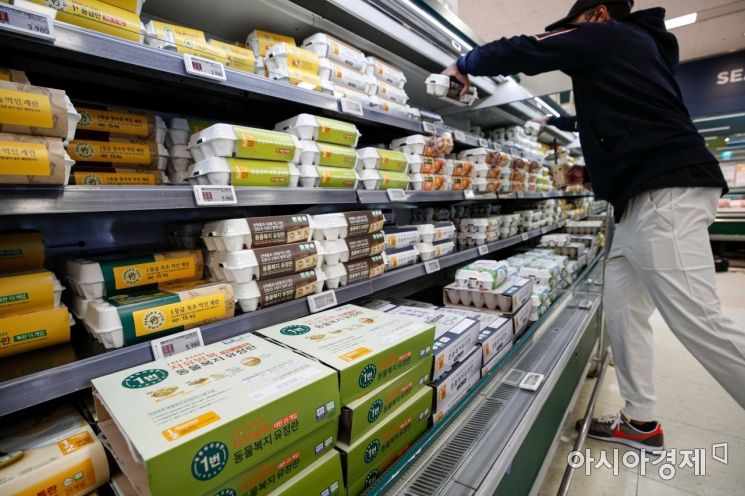
Government: "We will improve the practice of producer organizations announcing prices"
The government has effectively pointed to producer organizations as the cause of the recent sharp rise in egg prices. At the Price-Related Vice Ministerial Meeting held on May 16, the results of a field survey indicated that "there are no clear factors that would cause farm-gate egg prices to rise."
The Ministry of Agriculture, Food and Rural Affairs explained that the Korea Layer Association raised the "reference price" by 34 won in March and again by 10 won in May, resulting in a total increase of 44 won over two months. As a result, the reference price for an extra-large egg, which was 146 won per egg in March, rose to 190 won in May, a 30% increase. The ministry stated that as the farm-gate reference price rises, egg prices overall are increasing.
The Korea Layer Association, a producer organization, announces the so-called "reference price," which serves as the basis for the price at which layer farms sell eggs to distributors. This was introduced as a kind of negotiation reference price presented to producer farms, with the stated purpose of protecting farms that have weaker bargaining power compared to distributors.
However, the government believes that the reference price presented by the Layer Association has risen excessively considering supply and demand conditions, and that this has led to price increases. The Ministry of Agriculture, Food and Rural Affairs stated that the number of layer hens did not decrease in March this year, and egg production remains higher than last year. Therefore, they argue that the Layer Association raised the reference price without any particular reason.
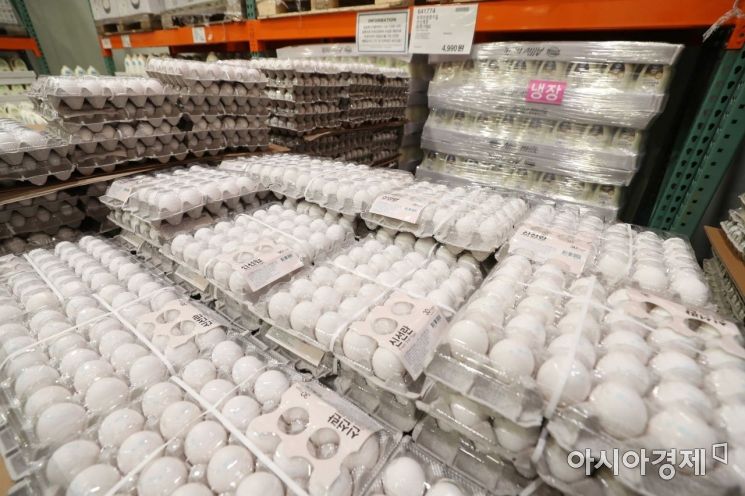
The Ministry also stated that it has promoted various policies to establish a transparent egg price-setting system, but implementation in the field is currently delayed due to opposition from producer organizations. Since 2018, the ministry has built egg distribution centers to encourage the opening of public auction markets and introduced online wholesale market trading methods. In addition, last year, through consultations with relevant associations and the industry, the ministry prepared a plan for the Korea Institute for Animal Products Quality Evaluation to systematically investigate and announce farm-gate egg prices and to abolish the practice of producer organizations announcing prices.
The government plans to improve the practice of producer organizations announcing prices and to establish a rational system for determining egg prices. The Ministry of Agriculture, Food and Rural Affairs stated, "Through a consultative body composed of egg-related organizations and experts, we plan to provide supply and demand information so that individual farms and distributors can negotiate transaction prices," adding, "We will also prepare legal grounds, such as standard transaction contracts, to ensure that eggs can be traded rationally and that these practices can be stably established in the field."
Egg industry: "Supply has decreased due to flawed amendments to the Livestock Act"
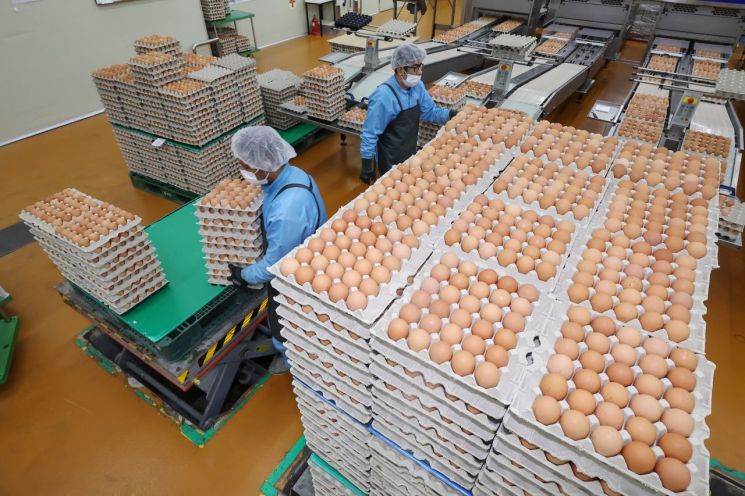
In response, producer organizations have expressed displeasure and are pushing back. They argue that providing price information has been a practice for over 60 years since the 1960s, and that the government's claim that the recent price increase is due to the reference price announcement system is absurd. Producer organizations also explain that, overseas in countries such as Japan and Europe, it is difficult for egg prices to be formed through wholesale markets, so supply and demand information is collected and provided to farms.
The Layer Association countered that the rise in egg prices is not due to the reference price, but rather is the result of flawed government policies such as stricter farming standards. According to the amended Livestock Act, from September, the minimum required space per chicken will increase from 0.05 square meters to 0.075 square meters. As a result, there has been increased demand to replace existing chickens with chicks before the new standard is applied, leading to a decrease in egg production.
Producer organizations also argue that although the government is expanding the minimum space per chicken to prevent avian influenza, there is little causal relationship between space per chicken and egg safety. On the contrary, they are concerned that expanding the minimum space will reduce the number of chickens that can be raised in the same area by about 30%, and that the current daily production of about 50 million eggs will decrease to around 35 million eggs.

The Layer Association stated, "In the United States, as 10 states including California have switched to cage-free systems for layer hens, the number of chickens has decreased, and increased contact with wild birds due to free-range farming has led to more avian influenza outbreaks. As a result, by the end of February, the price of eggs soared to a maximum of 1,017 won per egg," adding, "A price of 1,000 won per egg is not just a problem in the United States."
While the government and producer organizations continue to dispute the causes of rising egg prices, the burden on consumers continues to grow. In fact, as wholesale prices rise, retail prices are also climbing rapidly, with the price of a tray of eggs surpassing 7,000 won. As of June 1, the price of 30 extra-large eggs was 7,028 won, up 6.2% (409 won) compared to the same period last year (6,619 won). Compared to the low point in March, when the price increase began (5,987 won), the price has risen by 17.4% (1,041 won) in about two months.
© The Asia Business Daily(www.asiae.co.kr). All rights reserved.














