After its introduction in 1968, revised and improved over time
Adopted in 165 countries including the UK, US, and Japan
Discussion-based classes enhance critical thinking skills
The International Baccalaureate (IB) is an educational system established in 1968 for the children of United Nations (UN) officials. After World War II and throughout the Cold War, Western countries, particularly in Europe, recognized the importance of expanding international exchanges to promote world peace. As international exchanges increased, the number of UN staff, diplomats, correspondents, and overseas expatriates grew, and their children often found it difficult to prepare for university entrance exams in their home countries. The solution to this problem was the IB.
The IB headquarters in Switzerland needed to develop an educational program recognized by major universities as a valid academic credential. Professors, middle and high school teachers, and education officials from various countries participated in this effort, and after four years, the IB was created. The IB was adopted and implemented as part of the school curriculum in advanced educational countries such as the United States, the United Kingdom, and Japan. Over the decades, the program has undergone revisions and improvements, establishing itself as a highly regarded international curriculum. It is now implemented in 165 countries.
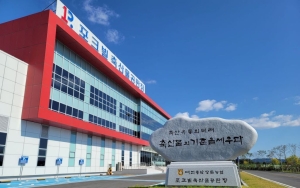
![[South Korea's Education Loses Its Way]⑪Why Is the Baccalaureate a Viable Alternative?](https://cphoto.asiae.co.kr/listimglink/1/2025053011542381228_1748573663.jpg)
In South Korea, the IB drew attention in 2019 when Oh Sejung, then president of Seoul National University, stated, "The solution to the problems in public education lies in the IB." Oh emphasized, "To nurture creative talent in the era of the Fourth Industrial Revolution, it is urgent to introduce a creative education system, rather than the current memorization-based approach," and added, "We should take advantage of the strengths of the IB."
The main feature of IB education is its emphasis on discussion-based classes. The discussions held during class are not intended to overpower others. Instead, students with different opinions engage in debate to make rational decisions and practice finding the most efficient solutions. Even during the preparation for debates, students acquire a broad range of knowledge. Kim Kyunghee, vice principal of the attached high school at Kyungpook National University College of Education, explained, "Rather than a winner-takes-all debate, students are trained to state their own arguments while also accepting the viewpoints of others."
The reason debate is essential in IB classes lies in its unique assessment methods. Each subject is evaluated through various formats, such as essays, oral presentations, report and portfolio writing, and collaborative projects. Good grades cannot be achieved simply by memorizing textbooks or practicing multiple-choice questions. Therefore, to achieve high marks, students must prepare for debates, essays, and oral presentations. Through this process, students naturally expand their thinking and have opportunities to grow through learning. According to the Oxford University Centre for Educational Assessment, students who completed IB programs demonstrated higher levels of critical thinking than those who did not.
Within the IB, the Diploma Programme (DP), which is the high school curriculum, is recognized as a university entrance qualification by over 3,300 universities in more than 90 countries. Former British Prime Minister Tony Blair even proposed abolishing the country's A-level exams and creating a new university entrance system similar to the IB, called the 'British Baccalaureate.'
![[South Korea's Education Loses Its Way]⑪Why Is the Baccalaureate a Viable Alternative?](https://cphoto.asiae.co.kr/listimglink/1/2025053014222681440_1748582545.jpg)
© The Asia Business Daily(www.asiae.co.kr). All rights reserved.