Calls for Blood Transfusion System Improvements Reflecting East Asian Genetic and Racial Characteristics
Researchers Highlight the Need for Country-Specific Transfusion Standards Beyond Simple Blood Type Distribution
Shortages of Universal Donor Blood in Korea Pose Risks During Emergencies
Unique 'Asian-type DEL' Blood Type Requires Advanced Testing for Safe Transfusions
There have been calls for improvements to the domestic blood transfusion system that reflect the genetic and racial characteristics of East Asians. Some point out that certain transfusion criteria and blood type classification systems currently in use are designed based on the blood type distribution of Western populations, making them unsuitable.
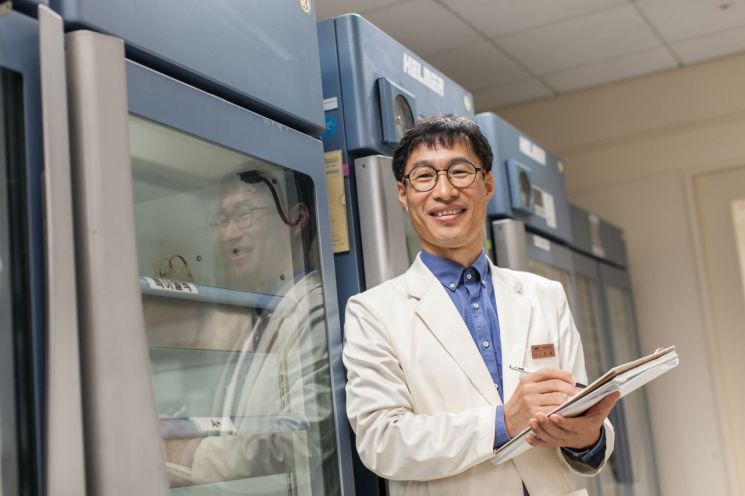
The research team led by Jodeok Cho, Professor of Laboratory Medicine at Samsung Medical Center, Sehyoh Yoon, resident in the Department of Pathology at Harvard Medical School, and Hajin Lim, Professor of Laboratory Medicine at Chonnam National University Hospital, published the results of their analysis of regional blood type characteristics in the latest issue of 'Transfusion,' the most prestigious international journal in the field of transfusion medicine.
According to the study, East Asia?including Korea, Japan, China, and Taiwan?shows a relatively high proportion of the AB blood type, but an extremely low proportion of RhD negative individuals, in contrast to regions such as Europe, the Middle East, and Africa.
In East Asia, the distribution of the AB blood type is 5 to 12%, and RhD negative is 0.1 to 1%. In Europe, these figures are 3 to 8% and 11 to 19%, respectively, highlighting clear regional and racial differences in blood type distribution.
The research team emphasized that the need for different transfusion systems by country should not be interpreted merely as a difference in blood type distribution.
The team cited as a representative example the case of universal red blood cells?'Type O RhD negative blood'?which can be used immediately in emergencies without blood typing. While it is relatively easy to secure such blood in Europe, in Korea, shortages force the unavoidable use of 'Type O RhD positive blood.' Even though this is applied as an exception in life-threatening emergencies involving massive bleeding, it still carries risks.
The researchers explained, "We are operating a blood donor registration program to secure RhD negative blood. However, in crisis situations such as during COVID-19, supply can become difficult," adding, "There is a need to establish a more stable supply system and to develop a more predictable and precise system in preparation for exceptional use."
The research team also pointed out the issue of the 'Asian-type DEL.' This blood type is known not to exist in Western populations and is found only among East Asians.
The problem is that existing testing methods classify this blood type as RhD negative, and without testing for the 'RHD gene,' it is impossible to accurately detect the Asian-type DEL. People with this blood type do have a small amount of the RhD antigen, so if their blood is transfused to an RhD negative patient, it can cause adverse reactions.
The research team stated, "RHD gene testing should be performed on donors classified as RhD negative to ensure safe transfusions."
Professor Jodeok Cho said, "This study demonstrates that existing Western-centric transfusion criteria cannot serve as universal standards," and added, "In an era of globalization, each country needs a more segmented system that accommodates racial diversity in healthcare."
© The Asia Business Daily(www.asiae.co.kr). All rights reserved.












