Jaewan Kim, Director of the Quantum Information Technology Research Institute at Yonsei University
Quantum computers: A collection of existing technologies
Only a few companies manufacture them directly
Component companies lead the market with accumulated expertise
Not an exclusive field for quantum mechanics majors
Technical capability for system implementation is key
Low entry barriers for engineers and programmers
Expanding performance by connecting multiple quantum computers
Finding intersections between existing technologies and quantum computing
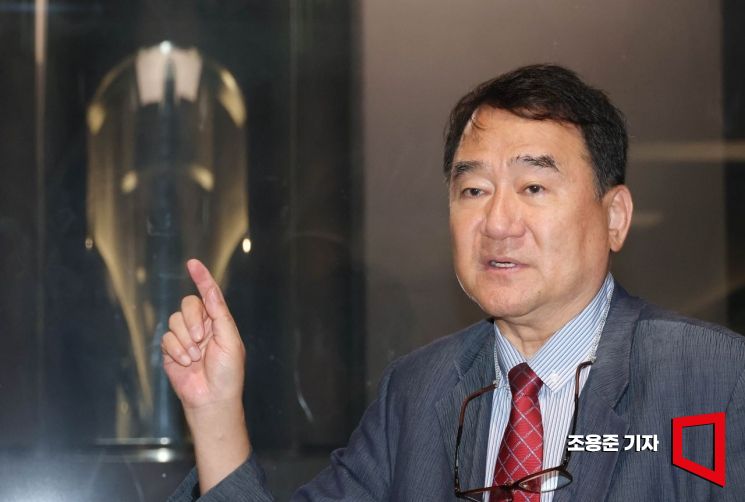 Jaewan Kim, director of the Quantum Research Institute at Yonsei University, is being interviewed by Asia Economy in front of the quantum computer at the Songdo campus. Photo by Jo Yongjun
"Quantum computing is not a completely new concept; it is a process of connecting and refining existing technologies with greater precision. It is true that Korea has been late to the game, but if the industry starts moving now, there are still plenty of opportunities."
Jaewan Kim, Director of the Quantum Information Technology Research Institute at Yonsei University, recently met with Asia Economy at the Quantum Convergence Research Center in Songdo, Incheon. He explained, "Quantum computing technology may appear to be an entirely new field on the surface, but in reality, it is an extension of the existing electronics and semiconductor industries." Technologies such as ultra-precise wiring for quantum computer qubits, cooling systems that maintain extremely low temperatures, electromagnetic shielding and high-vacuum processing to block external interference, and microwave control for signal modulation all already exist within current industries.
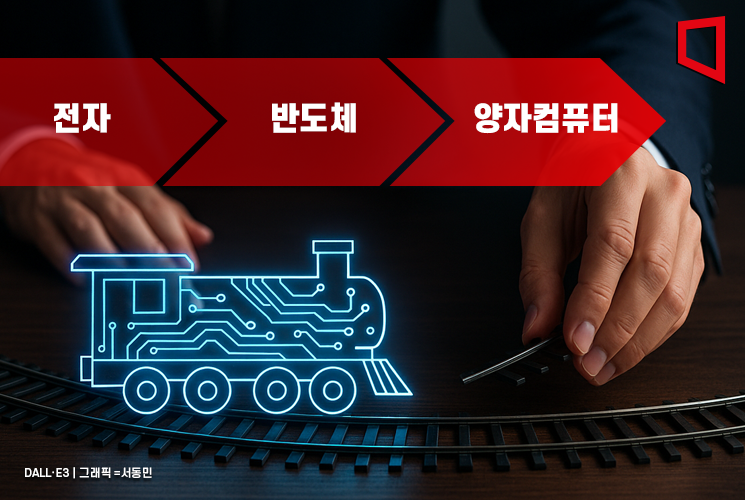
Director Kim said, "This industry is actually a collection of existing technologies such as semiconductors, cooling, and precision wiring," and added, "Engineers in the electronic components industry can enter the field with only a small amount of additional training."
He explained that the barrier to entry for individual engineers is lower than one might think. At companies leading the field of quantum computing, such as IBM, IonQ, and Rigetti, more than 90% of employees do not have a background in quantum physics. Instead, engineers from electronics or software backgrounds are participating by learning algorithms and control technologies.
He said, "This is not a field exclusive to those who majored in quantum mechanics," emphasizing, "Technical capability to implement systems is more important, and with experience in semiconductors, electronic engineering, software, or experimental physics, one can enter the field with just a few months of training." He further stated, "In fact, if you learn only the core concepts such as complex numbers, linear algebra, superposition, entanglement, and measurement, even existing programmers can participate in quantum algorithm development. About a month of intensive training is sufficient."
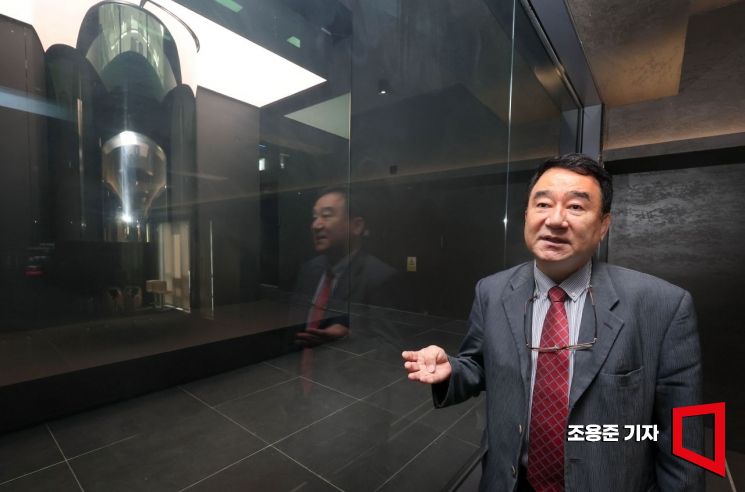 Jaewan Kim, director of the Quantum Research Institute at Yonsei University, is being interviewed by Asia Economy in front of the quantum computer at the Songdo campus. Photo by Jo Yongjun
In reality, only a small number of companies actually manufacture quantum computers themselves. Most companies are achieving commercial success by refining the core technologies that make up the components. Director Kim cited the Finnish cooling device manufacturer Bluefors as an example, saying, "Although Finland has a small population, this company produces 95% of the world's cooling devices for quantum computers. It originally started as a simple cooling device manufacturer, but now it has emerged as a key player." He emphasized that the most important challenge now is how to connect the technologies Korea's industry already possesses to the quantum computing sector.
Director Kim is currently researching technology that connects multiple quantum computers in an entangled state to make them operate as a single system. He explained, "It is difficult to simply increase the number of qubits, so we are trying to connect multiple quantum computers to expand them into a super quantum computer." He noted that solving such technical challenges requires the active participation of the industrial sector.
He said, "Now is the time for Korea's large and small companies to seriously consider how the technologies they possess can intersect with quantum computing." He continued, "For example, advanced microwave technology used in the defense industry can be applied to the stable connection of quantum computers. Quantum technology is not something far away; the technologies we already possess can become the essential foundation for the development of the quantum industry."
Finally, he emphasized, "Quantum computing technology is not completed in a single step, but rather by gradually paving the way. It is necessary to discover and foster domestic companies and technologies that will join this journey to build a robust quantum industry ecosystem."
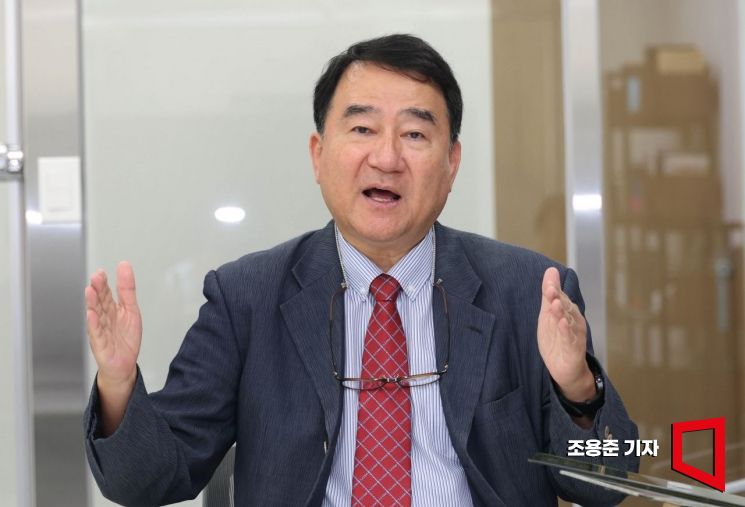 Jae-Wan Kim, Director of the Quantum Research Institute at Yonsei University, is being interviewed by Asia Economy at Yonsei University's Songdo Campus. Photo by Yong-Jun Cho
▲Jaewan Kim, Director of the Quantum Information Technology Research Institute at Yonsei University = Academic Representative, Future Quantum Convergence Forum (since June 2021); Distinguished Professor, Korea Institute for Advanced Study (since September 2023); Distinguished Professor, Yonsei University (since September 2023); Founding President, Korean Quantum Information Society (August 2023 - February 2024); Chair, Asia Quantum Information Science AQIS Organizing Committee (since September 2018); Chair, Quantum Korea Organizing Committee (2023, 2024); Head, Super Quantum Computing Strategy Research Group, Korea Research Institute of Standards and Science (since June 2025)
© The Asia Business Daily(www.asiae.co.kr). All rights reserved.














