On May 29, the Korea Customs Service announced that it had conducted safety inspections from April 7 to 30 on products expected to see increased demand around Family Month. As a result, the agency intercepted and blocked the entry of more than 340,000 children's products and electrical and household goods, as well as over 160,000 potentially hazardous food items purchased via overseas direct purchase.
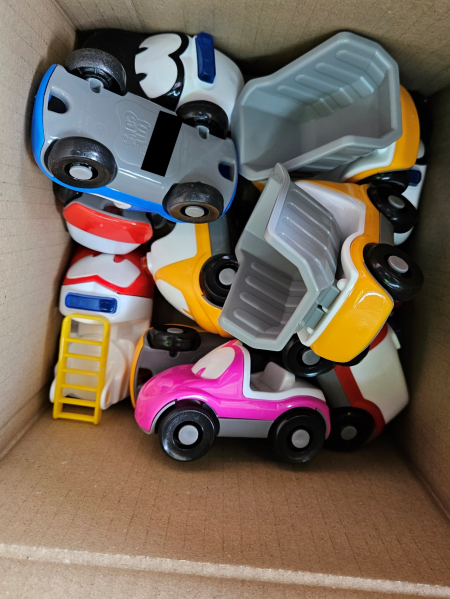 Children's products found to be non-compliant with safety standards during intensive inspection are packed in boxes. Provided by Korea Customs Service
The volume of items detected during this year's intensive inspection represents an increase compared to a similar inspection conducted around the same period last year. Specifically, the number of children's products and electrical and household goods rose by 62% (210,000 items last year), and hazardous food items purchased overseas increased by approximately 118% (75,000 items last year).
The intensive inspection of children's products and electrical and household goods was carried out in collaboration between the Korea Customs Service and the Korean Agency for Technology and Standards. As a result, violations were mainly found in 14 categories of gifts for infants, children, and households, including toys (164,000 items) and textile products for infants and children (19,000 items).
In particular, one type of toy (7,800 items) was found to contain phthalate plasticizers at a concentration 319 times higher than the domestic safety standard. Phthalate plasticizers are known as typical environmental hormones (endocrine disruptors). Potential side effects include endocrine system disorders when in contact with the body over a long period, as well as negative impacts on children's reproductive function and growth.
For food items purchased overseas, the Korea Customs Service worked in cooperation with the Ministry of Food and Drug Safety, focusing primarily on health supplements. During the inspection, the authorities found numerous products containing ingredients banned from import by the Ministry of Food and Drug Safety. A significant number of these products claim benefits such as "improved concentration" and "antioxidant effects," but most are health supplements whose safety has not been verified.
Additionally, some of the detected overseas direct purchase food products contained ingredients such as yohimbine and icariin, which may affect sexual function.
Information about hazardous food items purchased overseas that are restricted from import into Korea can be found on the Food Safety Korea website (Overseas Direct Purchase Food Guide).
A Korea Customs Service official stated, "We will continue to conduct joint safety inspections with relevant ministries, focusing on products with seasonal demand, to ensure the safety of daily life and food for the public."
© The Asia Business Daily(www.asiae.co.kr). All rights reserved.












