Interview with Quantum Computing Expert: Junkoo Lee, CEO of Qnova
Government-led Quantum Computer Introduction Project, an Excellent Starting Point for the Testbed Strategy
"By 2027 at the latest, quantum computers will reach an industrially significant inflection point by merging with high-performance computing (HPC)."
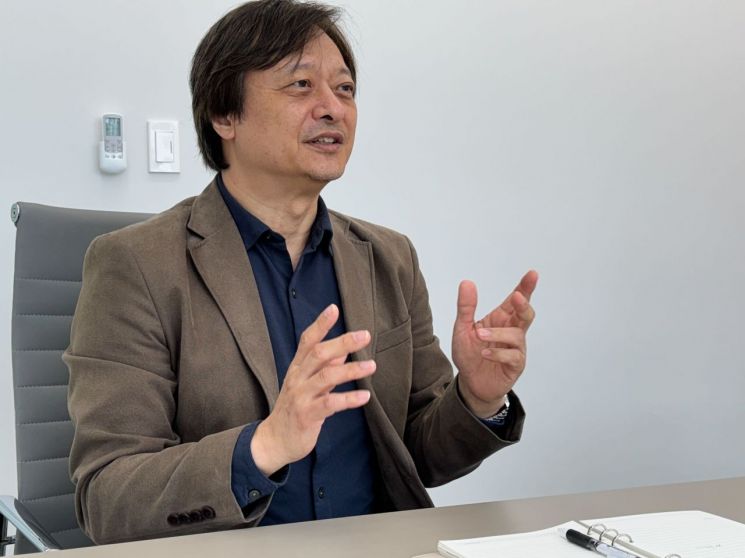
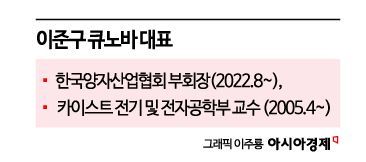
Junkoo Lee, CEO of Qnova, whom we met at the Qnova office in Yuseong-gu, Daejeon, expressed optimism about the future of quantum computers. Lee will deliver a keynote speech at the Future Enterprise Forum hosted by Asia Economy on June 11, providing insights into the industrialization potential of quantum computers. Lee is a professor at the Department of Electrical Engineering at KAIST and founded Qnova in 2021, Korea's first quantum computing software startup.
What Lee focuses on is the hybrid quantum computer?a system that connects conventional computers with quantum computers. This is closely related to the unique characteristics of quantum computers. While quantum computers can explore many possibilities simultaneously through superposition and entanglement of information, the quantum information collapses at the critical moment of 'measurement.' In other words, the rich quantum state disappears the moment the calculation result is read. Lee explained, "It is virtually impossible to equip a quantum computer with large-capacity memory using current technology," adding, "The emergence of hybrid quantum computers linked with conventional computers is essential."
Lee believes that for quantum computers to break the cryptographic system of Bitcoin, they must be error-free, but achieving this will not be possible for the time being. Qnova's role is to correct errors so that even today's quantum computers, which are prone to errors, can still be effective.
Lee emphasized, "The part of recording and managing information should be handled by existing supercomputers, while only complex and difficult calculations should be specialized for quantum computers. This is the core of a hybrid quantum computing system." He explained that, just as central processing units (CPUs) and graphics processing units (GPUs) cooperate by leveraging their respective strengths, quantum computers should work together with CPU- and GPU-based supercomputers to create synergy.
Regarding Korea's quantum technology development strategy, Lee stressed, "Over the past 10 years, government investment has focused on basic research and talent development. While this was an important process, now the focus should shift toward 'practical research' that can be applied and utilized in real industries." He argued, "The number of papers or patents is important, but we need a system that evaluates and supports technology based on the value it creates and the problems it solves in the actual industrial field."
The keyword Lee proposes for the advancement of Korea's quantum industry is "quantum testbed." He said, "Just as Korea became an IT powerhouse by commercializing code division multiple access (CDMA) technology for the first time in the world, Korea?with its diverse manufacturing base and application markets?can serve as a global testbed for quantum technology. We must actively introduce outstanding overseas quantum computing hardware and focus on developing software and application services using these to find our own unique strengths."
He added, "Collaboration with domestic research institutions, such as the Korea Research Institute of Standards and Science, as well as recent government-led projects to introduce quantum computers, can be excellent starting points for the testbed strategy."
However, Lee expressed a cautious stance, warning against vague expectations about quantum technology. He said, "Even if achievements such as Microsoft's announcement of Majorana qubit development are academically significant, we must be wary of exaggerating them as if commercialization is imminent," calling for a more sober perspective from the media and the public.
Lee founded Qnova through KAIST's "faculty startup" program. He said, "I started the company with the school's approval and support. Although there are challenges in balancing research and business, I find it very rewarding." He added, "As the company grew, I held both CEO and CTO roles, but now I intend to focus more on technology development as CTO to drive fundamental innovation in quantum technology." He continued, "Qnova will demonstrate particular strengths in areas such as material analysis for chemistry, new materials, and new drug development, as well as portfolio optimization in the financial sector."
© The Asia Business Daily(www.asiae.co.kr). All rights reserved.












