EU "Committed to Reaching an Agreement"
Some Expect Further Concessions from the EU
With U.S. President Donald Trump having postponed the imposition of a 50% tariff on the European Union (EU) until July, urgent tensions between the United States and the EU have eased for now. Both sides have agreed to continue negotiations over tariffs. Some observers speculate that the EU may present additional concessions to persuade the United States.
On the 26th (local time), Maros Sefcovic, the EU Commissioner for Trade and Economic Security, announced on the social media platform X (formerly Twitter) that he had a "good call" with U.S. Secretary of Commerce Howard Lutnick and U.S. Trade Representative (USTR) Jamison Greer.
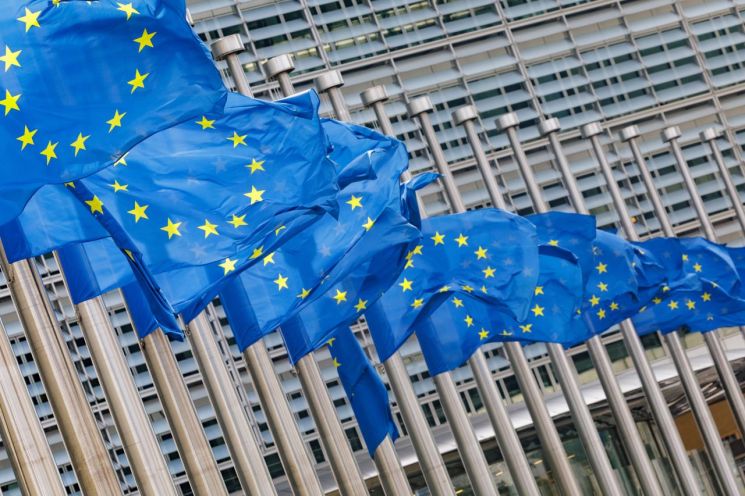
Commissioner Sefcovic stated, "The Commission remains committed to constructive and focused efforts toward an EU-U.S. agreement," adding, "We will remain in continuous contact."
This call took place three days after their previous conversation on the 23rd. The details of the discussion have not yet been disclosed.
Previously, European Commission President Ursula von der Leyen spoke with President Trump by phone and requested that the 50% tariff, scheduled for imposition on June 1, be postponed to allow for further negotiations. President Trump agreed, and the 50% tariff has now been delayed until July 9. For now, the immediate crisis has been averted.
Paula Pinho, the Commission's chief spokesperson, said at a regular briefing that the two leaders had "agreed to accelerate negotiations and to maintain direct contact." While she did not elaborate on the specifics of the call, she noted, "There is new momentum in the negotiations, and engagement at the highest level is a positive sign. As always, we are ready to reach an agreement."
The EU has proposed to the United States the elimination of mutual tariffs on industrial goods, including automobiles, as well as the expansion of imports of U.S. energy, weapons, and certain agricultural products. President Trump considers a 10% universal tariff as a kind of minimum threshold and has stated that tariffs will not be reduced below this level. He has imposed a 25% tariff on steel and automobiles. Some observers believe that, since President Trump raised the possibility of a 50% tariff out of dissatisfaction with the pace of negotiations, the EU may offer further concessions to persuade the United States.
Olof Gill, the Commission's spokesperson for trade, responded to questions about the negotiations by saying, "We still see the proposal for mutual tariff elimination as an attractive starting point for reaching a good agreement." He declined to comment on the possibility of additional concessions.
EU member states are urging a swift conclusion to the negotiations. Visiting Hanoi, Vietnam, French President Emmanuel Macron expressed confidence that the tariff negotiations would be successful. He stated, "Discussions with the United States are progressing well," and added, "We hope that tariff rates will be reduced as much as possible to ensure the most mutually beneficial trade."
Katharina Reiche, Germany's Minister for Economic Affairs, said, "There are six weeks left to find a solution," and emphasized, "We must use that time intensively to maintain smooth trade relations across both sides of the Atlantic."
© The Asia Business Daily(www.asiae.co.kr). All rights reserved.












