Construction Investment Drops 12.2% Year-on-Year
"Sharp Decline in Construction Investment Negatively Impacts Entire Domestic Industry"
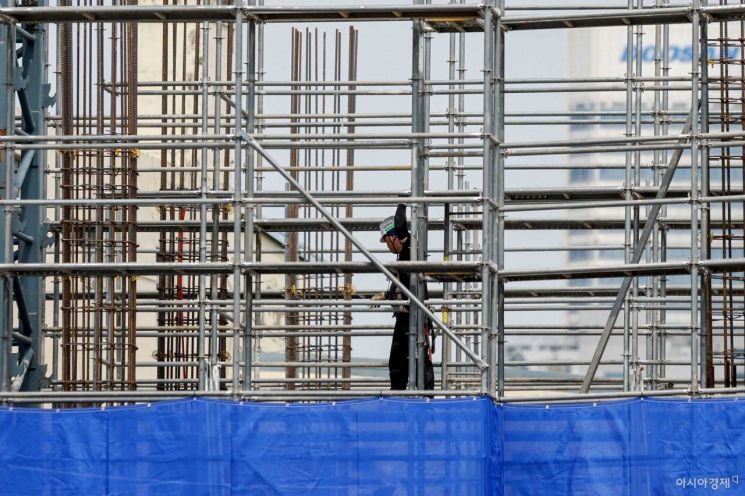
In the first quarter of this year, construction investment saw its sharpest decline since the IMF foreign exchange crisis. Experts warn that without intervention, investment could contract further, emphasizing the need for strong fiscal policy in the second half of the year.
According to the Korea Institute of Construction Industry (KIC), construction investment in the first quarter decreased by 12.2% compared to the same period last year. This marks the largest drop since the IMF foreign exchange crisis of 1997?1998.
The private sector's completed construction (on-site performance) shrank significantly, falling by 23.4% (6.8 trillion won) year-on-year. The public sector also declined by 6.1% (300 billion won) during the same period.
KIC stated, "The severe downturn in the construction industry in the first quarter, the worst since the IMF foreign exchange crisis, is not only due to the general sluggishness of the private sector, but also a result of poor performance in public construction caused by political instability." The institute further analyzed, "By construction type, both building and civil engineering works decreased compared to the same period last year, with the contraction being more pronounced in residential construction, followed by non-residential construction."
The institute diagnosed that, in the absence of policy responses, this trend is likely to continue. This underscores the need for robust public fiscal policies in the second half of the year to mitigate the domestic economic slowdown.
KIC explained, "The recent sharp decline in construction investment is having a negative impact on the entire domestic industry and is deepening the domestic recession. To reverse this trend, the implementation of strong fiscal policy in the second half of the year is considered essential."
The institute added, "This year’s economic sluggishness is due to external uncertainties caused by Trump’s tariff policies, which have led to reduced production and exports. The construction industry, a pillar of the domestic economy, is also experiencing a downturn. To respond to tariff policies and external uncertainties, it is necessary to withstand the situation with clear domestic stimulus measures, while also using this time to seek new directions for economic industries and policies."
KIC also called for tailored investments based on demand. "Given the current economic situation and the sharp rise in construction costs, the capacity for housing demand and building purchases is low. Therefore, it is necessary to selectively strengthen infrastructure investments that can enhance future capabilities," the institute said. "It is also worth considering focusing investments on infrastructure that will have the most positive impact on attracting corporate investment, as well as promoting regional economic development and population inflow in the mid- to long-term."
© The Asia Business Daily(www.asiae.co.kr). All rights reserved.












