Blocking River Inflow and Daily Inspections
Yongun Drainage Gate Closed and Ongoing Monitoring
Gwangsan District in Gwangju announced that there were no abnormalities in the water quality of Hwangryong River following the fire at the Kumho Tire Gwangju Plant. According to Gwangsan District on May 23, daily water quality tests of Hwangryong River have been conducted since the fire broke out on May 17, and all 18 items, including heavy metals and dissolved oxygen, were found to be within standard limits.
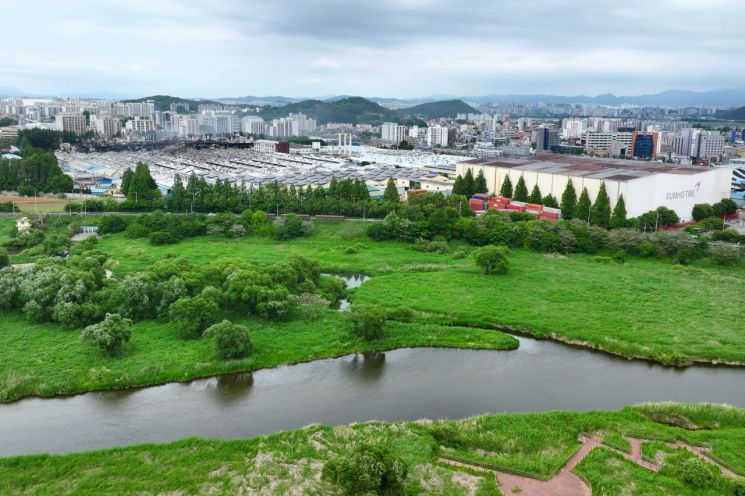 A view of Kumho Tire Gwangju Plant taken near Hwangryonggang and Jangnok Wetland in Gwangsan-gu, Gwangju, photographed on the 22nd. Provided by Gwangsan-gu
The Kumho Tire plant is located near Jangnok Wetland along Hwangryong River, which has been designated as the first national urban wetland, raising concerns about potential water pollution. Immediately after the fire, Gwangsan District identified the routes through which polluted water could enter the area near the plant, deployed 16 personnel to remove debris from the stormwater outfall connected to the sewage treatment plant, and took other emergency measures.
Additionally, at the Yongun drainage gate, where rainwater flows into Hwangryong River, the district installed 62 water barriers and approximately 800 sandbags to block the entry route into the river. Two excavators were also mobilized to construct a drainage channel that directly guides polluted water to the sewage treatment plant.
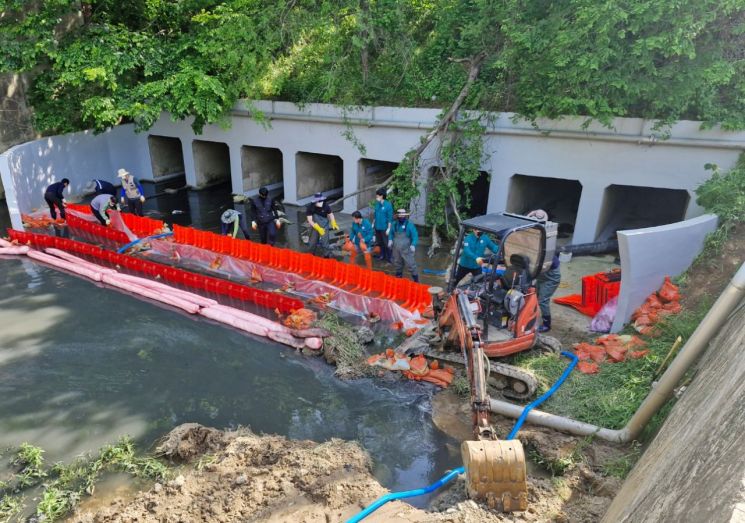 The site of the cofferdam and barrier installation work set up by Gwangsan District to prevent polluted water from entering Hwangryong River following the Kumho Tire fire. Provided by Gwangsan District
Gwangsan District plans to continue operating a monitoring system to prevent water pollution as cleanup work at the fire site is still ongoing.
© The Asia Business Daily(www.asiae.co.kr). All rights reserved.













