Performance-Based Pay Linked to Real GDP Growth Rate
Reduction Applied When Real GDP Is Negative
Lee Junseok, the presidential candidate of the Reform New Party, pledged on May 22 that “the total annual salary of high-ranking public officials at the vice-minister level and above will be composed of 50% fixed salary and 50% performance-based pay, with the performance-based portion linked to the real Gross Domestic Product (GDP) growth rate.”
In a policy briefing released the same day, Lee stated, “By clearly reflecting responsibility during periods of stagnation and rewards during periods of growth, we will institutionally secure the accountability and motivation of high-ranking public officials.” He added that the linkage rate will be set differently for each range, and the minimum annual salary will be set at 70% of the base salary to ensure a reasonable standard of living.
Lee explained, “Currently, the annual salaries of the president, ministers, vice-ministers, and senior officials at grade 1 and 2 in the presidential office are guaranteed regardless of policy failures or economic downturns, and there is no structure to impose real responsibility during periods of stagnation.” Conversely, during periods of economic recovery or high growth, salaries are not linked to performance, so even if results are achieved, there is a fixed structure that does not provide corresponding rewards.
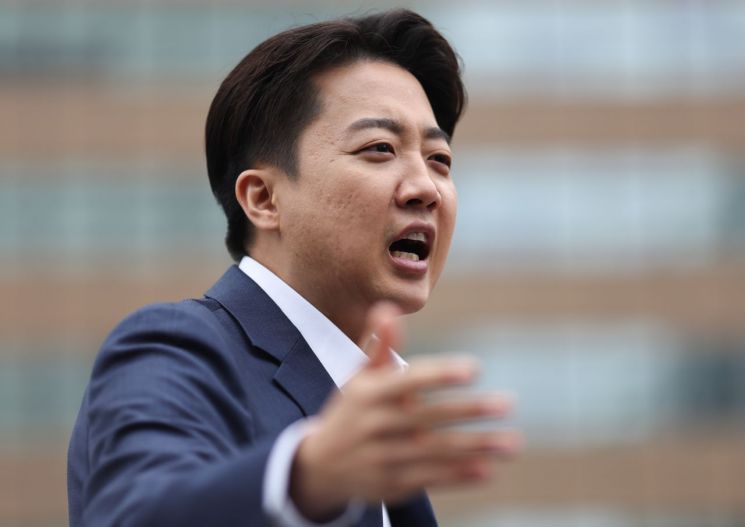 Candidate Lee Junseok holding a press conference (Seoul=Yonhap News) Photo by Yoon Dongjin = Reform New Party presidential candidate Lee Junseok is holding a press conference at Gwanghwamun Square in Seoul on May 19, 2025. mon@yna.co.kr (End)
 As for specific reform measures, Lee said, “For political appointees at the vice-minister level and above and senior officials at grade 1 and 2 in the presidential office, for example, if the GDP growth rate is in the low range of 0?1%, performance-based pay will not be applied and the annual salary will be frozen. If the growth rate is 1?3%, the performance-based portion will be reflected at a rate of 1?2%, similar to the increase rate for general public officials.”
He added, “If the growth rate exceeds 3%, the performance-based pay will be gradually increased in line with the real GDP growth rate, but the total annual salary increase will be capped so that it does not exceed 30% of the base salary.” Conversely, if the real GDP is negative, the performance-based pay will be reduced, but the total annual salary will not fall below 80% of the base salary, with a minimum threshold set accordingly.
Lee stated, “The real GDP figure used as the basis for calculating annual salary will be the figure officially confirmed and announced by Statistics Korea, and the actual application rate will be finalized each March by the ‘High-Ranking Public Officials’ Salary Linkage Review Committee.’” He added, “This will encourage high-ranking public officials to perform their duties with a sense of responsibility for the flow and performance of the national economy, and will institutionally establish the foundation for responsible politics.”
© The Asia Business Daily(www.asiae.co.kr). All rights reserved.












