Yoon Yeohyun, Samil PwC Partner
"Beware of Introducing Standardized Internal Controls"
"Integrated Strategies Are Crucial to Strengthen the Effectiveness of Internal Controls"
"Sometimes, internal controls at financial institutions require an 'omakase' approach rather than a 'meal kit' approach."
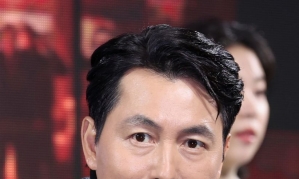
Yoon Yeohyun, Partner at Samil PwC, made this statement at the "2025 Asian Financial Forum" held at the Westin Chosun Seoul in Jung-gu, Seoul, on May 21. He emphasized the need to be cautious about the increasing standardization of internal control mechanisms introduced by financial institutions to prevent financial accidents. Yoon attended the forum hosted by Asia Economy and gave a presentation on "Proactive Prevention and Response to Financial Accidents Following the Implementation of Accountability Structure."
![[2025 Financial Forum] Yoon Yeohyun: "Financial Institutions Also Need an Omakase Approach to Internal Controls"](https://cphoto.asiae.co.kr/listimglink/1/2025052114385967399_1747805939.jpg) Yoon Yeohyun, Partner at Samil PwC, attended the "2025 Asian Financial Forum" held on May 21 at the Western Chosun Hotel in Jung-gu, Seoul, and gave a lecture on the topic "Proactive Prevention and Response to Financial Accidents Following the Implementation of Accountability Structure." 2025.5.21 Photo by Jo Yongjun
Yoon Yeohyun, Partner at Samil PwC, attended the "2025 Asian Financial Forum" held on May 21 at the Western Chosun Hotel in Jung-gu, Seoul, and gave a lecture on the topic "Proactive Prevention and Response to Financial Accidents Following the Implementation of Accountability Structure." 2025.5.21 Photo by Jo Yongjun
Why Do Financial Accidents Keep Occurring?
According to statistics from the Financial Supervisory Service, financial accidents in the domestic financial sector amounted to 842.3 billion won (468 cases) over the past six years, from 2019 to last month. Yoon explained that the nature of the financial industry, which involves frequent handling of money, inherently increases the likelihood of financial accidents.
He identified excessive performance pressure within organizations, lax internal controls, and personal financial problems as the main reasons for the continual occurrence of financial accidents. Yoon pointed out, "In reality, it is rare for financial accidents to occur simply due to a lack of internal discipline. The real problem is that existing rules are followed only out of inertia."
Yoon stated that adhering to the basics alone can prevent a significant portion of financial accidents. He said, "According to Samil PwC's analysis of the causes of financial accidents over several years, 34% were due to weak internal control activities, while 16% resulted from inadequate division of duties. Although companies already have policies and procedures in place to prevent financial accidents, many incidents occur because sufficient attention is not paid."
"Learning Internal Controls from Netflix"
Yoon explained that domestic financial institutions are currently introducing accountability structures as part of efforts to strengthen internal controls, and he suggested that Netflix deserves attention in this context. Netflix, a global online video service (OTT) provider, is a Nasdaq-listed company with a market capitalization of about 700 trillion won. He noted, "Netflix's internal controls do not simply follow standardized or formal regulations; instead, they manage the organizational culture itself. Through sufficient performance-based rewards, employees are encouraged to act in ways that are most beneficial to Netflix."
He compared accounting management systems in Korea and the United States, highlighting significant cultural differences in how companies approach internal controls. Since 2019, when the internal accounting management system was introduced for listed companies in Korea, the rate of modified audit opinions (opinions other than an unqualified opinion from external auditors) has remained around 2-3%. In contrast, in the United States, the rate was 15.8% in the first year of introduction in 2004 and has recently been around 8%. Yoon stated, "It is unlikely that Korean companies are vastly superior to their American counterparts. These differences arise from institutional and cultural factors related to internal controls."
![[2025 Financial Forum] Yoon Yeohyun: "Financial Institutions Also Need an Omakase Approach to Internal Controls"](https://cphoto.asiae.co.kr/listimglink/1/2025052114385567398_1747805935.jpg) Yoon Yeohyun, Partner at Samil PwC, attended the "2025 Asian Financial Forum" held on May 21 at the Western Chosun Hotel in Jung-gu, Seoul, and gave a lecture on the topic "Proactive Prevention and Response to Financial Accidents Following the Implementation of Accountability Structure." 2025.5.21 Photo by Jo Yongjun
Yoon Yeohyun, Partner at Samil PwC, attended the "2025 Asian Financial Forum" held on May 21 at the Western Chosun Hotel in Jung-gu, Seoul, and gave a lecture on the topic "Proactive Prevention and Response to Financial Accidents Following the Implementation of Accountability Structure." 2025.5.21 Photo by Jo Yongjun
In the United States, companies with a market capitalization of less than $75 million (about 100 billion won) are exempt from external audits under the internal accounting management system. Instead, executives are required to submit their own opinions on the company's internal controls. As of 2022, 40% of executives at companies exempt from external audits assessed their own companies as having 'material weaknesses.' Yoon commented, "Even though no one externally is criticizing them, executives are voluntarily acknowledging that their internal control mechanisms are inadequate. While it is uncertain whether any Korean companies would do the same if this system were introduced here, this result prompts us to reconsider the true purpose of internal controls." He explained that many executives in the United States do not treat internal controls as a mere formality for avoiding responsibility, but rather use them as a tool to genuinely improve their companies.
Yoon advised that strengthening the effectiveness of internal controls requires linking business characteristics and risks with internal controls. He explained that inefficiencies, such as risk blind spots and overlaps, are occurring due to the lack of integrated strategies and control towers. He also suggested that artificial intelligence (AI) and data analytics can enhance the effectiveness of internal controls. Yoon stated, "As business evolves, so do risks and management. We need to consider whether we are wasting too many resources on the 'form' of internal controls and instead focus on the essence of business risks and management."
© The Asia Business Daily(www.asiae.co.kr). All rights reserved.