Nipah Virus Requires Caution Due to Lack of Vaccine or Treatment
Designated as a Class 1 Infectious Disease for the First Time in Five Years Since COVID-19
Nipah virus infection, which primarily occurs in India and Southeast Asia, will be designated as a Class 1 statutory infectious disease.
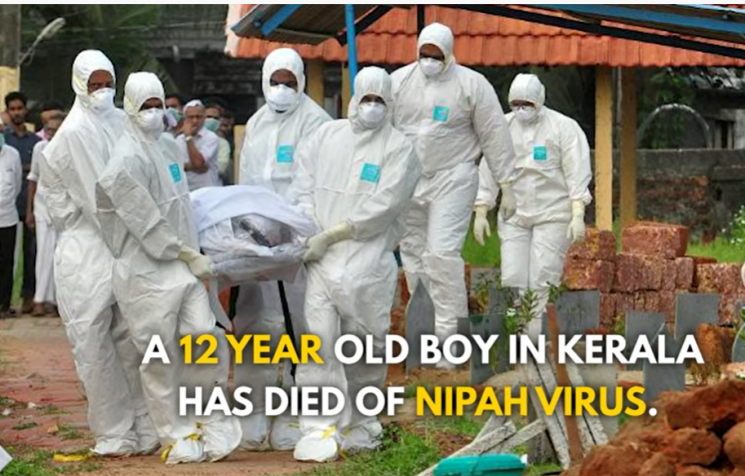 A 12-year-old boy infected with the Nipah virus died in Kerala, India. Photo by India Today (YouTube capture)
On May 18, the Korea Disease Control and Prevention Agency (KDCA) announced that the proposal to designate Nipah virus infection as a Class 1 infectious disease had recently passed the review and resolution of the Infectious Disease Management Committee. Following subsequent administrative procedures, including consultations with relevant ministries, the designation is expected to take effect as early as July.
This is the first addition to the list of Class 1 infectious diseases in five years since the designation of COVID-19 in 2020. However, COVID-19 was designated as Class 1 in January 2020, then downgraded to Class 2 in April 2022, and further to Class 4 in August 2023.
The Nipah virus was first discovered in 1998 in the village of Nipah, Malaysia. Fruit bats are the primary natural reservoir of the Nipah virus. The virus can be transmitted to humans through the consumption of date palm sap contaminated by the urine or saliva of infected bats, or through contact with or consumption of sick pigs, which serve as intermediate or amplifying hosts.
Cases continue to be reported each year in various regions, including Bangladesh, Southeast Asia, India, and Singapore. After infection with the Nipah virus, most people experience an incubation period of 5 to 14 days, followed by symptoms such as fever and headache, though some cases may be asymptomatic. In severe cases, the illness can progress to respiratory distress or encephalitis. The fatality rate is extremely high, ranging from 40% to 75%. As there is currently no effective treatment or vaccine, travelers to Southeast Asia are advised to exercise particular caution. However, no cases have been reported in Korea so far.
The KDCA also assessed that the likelihood of the Nipah virus causing a global pandemic is low. The agency explained, "Although the Nipah virus is included in the World Health Organization's list of potential future pandemic threats, the highest pandemic risk currently comes from avian influenza infecting humans." However, the KDCA noted that the Nipah virus still poses a pandemic risk because it can be transmitted between people who have close contact, such as family members or healthcare workers.
Meanwhile, Class 1 infectious diseases refer to diseases that require immediate reporting and high-level isolation measures, such as negative pressure isolation, due to their potential use as bioterrorism agents, high fatality rates, or the risk of large-scale outbreaks. Currently, 17 diseases are designated as Class 1 infectious diseases, including Ebola virus, anthrax, plague, Severe Acute Respiratory Syndrome (SARS), and Middle East Respiratory Syndrome (MERS). When a Class 1 infectious disease is confirmed, medical personnel must immediately report the case to the authorities and isolate the patient.
© The Asia Business Daily(www.asiae.co.kr). All rights reserved.












