Most Casualties Were Local Cambodians
Lack of Proper Lightning Protection Devices
A lightning strike occurred during a religious ceremony at Angkor Wat, Cambodia's world-renowned tourist site, resulting in over ten casualties.
According to the Straits Times and Khmer Times on May 18 (local time), the incident took place around 5 p.m. on May 16 at Angkor Wat in Siem Reap, Cambodia, where three people were killed and more than ten others were injured due to lightning.
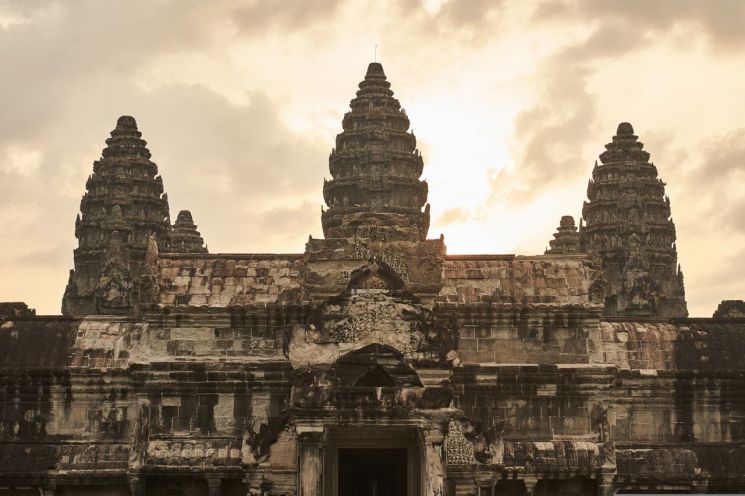
The accident happened while a traditional religious ceremony was being held at the top of the temple amid rainfall. Most of the casualties were reported to be local Cambodians.
The investigation identified the lack of proper lightning protection devices at the temple as the cause of the accident. In Cambodia's tropical monsoon climate, lightning accidents occur frequently, especially during the rainy season from May to October. Tall stone tower structures like Angkor Wat are particularly vulnerable to lightning strikes. To avoid lightning, it is advised to refrain from outdoor activities during the rainy season, be cautious when using metal tools, and avoid standing near large trees or tall towers.
After news of the lightning accident spread, posts expressing concerns about damage to the national image and a potential decrease in tourist numbers appeared on Cambodian social networking services (SNS). Angkor Wat, a UNESCO World Heritage Site and one of the world's three major Buddhist sites, is Cambodia's leading tourist destination, attracting over one million foreign visitors last year alone. The site covers a total area of approximately 162 hectares (about 1.6 square kilometers), making it the largest religious structure in the world.
Angkor Wat, a legacy of the Khmer Empire, was built in the early 12th century by King Suryavarman II, who mobilized tens of thousands of people to dedicate the temple to Vishnu, a Hindu deity. The temple was constructed over about 30 years, and later, as Buddhism spread, it was converted from a Hindu temple to a Buddhist one. For centuries, the temple remained largely unknown to the outside world until 1855, when Henri Mouhot, a French explorer and biologist, discovered it while exploring the Cambodian jungle, leading to renewed attention in the West.
© The Asia Business Daily(www.asiae.co.kr). All rights reserved.












