May Issue of Recent Economic Trends
"Slowdown in Exports" Newly Added
Exports to the U.S. Decline as Tariff War Escalates
"Not Significantly Different from KDI's Outlook"
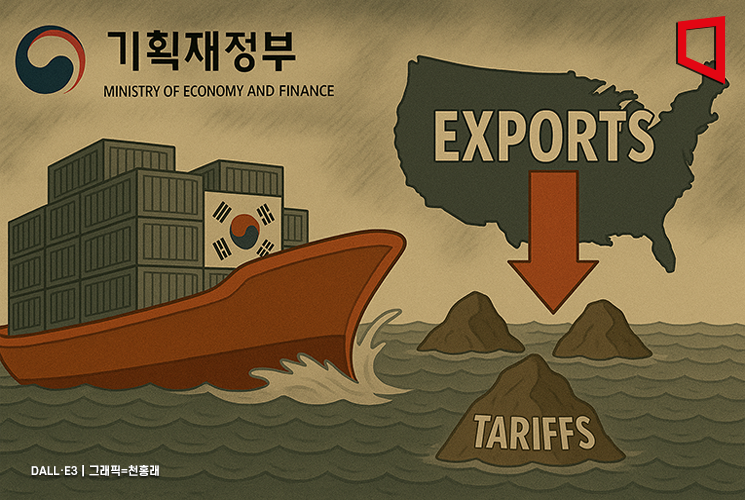
The government has maintained its assessment that downward pressure on the Korean economy is increasing. This is due to the worsening external environment caused by U.S. tariff impositions, which have led to a slowdown in exports, as well as the delayed recovery of domestic demand.
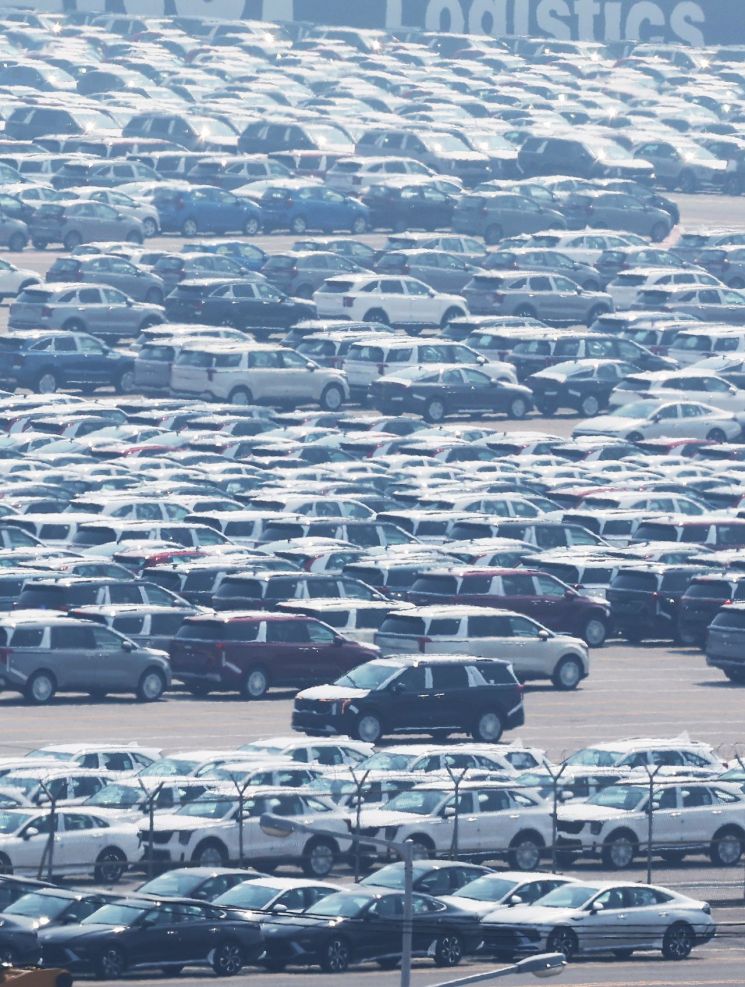
On May 16, the Ministry of Economy and Finance stated in the May issue of its “Recent Economic Trends (Green Book)” that “the Korean economy is experiencing delayed recovery in domestic demand, such as consumption and construction investment, and persistent employment difficulties in vulnerable sectors. At the same time, the external environment has deteriorated due to U.S. tariff impositions, resulting in a slowdown in exports and increasing downward pressure on the economy.”
While there are no major changes from last month’s Green Book, the expression “slowdown in exports” has been newly added. In the March issue of “Recent Economic Trends,” the government described the situation as a “slowdown in export growth,” but did not include this term in the April issue due to a slight rebound in exports. However, as the global tariff war initiated by U.S. President Donald Trump intensified and Korea’s export performance began to decline, the government has now used a more negative expression to reflect the worsening situation.
Cho Sungjoong, Director of Economic Analysis at the Ministry of Economy and Finance, explained, “The impact of tariffs has already been felt, and exports to the United States have decreased significantly.” However, Cho also noted, “Although tariffs began to be imposed on April 10, there was a 90-day grace period, and exports to countries other than the U.S. increased, so the outcome was better than initially feared.”
Exports in April rose by 3.7% compared to the same month last year, marking three consecutive years of growth. However, when adjusting for the number of working days, average daily exports actually fell by 0.7%. In particular, exports to the U.S. were hit hard by the tariffs, dropping by about 7%.
The government has maintained its view since January this year that downward pressure on the economy is increasing. Cho stated, “The first quarter growth rate (-0.246%) was a disappointing figure, and there are increasing pressures that suggest the annual growth rate will be lower than initially projected.” He added, “This is not significantly different from the Korea Development Institute (KDI)’s assessment of the economy.”
On May 14, KDI sharply lowered its forecast for Korea’s economic growth rate this year to 0.8% from 1.6% in its “Economic Outlook for the First Half of 2025.” This halved the previous forecast of 1.6% announced in February, in just three months. KDI attributed this to the acceleration of tariff hikes and a slower-than-expected recovery in domestic consumption sentiment.
The slowdown in domestic demand is continuing. In the first quarter, private consumption (according to preliminary GDP data) decreased by 0.1% compared to the previous quarter, and retail sales in March fell by 0.3% from the previous month. However, consumer sentiment showed a slight improvement. The consumer sentiment index in April recorded 93.8, up 0.4 percentage points from the previous month.
The government expects that improvements in credit card approval amounts and the consumer sentiment index in April will act as positive factors for retail sales, while declines in credit card approval amounts at department stores and discount stores will act as negative factors. Department store credit card approvals fell by 13.2% year-on-year, a much larger drop than the previous month’s -2.1%. Discount store approvals also dropped by 8.2%, a sharp reversal from the previous month’s increase of 3.2%.
Regarding the global economy, the Ministry of Economy and Finance noted that although the U.S. economy maintained solid employment growth, consumer sentiment continued to decline, and the first quarter saw negative growth (-0.3% annualized) for the first time in three years, increasing uncertainty. For the Chinese economy, the ministry analyzed that consumer prices in April fell by 0.1% for the third consecutive month, while the real estate market remained sluggish.
The ministry stated, “We will make every effort to respond to trade risks, including swift execution of an essential supplementary budget totaling 13.8 trillion won to support Korean companies affected by U.S. tariffs and to strengthen industrial competitiveness. At the same time, we will continue to intensify efforts to support the recovery of the livelihood economy, including job creation and support for construction and small business owners.”
© The Asia Business Daily(www.asiae.co.kr). All rights reserved.












