Even Japan, a Leader in Traffic Culture, Faces Severe Road Rage
Both Victims and Perpetrators... Explosive Outbursts from Uncontrolled Stress
A Serious Crime in Korea, Punishable under the Criminal Act
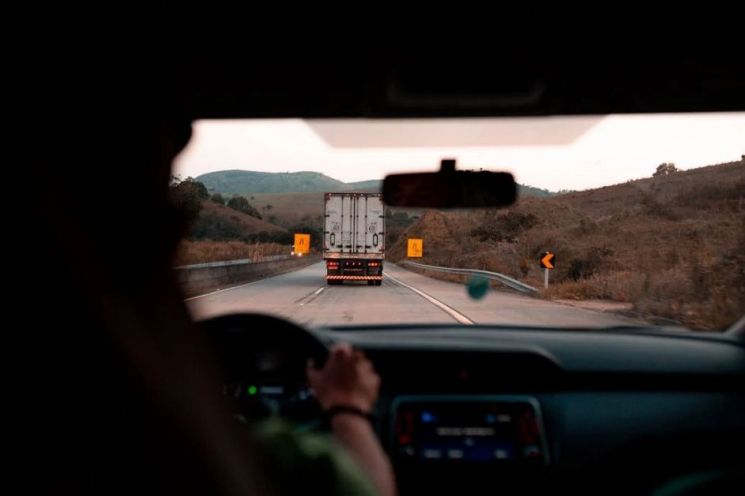
A video filmed in downtown Nagasaki, Japan at the end of last month has attracted significant attention. The footage captured a red vehicle closely tailgating a white vehicle in front of it. The person who filmed the video said, "Although I wasn't driving myself, just watching it was terrifying." The individual reported the incident to the police immediately after filming. While Japan is known as a global leader in traffic culture, road rage is as prevalent there as in any other country.
On May 14, TV Asahi in Japan highlighted the severity of road rage in the country in a report titled, "Why Does Road Rage Occur?" According to the report, on a national highway in Chiba Prefecture, a driver engaged in sudden hard braking, obstructed the path of other vehicles, and even drove in the wrong direction. Police arrested a 49-year-old man, but he denied the charges. In 2017, a tragic road rage incident that resulted in the deaths and injuries of a family of four led to stricter police crackdowns and an amendment to the Road Traffic Act to increase penalties. Despite these efforts, road rage incidents have not disappeared.
In the Kyushu region, a white sedan cut in front of a moving express bus and suddenly decelerated, forcing the bus driver to slam on the brakes. The bus driver reported the incident to the police. However, immediately after the report, the sedan came to an abrupt stop and collided with the bus. The sedan driver then rushed at the bus, shouting and making threats. He was arrested. In Sapporo this January, a major accident was narrowly avoided when a large truck carrying 20,000 liters of kerosene was involved in a road rage incident. There was also a case where a driver overtook a tractor (a small truck) on a straight road using a turn signal, then blocked its path again before driving away as if nothing had happened.
In a 2024 survey of over 2,000 drivers, more than 70% responded that they had experienced road rage. This figure represents an increase of about 20% compared to the previous year. Professor Yasushi Fujii of the Department of Psychology at Meisei University, who has researched road rage for over 10 years, stated, "98% of victims experience road rage in the passing lane, while 80% of perpetrators are unaware they are the aggressor, and 60% actually believe they are the victim." After interviewing more than 1,000 perpetrators, the majority reportedly felt they were actually the victims. Many road rage perpetrators held beliefs such as, "I retaliated because I was threatened first," "It was a kind act to correct the other's driving habits," and "If the other person dislikes driving or gives up, traffic order will improve."
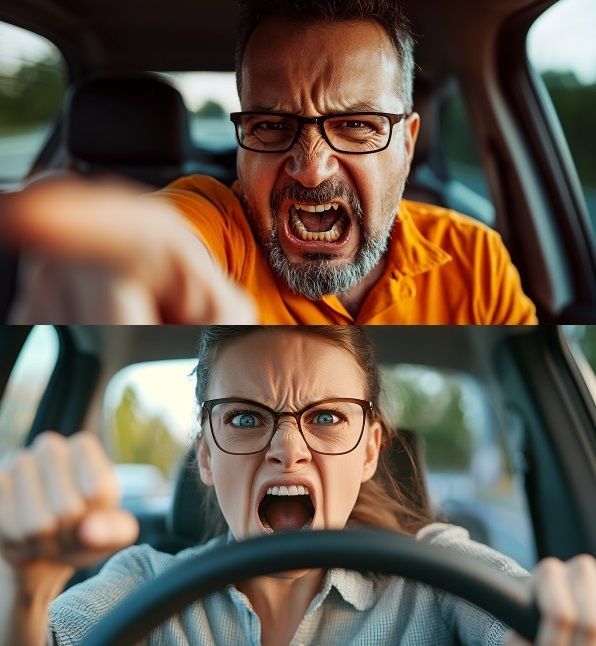
Professor Fujii explained that road rage is not a single, momentary act (a point), but rather a process in which accumulated emotions build up and eventually explode (a line). It is not simply anger at a specific moment, but rather the result of stress, hostility, and dissatisfaction built up while driving, which at some point erupts as road rage. For example, after finally getting through a traffic jam, if the car in front moves slowly, the feeling of "Why are you blocking my way now?" can explode. Especially in congested urban areas, intersections, and merging points, emotions can easily accumulate. There have also been cases of road rage for absurd reasons, such as "The sports car was driving too slowly," "I didn't like the driver's hairstyle," or "I wanted to forget about my severe pollen allergy."
Professor Fujii advises that if you become a victim of road rage, remember the three principles: awareness of the situation, stopping, and recording. Awareness of the situation means quickly noticing if the car behind is following too closely or behaving abnormally, so you can take actions such as keeping a safe distance. If you encounter road rage, it is important to pull over to the side of the road and let the aggressive vehicle pass. Additionally, using a dashboard camera is crucial. Filming directly with a smartphone may provoke the perpetrator and be dangerous. In some cases, even recording audio can be useful.
In South Korea, road rage involving the use of vehicles to commit crimes such as injury, assault, threats, or property damage is subject to the Criminal Act, unlike reckless driving, which is governed by the Road Traffic Act. Road rage applies even if there is only a single act of injury, assault, threat, or property damage, and differs from reckless driving in that it involves intentionally threatening a specific person. Causes of road rage include failure to use turn signals, disputes over slow driving, provocative cutting in, reckless driving, and disputes over horn or high beam usage. Typical types of road rage include sudden deceleration and hard braking after overtaking, repeated hard braking to intimidate, and deliberately colliding with another vehicle while chasing it.
Road rage subject to criminal punishment can result in a minimum of one year in prison for special injury, and imprisonment of up to five or seven years or a fine of up to 10 million won for special threats, special assault, or special property damage. Depending on whether the perpetrator is detained, administrative penalties may include 100 penalty points and a 100-day driver's license suspension, or even license revocation.
© The Asia Business Daily(www.asiae.co.kr). All rights reserved.












