Wave of Layoffs Sweeps the Auto Industry Amid Tariff Shock
Big Tech Firms Not Immune to Job Cuts
Intel and Starbucks Also Slash Jobs... "No Such Thing as Eternal Growth"
Global corporations are opting for workforce reductions as a survival strategy amid growing uncertainty caused by U.S. President Donald Trump's tariff policies and rapid industrial restructuring in areas such as artificial intelligence (AI) and electric vehicles. This move is interpreted as an effort to proactively respond to rapidly changing market conditions by streamlining organizations and cutting unnecessary costs.
Mass Layoffs at Nissan in Japan, Volkswagen in Germany, and Others... Simultaneous Impact from Chinese Competition and U.S. Tariffs
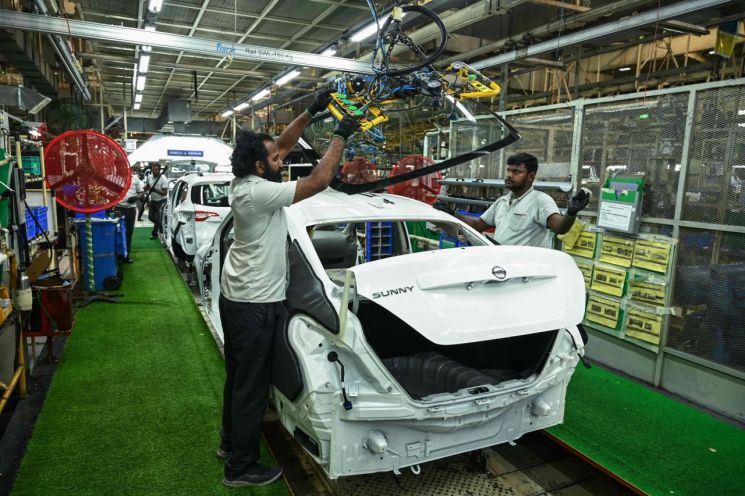
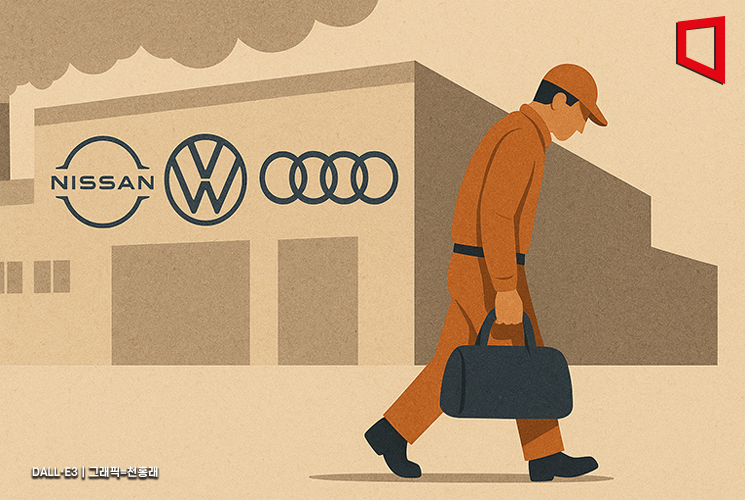
Amid widespread layoffs across industries, restructuring in the automotive sector is particularly prominent. According to NHK and Asahi Shimbun on May 12 (local time), Nissan Motor Company of Japan, which is facing management difficulties, has decided to cut 20,000 employees, or 15% of its total workforce of 130,000. Previously, in November last year, Nissan announced plans to cut 9,000 jobs, but has now decided to reduce an additional 11,000 employees. Furthermore, the company plans to reduce the number of its factories worldwide from 17 to 10 by 2027.
In March, Audi, a subsidiary of Germany's Volkswagen Group, announced plans to cut 7,500 jobs by 2029. Last year, Volkswagen's management and labor union agreed to reduce the workforce by 35,000 employees by 2030.
Industry analysts note that the automotive sector is resorting to workforce reductions as it faces a complex crisis involving the transition to electric vehicles, weakening demand, and intensifying competition. Chinese automakers are increasing their market penetration by leveraging price competitiveness and technological prowess, pushing out traditional powerhouses such as those in Germany and Japan.
In particular, the 25% tariff imposed on imported cars by the Trump administration since last month is having a significant impact. Stellantis, the parent company of Chrysler, Peugeot, Fiat, and Jeep, responded to the Trump administration's tariff measures last month by suspending operations at its factories in Canada and Mexico, resulting in the temporary layoff of 900 workers at its U.S. parts plants. Volvo Cars also announced on May 7 that it would cut about 125 out of 2,500 employees at its South Carolina plant, citing changes in tariffs, trade policy, and market conditions as reasons.
Layoffs Hit U.S. Big Tech Firms Like Microsoft, Meta, and Google... Focus on Non-Core Departments
Layoff trends are continuing among U.S. big tech companies as well. On May 13, Microsoft (MS) announced plans to lay off about 7,000 employees, or 3% of its total workforce, marking its largest round of layoffs since 2023. MS explained that one of the purposes of the layoffs is "to reduce unnecessary management layers."
Meta Platforms, the parent company of Facebook, also laid off about 3,600 employees, or roughly 5% of its total workforce, in February. Last month, it reportedly further reduced staff in its virtual reality (VR) development division, Reality Labs. In January, Meta CEO Mark Zuckerberg stated, "We have decided to raise performance management standards and to let go of underperforming employees more quickly."
Google, after announcing in early 2023 that it would cut 12,000 jobs, or about 6% of its global workforce, has continued to reduce staff, primarily in non-core departments. In February, Google carried out layoffs in its cloud division, and last month, it reportedly cut several hundred jobs in its platforms and devices division.
Intel and Starbucks Also Undergo Restructuring Due to Poor Performance... "Impact of Trade War, Declining Consumption"
Intel, once dubbed the "semiconductor king" for its dominance in the server semiconductor and PC CPU markets, is also undergoing restructuring after losing ground in competition. Lip-Bu Tan, who succeeded former CEO Pat Gelsinger in December last year, told employees on April 24 that "layoffs will begin in the second quarter." According to Bloomberg, Intel plans to cut about 20,000 employees, or 20% of its total workforce.
Starbucks, the iconic American coffee chain, has also resorted to layoffs due to poor performance and the impact of tariffs. In February, Starbucks CEO Laxman Narasimhan announced plans to reduce corporate support staff by 1,100. The Financial Times (FT) in the UK noted, "Starbucks is facing increasingly difficult circumstances as the impact of President Trump's trade war leads people to adopt more cautious consumption habits."
Additionally, British oil giant BP reportedly plans to lay off about 4,700 employees, or more than 5% of its total workforce. U.S. PC and printer manufacturer Hewlett-Packard (HP) announced in February that it plans to cut up to 2,000 jobs this year.
© The Asia Business Daily(www.asiae.co.kr). All rights reserved.













