Consortium led by Chun Geuna and Kim Bungnyeon
to develop AI-based digital medical devices for autism spectrum disorder
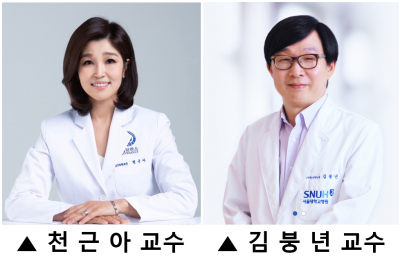 Professor Chun Geuna, Department of Child Psychiatry, Severance Hospital, Yonsei University (left), and Professor Kim Bungnyeon, Department of Child and Adolescent Psychiatry, Seoul National University Hospital (right). Photo by Yonsei Medical Center
The consortium of Yonsei University Industry-Academic Cooperation Foundation and Seoul National University Industry-Academic Cooperation Foundation will launch the "Advancement of Biohealth Big Data and Development of Digital Medical Devices for Autism Spectrum Disorder" project, overseen by the National Center for Mental Health under the Ministry of Health and Welfare, on May 14, 2025. Approximately 9.2 billion KRW in government funding is expected to be allocated to this project.
The consortium is jointly led by Professor Chun Geuna of the Department of Child Psychiatry at Severance Hospital, Yonsei University, and Professor Kim Bungnyeon of the Department of Child and Adolescent Psychiatry at Seoul National University Hospital. Major domestic medical institutions participating in the project include Gangnam Severance Hospital, Gangnam CHA Hospital, Ewha Womans University Seoul Hospital, Ewha Womans University Mokdong Hospital, Hanyang University Hospital, Wonkwang University Hospital, and Seoul St. Mary's Hospital. For the development of AI-based digital medical devices, technical organizations such as the Department of Biomedical Systems Informatics and the Department of Neurosurgery at Yonsei University, Korea Institute of Science and Technology (KIST), Urban Data Lab, Huraypositive, Evertrai, BaikalAI, Echo Insight, and A.Dot Cure are also collaborating.
The project aims to develop digital medical devices that support early identification and prognosis prediction for high-risk groups of autism spectrum developmental disorders by 2028. To achieve this, a new cohort of 1,200 infants under the age of 48 months will be established, and medical devices will be developed based on the collected data, with plans to seek designation as innovative medical devices from the Ministry of Food and Drug Safety.
Currently, the diagnosis of autism spectrum disorder relies heavily on the clinical judgment of specialists and the subjective observations of caregivers, which presents limitations in terms of objectivity and consistency. By detecting early signs that appear in children's daily lives using digital technology and incorporating them into the screening process, the project aims to enhance the efficiency of autism spectrum disorder screening.
Professor Chun Geuna, the principal investigator, stated, "The AI-based auxiliary medical device for autism spectrum disorder screening that will be developed through this project will serve as a turning point in the paradigm of early diagnosis and treatment of autism."
Professor Kim Bungnyeon added, "The consortium aims to overcome the limitations of autism spectrum disorder diagnosis and lay the foundation for achieving better treatment outcomes."
© The Asia Business Daily(www.asiae.co.kr). All rights reserved.












