April CPI Up 2.3% Year-on-Year, Below Expectations
Limited Impact from Reciprocal Tariffs
Summer Could Be Pivotal as Inventories Deplete and Tariff Talks Conclude
The U.S. Consumer Price Index (CPI) growth rate slowed last month, coming in below expectations. This was the first inflation indicator to reflect the impact of reciprocal tariffs that took effect in April, and the inflationary effects of tariff policies are still considered limited at this stage. However, some analysts predict that inflation could rebound this summer if companies deplete their inventories and tariff negotiations stall in the coming months.
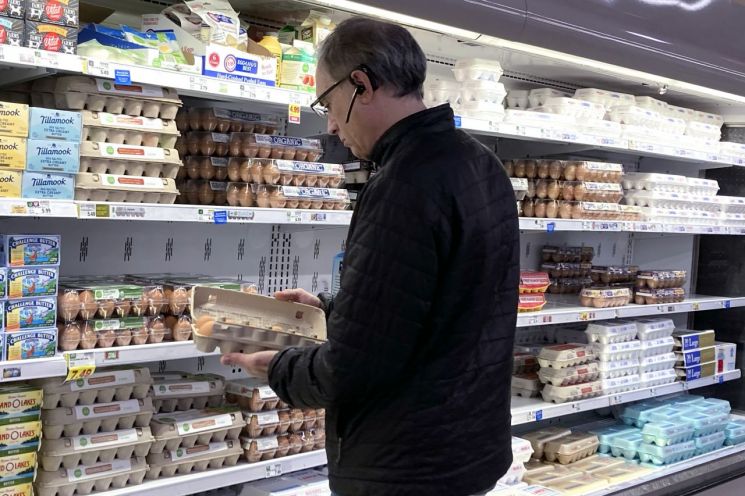
According to the U.S. Department of Labor on May 13 (local time), the CPI in April 2025 rose by 2.3% year-on-year.
This is the lowest figure in four years and two months, since February 2021. It was below both the March figure and market expectations, both of which were 2.4%. On a month-on-month basis, the CPI increased by 0.2%, also falling short of the forecast of 0.3%. In March, the CPI had decreased by 0.1%.
The core CPI, which excludes the volatile food and energy sectors, rose by 2.8% year-on-year, matching both the previous month and the market forecast (both 2.8%). On a month-on-month basis, the core CPI increased by 0.2%, which was higher than March's 0.1% but lower than the expected 0.3%. As the core CPI reflects the underlying trend of prices, it is the inflation indicator most closely watched by the Federal Reserve.
By category, the increase in housing costs accounted for more than half of the overall CPI rise. Housing costs rose by 0.3% from the previous month. Energy prices reversed course, rising 0.7% in April after falling 2.4% in March. Food prices fell by 0.1%, with egg prices dropping by 12.7%. Used car prices rose by 0.5%, while new car prices remained flat. Medical services increased by 0.5%.
This CPI reading is the first to reflect the impact of President Donald Trump's imposition of a 10% base tariff on all trading partners on April 5. Reciprocal tariffs by country were deferred for 90 days, except for China. Last month's CPI only partially reflected the 25% item-specific tariffs on steel, aluminum, and automobile imports, as well as tariffs on Chinese goods. The direct impact of President Trump's tariff policies on prices appears to be limited for now, easing concerns about inflation.
However, some analysts argue that this reading should not be given too much weight, as companies stockpiled inventories in advance of the tariff hikes and have not yet fully passed on the tariff burden to consumer prices. If inventories secured before the tariffs took effect are depleted and there is no significant progress in tariff negotiations scheduled through July, inflation could reignite this summer.
Ali Jaffery, senior economist at CIBC Capital Markets, said, "April was the first month of the Trump administration's global tariff regime, so it was unlikely that tariffs would have a major impact, and companies could be patient thanks to ample inventories and high margins." He added, "However, current tariff levels are still higher than before the trade war began, and some pass-through is possible, which could spread over a longer period."
On the other hand, some predict that if tariffs lead to sluggish consumption and the U.S. economy slows rapidly, the inflation rate will remain limited. The fact that the U.S. and China have agreed to lower tariff rates by 115 percentage points each for 90 days and continue follow-up negotiations also suggests that inflation may not be significantly stimulated.
Anna Wong, an economist at Bloomberg Economics, said, "If most of the tariff costs are being borne in the U.S. and the CPI growth rate remains moderate, it is likely due to weakening demand." She added, "If this effect persists, the net impact of tariffs could be less inflationary than generally expected."
© The Asia Business Daily(www.asiae.co.kr). All rights reserved.












