Commemorating the 80th Anniversary of Liberation:
Digitizing Over 130,000 Japanese Colonial-Era Land Registers into Korean
Personalized Services Using Big Data,
Including the "Find Ancestors' Land" Program
Over 350,000 Real Estate Certificates Issued Annually...
Enhancing Administrative and Judicial Efficiency
Goyang Special City in Gyeonggi Province is launching a full-scale personalized service for citizens, such as the "Find Ancestors' Land" program, by digitizing and converting real estate documents from the Japanese colonial period into Korean to commemorate the 80th anniversary of Liberation and the birthday of King Sejong.
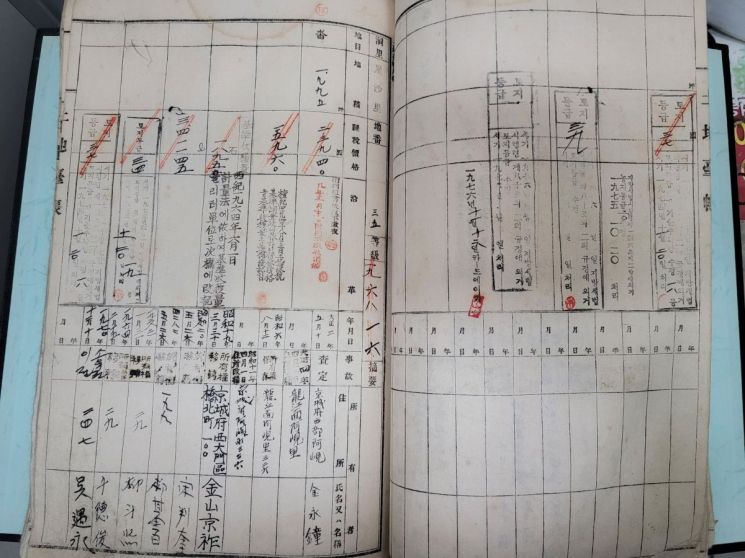
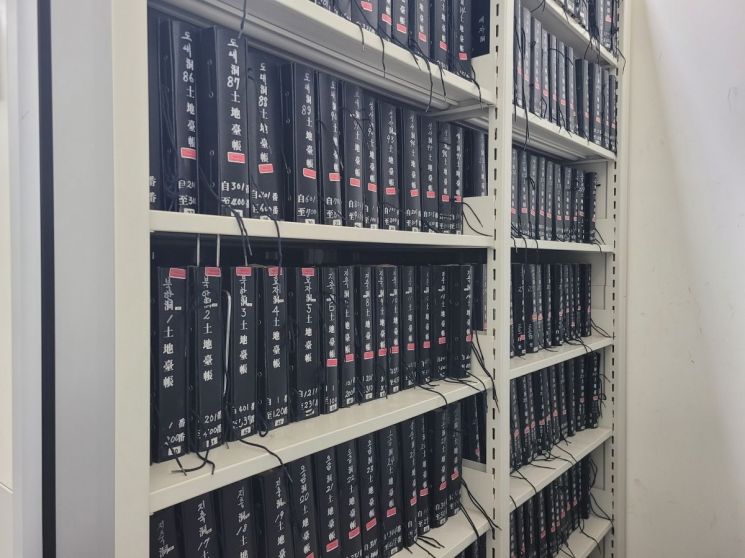
According to Goyang Special City on May 12, the city has been carrying out a project since 2023 to convert a total of 136,343 real estate documents?including land registers, cadastral maps, and original survey drawings created from the Japanese colonial period to 1975?into Korean using AI-based technology. As a result, the city has succeeded in creating a searchable digital database (DB) containing land information for approximately 180,000 parcels covering 268 square kilometers.
The original documents were written in Japanese era notations and Chinese characters, making them difficult to decipher for both ordinary citizens and public officials. Through this project, the era notations have been converted to the Gregorian calendar, and all information in Chinese characters has been translated into Korean.
Goyang Special City expects that this project will fill the database (DB) gap for the period from 1910 to 1975, when searches were impossible with image files alone, thereby enabling the provision of more accurate and extensive land information.
After completing the digitization and Korean conversion of real estate information accumulated over more than 100 years, Goyang Special City will expand its personalized real estate information services, including the "Find Ancestors' Land" program. By providing a wide range of real estate big data, the city aims to lower the barrier to information access so that people can easily view records of dormant land, while also improving the efficiency of administrative and judicial systems.
Last year, 10,229 people used the personalized real estate information service provided by Goyang Special City, and among these, approximately 66% (6,802 cases) were inquiries about land under the name of a decedent. The city provided about 8.14 square kilometers of real estate information to heirs last year.
Previously, heirs had to manually decipher old land registers written in Chinese characters to find land with unclear ownership when reviewing land registers, interpreting details such as lot number, land category, area, owner's name, address, and changes in ownership. However, starting this year, the "Find Ancestors' Land" service is linked with land register data converted into Korean, eliminating such inconveniences and enabling faster searches so that hidden land can be found more easily and property rights can be better protected.
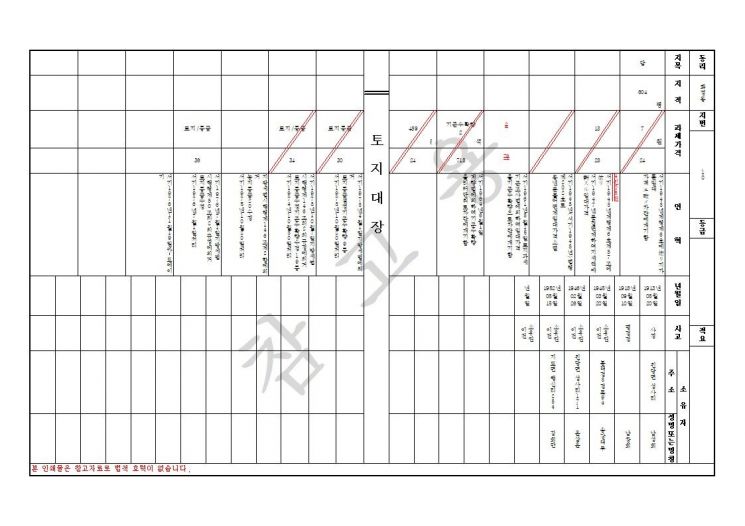
This service can be requested by the landowner, an heir, or a person with legitimate authorization through the Land Information Division at Goyang City Hall or the Citizen Service Division at each district office. In particular, by using the "Safe Inheritance Service," which is automatically linked upon death registration, citizens can access the service more conveniently.
The city is improving citizen convenience in various economic and legal activities by issuing real estate certificates quickly and accurately based on real estate big data. Last year, the total number of real estate-related certificate issuances, such as land register copies and cadastral map copies, reached approximately 350,000 cases.
Real estate big data also plays a key role in improving the efficiency of administrative and judicial institution systems. Last year, the number of requests from relevant institutions to Goyang City for real estate big data information for administrative and judicial purposes totaled about 204,000 cases.
In the fields of urban planning and housing construction, real estate information is being utilized to set future development directions and implement specific projects. The city provides related departments with continuous cadastral maps and thematic maps to assist with tasks such as revising urban management plans, conducting preliminary reviews for designating economic free zones, updating landscape plans, and establishing phased implementation plans for long-term unexecuted urban planning facilities.
For tax and delinquent payment collection, information on real estate ownership under the names of corporations or delinquent taxpayers is used. In courts, real estate ownership information is provided during personal rehabilitation or bankruptcy proceedings, while the prosecution uses it for the execution of fines and forfeitures, thereby increasing accuracy and reliability. This year, with the application of real estate big data converted into Korean, more effective real estate information issuance services for the public and more efficient administrative and judicial procedures are expected.
Lee Donghwan, Mayor of Goyang, said, "We expect that the digital transformation of real estate information assets and the integration of big data technology will enable us to provide personalized services to citizens and improve administrative efficiency," adding, "We will continue to focus on data management and system improvement so that real estate information can be used easily and conveniently."
© The Asia Business Daily(www.asiae.co.kr). All rights reserved.














