"The Taiwan Dollar's Sharp Drop Is Just One Example"
"More Such Cases Expected Going Forward"
Amid a sharp drop in the Taiwan dollar/US dollar exchange rate in recent days, experts have analyzed that similar movements could appear in other Asian currency exchange rates within the next few quarters.
According to the Financial Times (FT) of the UK on May 7 (local time), Stephen Jen, CEO of Eurizon SLJ, a small forex-focused hedge fund owned by Eurizon Capital, made this projection in a recent memo sent to investors.
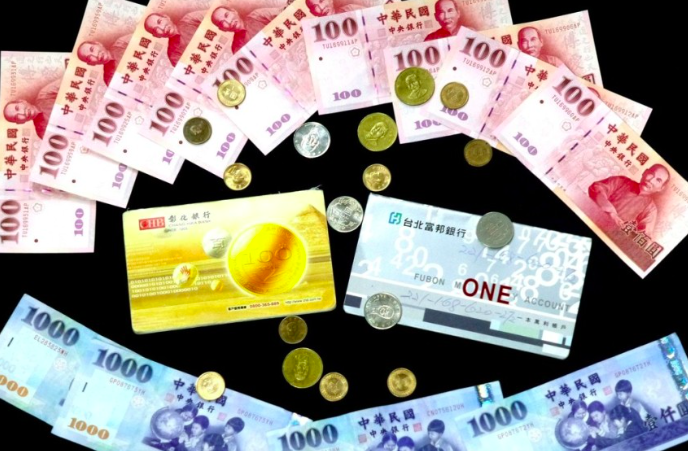
The Taiwan dollar, the currency of Taiwan, experienced a roller-coaster ride, surging 9% over two trading days on May 2 and 5, then falling back 3% on May 6. Given that the Taiwan dollar has generally maintained a stable trend, these recent movements are unprecedented.
Stephen Jen, who led Morgan Stanley's currency strategy team until 2009, commented on this phenomenon, stating, "The risk that investors in the US dollar could be caught off guard by a nonlinear sell-off in the dollar continues to grow," and added, "Last week's sharp drop in the Taiwan dollar/US dollar exchange rate is just one example. We will see more such cases going forward."
Jen has particularly pointed to the risk that China's "shadow reserves" (unofficial foreign exchange reserves) could exit en masse when the dollar weakens, and he viewed the recent plunge in the Taiwan dollar exchange rate as the beginning of that risk. He said, "We have long warned about the risk of a 'snow avalanche' (sharp collapse) in the dollar. In China alone, about $2.5 trillion worth of 'snow' has accumulated, and an additional $500 billion per year is being added in Taiwan, Malaysia, Korea, and elsewhere. Only a portion of these countries' massive trade surpluses has been remitted back home, while exporters are holding a significant amount in US dollar deposits."
He continued, "While we are still waiting for more triggers, this week's plunge in the Taiwan dollar exchange rate can be seen from the perspective of this dollar avalanche. We expect further sharp drops in Asian currency exchange rates over the next few quarters." He also noted, "Since Asia accounts for more than half of the US trade deficit, an adjustment in Asian currency exchange rates could help calm the United States."

Jen identified China, Taiwan, Singapore, and Malaysia as the countries most at risk of a 'dollar avalanche,' based on cumulative trade surpluses relative to the size of their economies. He said, "If the dollar weakens, the US central bank, the Federal Reserve (Fed), cuts interest rates, and China enters an economic recovery phase, the excess of US dollar-denominated assets will still be too large." He added, "The 'push' and 'pull' factors that have caused export earnings to be held in US dollars rather than being brought home over the past few years may start to work in the opposite direction going forward."
Meanwhile, a stronger Taiwan dollar could negatively impact export companies. It has been reported that TSMC's operating margin drops by about 0.4 percentage points for every 1% appreciation of the Taiwan dollar. In addition, Taiwan's life insurance companies are also directly exposed to the sharp rise in the Taiwan dollar's value. Most of the overseas assets held by local life insurers, totaling 23 trillion Taiwan dollars, are in US bonds such as US Treasuries. As of the end of last year, the hedge ratio for these overseas assets was estimated to be only 65%, close to a historic low. As a result, if these life insurers increase their hedging to guard against further declines in the US dollar, the value of the Taiwan dollar could rise even more.
© The Asia Business Daily(www.asiae.co.kr). All rights reserved.













