"Many Negotiations Underway... Tariffs Believed to Be Temporary"
Oliver Zipse, CEO of the German automaker BMW, stated that he expects U.S. President Donald Trump to reduce the 25% tariff imposed on imported cars by July.
According to the British daily The Guardian and other sources on May 7 (local time), CEO Zipse said, "No one can be a winner in a trade dispute. All parties must avoid the vicious cycle of isolation and trade barriers," expressing his views on the matter.
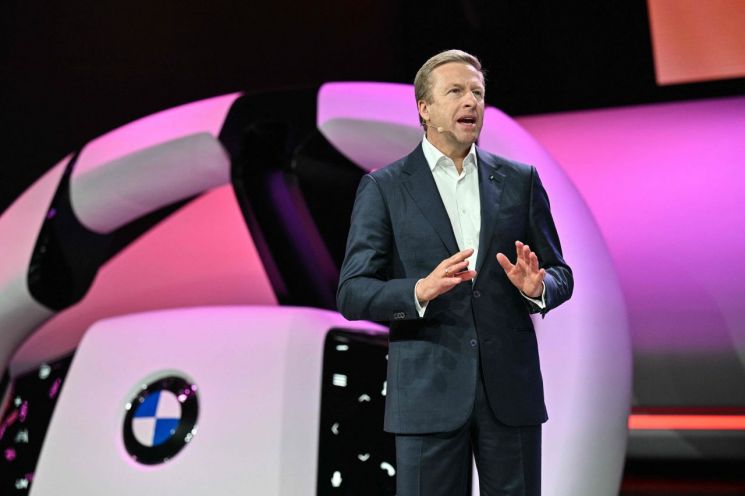
CEO Zipse met with President Trump on April 18 to discuss the tariff issue. He expressed hope that BMW's large-scale production facilities in the United States would have an impact on negotiations with the Trump administration. He also added that the U.S. government is listening to the arguments of companies that oppose the tariffs. Both American and foreign automakers have been lobbying the U.S. government to allow them to offset import tariffs if they manufacture cars in the U.S. for export.
He said, "Many negotiations are taking place behind the scenes. That is why there is speculation that the tariffs will be temporary," adding, "We know that our significant influence will not be ignored."
President Trump has been imposing a 25% tariff on foreign-made automobiles since May 3. Starting from May 3, a 25% tariff also took effect on foreign-made auto parts. However, on April 29, the U.S. announced a measure to partially ease tariffs on auto parts for two years for companies with complete vehicle production facilities in the United States.
CEO Zipse said he expects the United States, Mexico, and Canada to return to a lower tariff regime because the costs are too high for everyone. He also stated that BMW is fully capable of absorbing the additional costs caused by tariffs, as the company currently operates factories in both the United States and China. He claimed that BMW has been largely unaffected by the U.S. tariffs on China and China's retaliatory tariffs.
On this day, BMW announced quarterly results that exceeded market expectations and maintained its annual outlook. As tariff uncertainties persist, companies such as Stellantis and Mercedes-Benz withdrew their earnings forecasts last month, citing the inability to predict the impact of tariffs on supply chains and consumer demand. BMW stated that U.S. auto tariffs would have a notable impact on its second-quarter results, but expected its U.S. business to grow.
In the first quarter, BMW reported a pre-tax profit of 3.1 billion euros (about 4.8977 trillion won), a 25% decrease compared to the same period last year. This is considered a better performance in weathering tariff disruptions than Mercedes-Benz, which saw its first-quarter pre-tax profit plummet by 41%.
© The Asia Business Daily(www.asiae.co.kr). All rights reserved.












