LPR Also Lowered by 0.1 Percentage Points
On May 7, China, which is currently engaged in a "trade war" with the Donald Trump administration in the United States over tariffs of 145%, announced that it would lower the reserve requirement ratio (RRR) and inject 1 trillion yuan (approximately 193 trillion won) in long-term liquidity into the market.
Pan Gongsheng, Governor of the People's Bank of China, made this announcement during a press conference on the "Package of Financial Policies to Support Market Sentiment," which was hosted by ministerial-level officials from the People's Bank of China, the National Financial Regulatory Administration, and the China Securities Regulatory Commission.
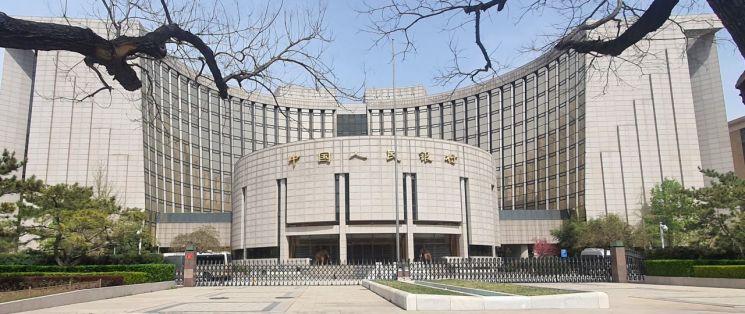
Governor Pan stated that the interest rate on the 7-day reverse repurchase agreements (reverse repos) would be reduced from 1.5% to 1.4%. As a result, the loan prime rate (LPR), which serves as the de facto benchmark interest rate, is also expected to be lowered by 0.1 percentage points.
He further announced that the reserve requirement ratio would be lowered by 0.5 percentage points. The reserve requirement ratio is the proportion of deposits that banks are required to hold with the central bank. Lowering the reserve requirement ratio increases liquidity in the market. Although Chinese authorities have not reduced the reserve requirement ratio since September of last year, they have consistently indicated that there is room to lower both interest rates and the reserve requirement ratio. At the Politburo meeting chaired by President Xi Jinping on April 25, the government emphasized the need for a "more proactive fiscal policy" and a "moderately accommodative monetary policy," calling for timely reductions in the reserve requirement ratio and interest rates, as well as the maintenance of liquidity to support the real economy.
Referring to this, Governor Pan stated, "We will implement a more appropriately accommodative monetary policy, and the People's Bank of China plans to strengthen macroeconomic adjustments and introduce a comprehensive package of monetary policy measures."
In addition, he announced that the interest rate on first-home mortgages with maturities of five years or more would be reduced from 2.85% to 2.6%, a decrease of 0.25 percentage points. He also revealed the establishment of 500 billion yuan in consumer and pension refinancing to support the revitalization of consumption.
Governor Pan remarked, "Despite facing relatively significant external shocks since April, the domestic financial system has remained robust and the financial markets have demonstrated strong resilience." However, he also expressed concern, saying, "The global economy is filled with uncertainty, and increasing economic fragmentation and trade tensions are posing challenges to global economic growth."
China has set a target for gross domestic product (GDP) growth of around 5% for this year, following last year's goal. The growth rate for the first quarter of this year was recorded at 5.4%, but there are projections that the growth rate will decline from the second quarter due to the tariff war with the United States. The United States has imposed 145% tariffs on China, and China has retaliated with 125% tariffs, resulting in a virtual halt to trade between the two countries.
As a result, warning signs are appearing throughout the Chinese economy. According to the National Bureau of Statistics of China, the manufacturing PMI for April was recorded at 49.0, a decrease of 1.5 points from the previous month (50.5). This figure is below the market expectation of 49.8, indicating that the economy has entered a contraction phase (below 50). The trade war is also exacerbating unemployment. According to the National Bureau of Statistics, the unemployment rate among urban youth aged 16 to 24 was 16.5% in March, remaining above 16% for three consecutive months since January.
© The Asia Business Daily(www.asiae.co.kr). All rights reserved.












