High Concentrations of Ozone Persist Overnight in Rural Areas,
Published in Journal of Hazardous Materials
As the Ministry of Environment announced plans to implement intensive ozone management from May to August, when ozone concentrations rise, a new study suggests that not only daytime urban areas but also nighttime rural regions require attention regarding ozone pollution.
The research team led by Professor Jungho Lim from the Department of Urban and Environmental Engineering at UNIST announced on May 6 that their self-developed AI model had detected a pattern of prolonged ozone retention in rural areas overnight.
 Research team (from left) Yejin Kim, Researcher (First Author), Jungho Lim, Professor, Hyunyoung Choi, Researcher. Provided by UNIST
Ozone is a secondary pollutant produced when sunlight reacts with airborne contaminants, and its concentration peaks in the afternoon when temperatures are highest. Because ozone particles are smaller than fine dust, they cannot be blocked by standard health masks and can penetrate deep into the alveoli, triggering inflammatory responses. Despite these risks, ozone is a colorless and odorless gas, highlighting the need for a real-time, high-precision monitoring system.
The research team developed an AI-based all-sky model capable of estimating ground-level ozone concentrations across East Asia at high resolution, 24 hours a day, regardless of cloud cover.
Yejin Kim, the first author of the study, explained, "Previous models struggled to provide accurate estimates when clouds obscured the surface, resulting in observation gaps. In contrast, this all-sky model can estimate ozone concentrations even under cloudy conditions, enabling uninterrupted monitoring regardless of time or weather. Additionally, the model offers a spatial resolution of 2 km, which is 40 times finer than existing global atmospheric reanalysis data (CAMS), allowing it to capture localized high ozone concentrations that occur in smaller areas."
Analysis using this model revealed that ozone concentrations were higher in urban areas during the day, while in some rural areas near cities, ozone did not decrease rapidly after sunset. Instead, it tended to remain at high concentrations for extended periods during the night.
Professor Jungho Lim stated, "Because most ground monitoring stations are concentrated in urban areas, the regional and temporal characteristics of ozone have often been overlooked. Our findings accurately reflect these variations and can serve as precise supporting data for future environmental policies, such as seasonal ozone management programs."
The research team developed this model by integrating various meteorological data?including brightness temperature from the Himawari-8 satellite, air temperature, wind speed, and solar radiation?and applying an explainable artificial intelligence technique to analyze which factors the AI relied on for its predictions. Brightness temperature is a value that converts the infrared energy detected by satellites from the surface or atmosphere into temperature, and it is influenced by several environmental factors, such as actual air temperature, sunlight intensity, and the thermal state of the atmosphere.
Through brightness temperature, the AI can indirectly assess the likelihood of ozone formation. The team analyzed which information the AI considered most important during the prediction process and found that brightness temperature had the greatest impact, confirming its key role in precise ozone forecasting.
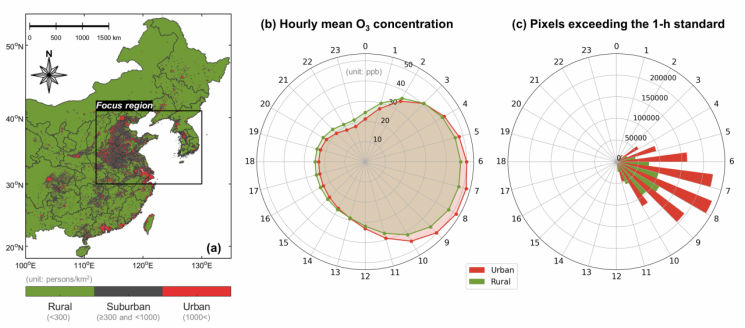
This research was supported by the Ministry of Environment, the Ministry of Oceans and Fisheries, and the Ministry of Education. The findings were published on May 5 in the internationally renowned Journal of Hazardous Materials.
© The Asia Business Daily(www.asiae.co.kr). All rights reserved.












