At Least 15,000 Won for Pyongyang Naengmyeon in Seoul
Buckwheat Prices, the Main Ingredient, Drop 9.4% from a Year Ago
The price of Pyongyang naengmyeon in Seoul is steadily rising.
According to Yonhap News Agency on May 6, the price of naengmyeon at Pildong Myeonok, a renowned Pyongyang naengmyeon restaurant in Jung-gu, Seoul, is 15,000 won. This is an increase of 1,000 won from last year's price of 14,000 won. Even so, the price at Pildong Myeonok is considered relatively affordable. At most famous Pyongyang naengmyeon specialty restaurants known for their taste, the price of mul naengmyeon is generally over 15,000 won.
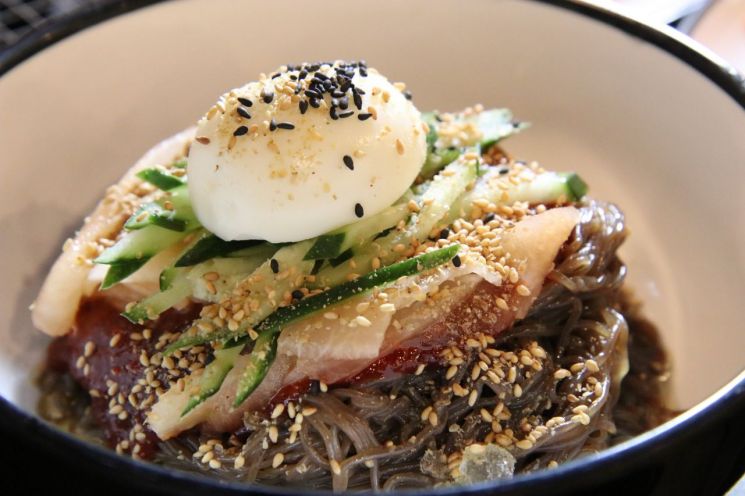
At Eulji Myeonok, considered one of Seoul's "four major old Pyongyang naengmyeon houses," the price is also 15,000 won. Eulji Myeonok was closed for two years due to redevelopment, then reopened in April last year after relocating to Nakwon-dong, Jongno-gu, at which time the price increased by 2,000 won from 13,000 won to 15,000 won.
At Eulmildae, a popular Pyongyang naengmyeon restaurant in Yeomni-dong, Mapo-gu, the price of mul naengmyeon rose from 15,000 won to 16,000 won in March this year. The price of hoe naengmyeon is 20,000 won. If four people each order a bowl of naengmyeon and also share suyuk (45,000 won), the total bill exceeds 100,000 won.
At Uraeok in Jung-gu, the price per bowl of naengmyeon has already been 16,000 won for several years. At Bongpiyang in Bangi-dong, Songpa-gu, the price is also 16,000 won. At Pyongyang Myeonok in Jangchung-dong, Jung-gu, naengmyeon costs 15,000 won, and a large-sized naengmyeon is 22,000 won.
Some naengmyeon specialty restaurants that opened relatively recently, compared to the famous old establishments with decades of tradition, charge even higher prices by emphasizing their own unique characteristics. At a North Korean local cuisine restaurant in Haengchon-dong, Jongno-gu, the price of Pyongyang naengmyeon is 18,000 won.
At a Pyongyang naengmyeon specialty restaurant in Donggyo-dong, Mapo-gu, the regular naengmyeon is relatively affordable at 10,000 won, but the version made with "100% domestic buckwheat" is priced at 18,000 won.
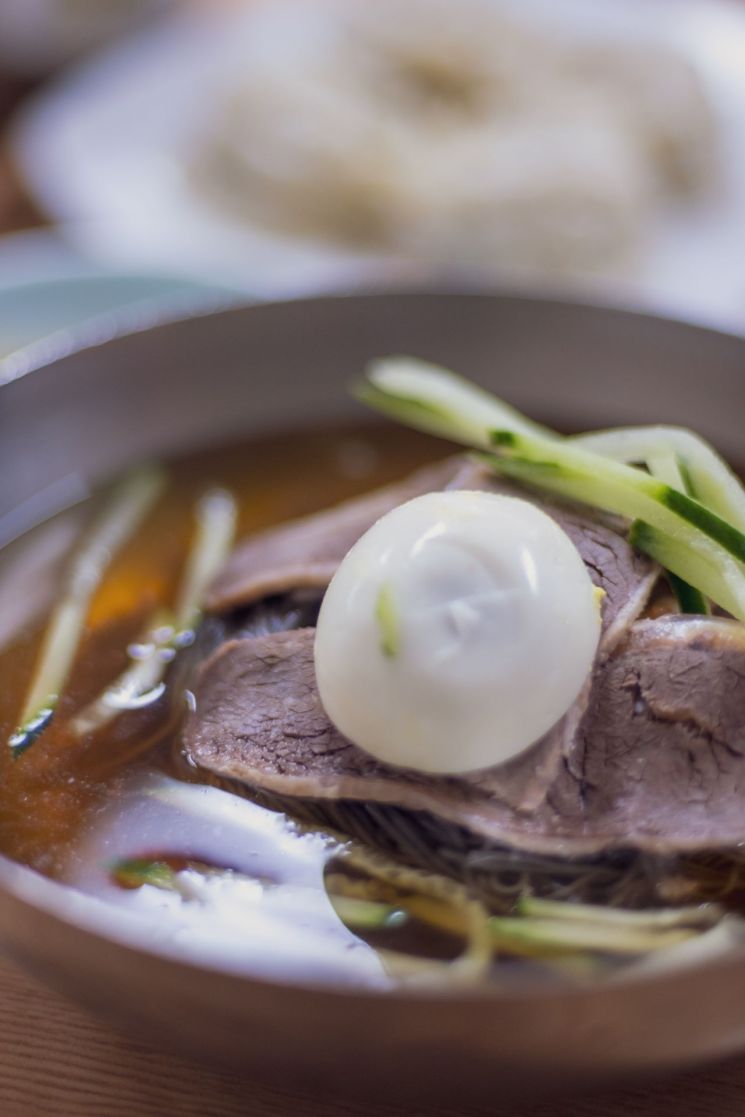
The price of buckwheat, the main ingredient in Pyongyang naengmyeon, has actually decreased. According to the Agricultural Products Distribution Information System on May 6, the wholesale price of buckwheat as of May 2 was 3,285 won per kilogram, down 9.4% from a year earlier. The continued rise in naengmyeon prices appears to be due to increases in costs such as food ingredients, energy, labor, and store rent.
A few years ago, the hourly minimum wage and the average price of naengmyeon were similar, but as the price of naengmyeon has risen sharply, one now needs to add 2,000 won to the minimum wage to afford a bowl. This year's minimum wage is 10,030 won, up 9.5% from 9,160 won in 2022.
Even aside from naengmyeon, the prices of dining-out items overall have continued to rise, pushing up consumer prices as well. According to Statistics Korea's Consumer Price Trends, dining-out prices rose by 3.2% last month, marking the largest increase in 13 months since March last year.
According to Chamgagyeok, in March this year in Seoul, the prices of naengmyeon, bibimbap, kimchi stew set meals, and jjajangmyeon each rose by 5-6% compared to a year earlier, while the price of gimbap increased by 8%. The prices of samgyeopsal, samgyetang, and kalguksu rose by 1-4% during the same period.
© The Asia Business Daily(www.asiae.co.kr). All rights reserved.












