Gwacheon Branch: From the Korean Empire to the 2000s
Featuring 145 Works
Seoul Branch: Showcasing Contemporary Art
Exhibiting 86 Works, Including the Lee Kunhee Collection
For the first time in 53 years since 1972, a permanent exhibition offering an in-depth look at 100 years of Korean modern and contemporary art will open in May at the National Museum of Modern and Contemporary Art (MMCA) in Gwacheon and Seoul. When the museum first opened in 1969, it did not own a single piece of art, but as of March this year, its collection has grown to 11,800 works, making it capable of presenting a comprehensive view of a century of modern and contemporary art. Notably, the Lee Kunhee Collection, which has toured ten regional museums, will return and be on display again in this permanent exhibition. The MMCA plans to use this exhibition as an opportunity to promote modern and contemporary art.
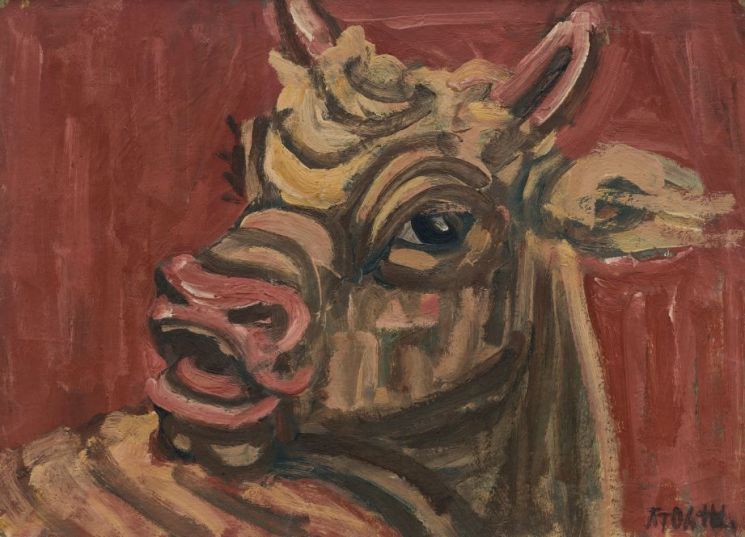
The Gwacheon branch presents a panoramic view of 20th-century art history. "Korean Modern and Contemporary Art I" examines the birth of Korean modern and contemporary art amid the turbulent historical currents from the Korean Empire and the Enlightenment period to the Korean War (1900s?1960s), through 145 works by 70 artists including Chae Yongshin, Koo Bonwoong, Lim Gunhong, Oh Jiho, Park Raehyun, Kim Kichang, Lee Ungno, and Lee Joongsup. The exhibition also features a substantial portion of the Lee Kunhee Collection, with 42 works included.
Among the highlights are Lee Youngil's (1904?1984) "Eungchubaekro" (1929) and Jung Chanyoung's (1906?1988) "Peacock" (1937), which depict new perspectives using modern inventions such as microscopes, telescopes, and cameras introduced from the West. Kim Eunho's (1892?1979) "Portrait of Emperor Sunjong" (1923) and Chae Yongshin's (1850?1941) "Portraits of Heo Yu and Yoo Inmyeong" (1924?1925), both based on actual photographs, offer a unique experience.
Lee Haeseon (1905?1983) and Na Sangyun (1904?2011), who encountered Western art movements in the early 20th century, each presented nude works in 1928 and 1927, respectively, expressing the human body beautifully and realistically based on anatomical study. While male artists emphasized the curves of the female form, Na Sangyun, a female artist, is noted for her candid reflection of reality.
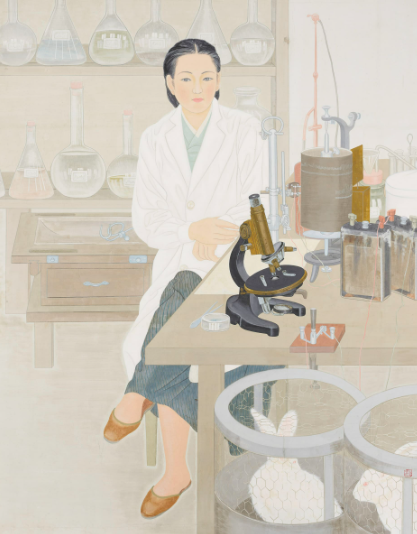
Yoo Tae Lee (1916?1999) captured the image of a female scientist?an unusual subject for the time?in his work "Portrait Pair - Inquiry" (1944). The modern concepts of "new woman" and "woman" can be found throughout his various works. Some female artists, such as Lee Youngil (1904?1984), who was active and even won awards, suddenly disappeared from the art scene. Regarding Lee Youngil, who presented works such as "Eungchubaekro" (1929), curator Lee Sujeong explained, "She was active and even won awards, but after liberation, she stopped working. I am curious about why she stopped after pursuing something she loved."
A "Room of the Artist," dedicated to specific artists, has also been created. It focuses on the works of Oh Jiho, a pioneer of Korean Impressionism; the artist couple Park Raehyun and Kim Kichang; and Lee Joongsup, one of Korea’s most beloved painters. The second part of the exhibition, opening on June 26, will feature works from the 1960s to the 2000s.
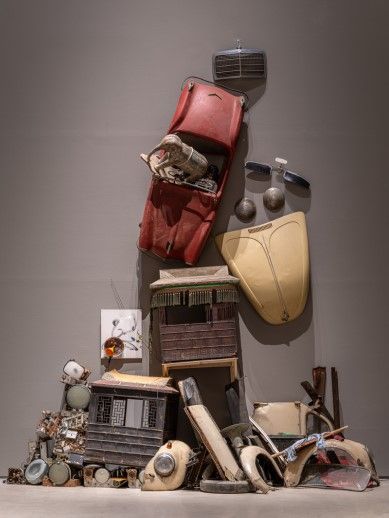
At the Seoul branch, which is about one-third the size of the Gwacheon branch, representative works by leading contemporary artists are introduced. A total of 86 major works from the 1960s to the 2010s have been carefully selected, including nine from the Lee Kunhee Collection. The exhibition encompasses a variety of genres, including abstraction, experimentation, figuration, hybridity, conceptual art, and documentary. This is the first time since its opening that the Seoul branch has hosted a permanent exhibition.
In the "Abstraction" section, works by Kim Whanki, Choi Wookkyung, Kim Changyeul, Nam Kwan, Park Seobo, Suh Seok, Yoo Youngkuk, Yoon Myungro, Yun Hyongkeun, Lee Seungja, Lee Ufan, Lee Ungno, and Jung Changsub are featured. The "Experimentation" section presents works by experimental artists such as Kwak Duckjun, Kwak Insik, Kim Kulim, Kim Yongik, Park Sukwon, Park Hyunki, Sung Neungkyung, Lee Kangso, Lee Kunyong, and Lee Seungtaek.
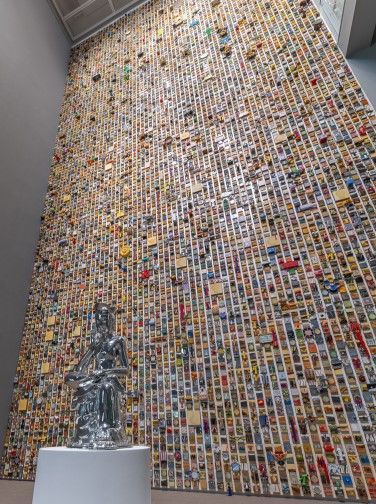
The "Figuration" section introduces works of Minjung art and hyperrealism, while the "Hybridity" section features works by Nam June Paik, Ikjung Kang, Kimsooja, Do Ho Suh, Lee Bul, and Choi Jeonghwa. Nam June Paik’s "Jadongsani Wall," first shown at his solo exhibition at the Wolfsburg Museum in Germany in 1995, and Kimsooja’s "Bottari Truck - Migrants" (2007) are being displayed for the first time since being acquired by the museum. Ikjung Kang’s "Samramansang," composed of 10,000 miniature paintings each measuring 3 inches (7.6 cm) on each side, will have about 8,500 of them exhibited in a 13-meter-high installation.
Additionally, the "Conceptual" section features Park Iso, Ahn Kyuchul, Kim Beom, Kim Hongseok, and Yang Haegue, while the "Documentary" section introduces Moon Kyungwon & Jeon Joonho, Park Chan-kyong, Kim Ah-young, Noh Suntag, Lim Minouk, Hong Youngin, and Jung Yeon-doo.
The Lee Kunhee Collection played a significant role in the permanent exhibition of Korean modern works. This is because the collection has grown both in quantity and quality as a result. Kim Inhye, head curator at the MMCA, explained, "It wasn’t that we deliberately chose works from the Lee Kunhee Collection; we simply selected the best works, and they happened to be from the Lee Kunhee Collection. Our modern collection was relatively small, but thanks to the Lee Kunhee Collection, it has become much richer." She added, "We selected as many works as possible that the public wants to see and included works that we hope everyone in the country will view. If the Seoul branch offers a 'core viewing' experience, the Gwacheon branch serves as an 'in-depth learning' space."
Kim Sunghee, director of the MMCA, stated, "The collection is the backbone and foundation of the museum, and the permanent exhibition is its face. It is a meaningful exhibition because it allows us to explain the 100-year history of Korean modern and contemporary art, as well as the aspects of Korean art that are attracting international attention, solely through our collection."
Some works in the exhibition may be replaced due to the overseas tour of the Lee Kunhee Collection, which begins in November. Both exhibitions require paid admission.
Meanwhile, the MMCA Seoul branch has been remodeled, with new spaces for children and educational activities. In the children's space, children can appreciate modern sculptures and participate in drawing activities. There is also an activity where children and their guardians, separated by a transparent glass wall, can draw each other's faces on transparent paper. The educational space has also been redesigned to enhance aesthetics and convenience.
© The Asia Business Daily(www.asiae.co.kr). All rights reserved.














